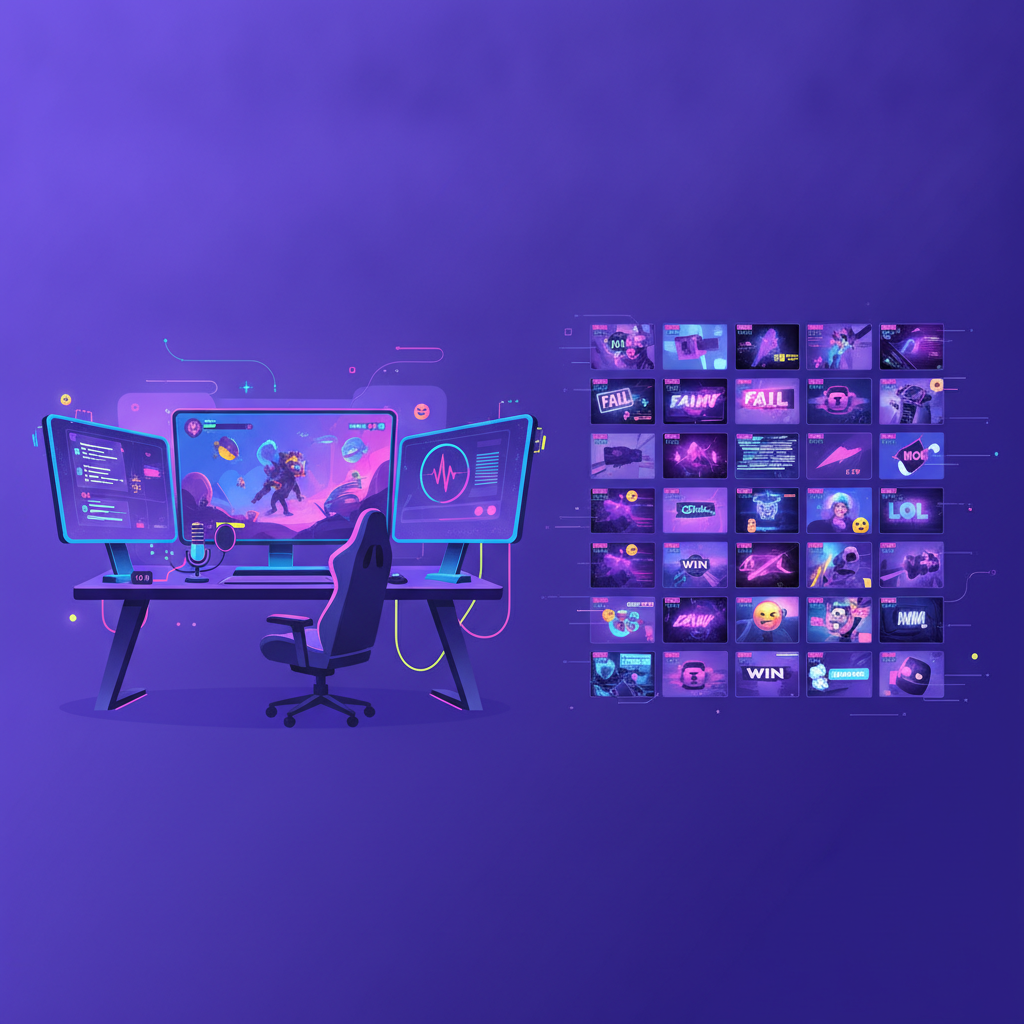
The Volume Problem
Félix Lengyel (xQc) broadcasts extended sessions on Kick, building 1.4 million followers on that platform and 12.6 million on Twitch. The operational challenge is not creating content. It is making hours of live reaction footage consumable for audiences who will never watch a full stream. The solution is a distributed clipper economy that converts marathon broadcasts into thousands of short-form assets.
This is not a creator who scripts, shoots, and posts. This is high-volume content generation where the raw material (live streams) feeds a secondary production layer (clippers, highlight channels, meme accounts) that does the actual audience building work. The business model depends on volume, velocity, and a specific editing vocabulary that makes even mundane reactions feel like events.
The Editing Vocabulary: Speed, Chaos, Meme Density
Analyzing xQc's recent uploads reveals a consistent editing pattern. Cut rhythm averages well under 1 second per shot. In the T-Pain collaboration video, shots change every 1 to 3 seconds during high energy moments, maintaining relentless pace. Jump cuts compress time. Match cuts transition seamlessly between xQc's face and whatever he is reacting to (FL Studio interfaces, durability test footage, gameplay).
Text overlays appear constantly. Key phrases from xQc or chat messages get highlighted in motion graphics. B-roll is not supplementary, it is structural. In the music production video, meme clips (Clash Royale, Peter Griffin, Minions, various animals) insert at extreme frequency. The same clips recur as running gags. The Peter Griffin trap becomes a visual punchline that repeats whenever a specific sound plays.
Sound design is exaggerated. Scratching sounds in the iPhone durability reaction get amplified. Music stings punctuate moments. Voice modulation adds comedic effect. The editing does not document xQc's reactions, it manufactures them into shareable moments. A streamer saying "is that a Cheeto?" becomes a meme format because the edit isolates, amplifies, and packages the moment for reuse.
The Clipper Economy: Distributed Production at Scale
xQc does not edit his own highlights. The operation depends on external editors who watch streams, identify moments, and package them. Some work for official channels. Most operate independently, posting to TikTok, YouTube Shorts, Twitter. The incentive structure is simple: xQc's audience is large enough that even unofficial clips generate meaningful views and ad revenue.
This creates a content flywheel. xQc streams for extended sessions. Clippers extract numerous moments per stream. Each moment gets edited into a 30-second to 3-minute clip. Those clips distribute across platforms. The most viral clips drive new viewers back to the live stream. The cycle repeats daily.
The editing vocabulary described above (fast cuts, meme density, text overlays) is not just xQc's style. It is the clipper economy's shared language. Any editor trying to make xQc content work learns this vocabulary or their clips do not perform. The result is a consistent brand aesthetic maintained by independent editors who have never coordinated.
Monetization: Platform Deals, Sponsorships, and the Kick Contract
xQc's revenue model layers multiple income streams. He earns an estimated $500,000 to $1.5 million annually from YouTube ads alone, despite YouTube being a secondary platform for him. Twitch subscriptions operate on a 50/50 revenue split. Sponsorships include G-Fuel, showcased during live streams.
The most significant deal was his Kick contract. Unlike traditional sponsorships tied to single events, Kick's model offers creators a salary-like advance in exchange for content exclusivity, channel monetization rights, and merchandising cuts. The exact terms remain undisclosed, but the structure represents a shift in streaming economics where platforms pay upfront for guaranteed content volume rather than rev share alone.
Casino sponsorships added another layer. In 2022, xQc accepted gambling sponsorships and started distributing promotional codes, which attracted criticism. The stakes he plays are sponsored content, not a template for viewer behavior. Big spins make great clips. They do not make strategy. The operational insight is that xQc treats his stream as an advertising surface where the content (reactions, gameplay, gambling) is the vehicle for monetization, not the product itself.
Why the Format Works: Parasocial Intimacy at Scale
The format succeeds because it combines intimacy (extended streams create the illusion of hanging out with xQc) with distributed production (clippers ensure no viral moment goes unexploited). TikTok compilations of his reactions (the "happy to sad" clip, the Cheeto moment) function as audience acquisition funnels. New viewers discover xQc through a 15-second meme, click through to a 3-minute highlight, eventually land on a live stream.
The editing vocabulary supports this funnel. Fast cuts and meme density make even low-stakes moments (xQc reacting to someone else's video) feel eventful. Text overlays and sound design add layers of commentary. The viewer is not just watching xQc watch something. They are experiencing a curated, amplified, remixed version of his reaction.
His editor reportedly uses ChatGPT for video titles, which xQc finds funny. The detail illustrates the operation's pragmatism. Titles are optimization problems, not creative decisions. The goal is volume and velocity. Any tool that accelerates production without degrading quality gets adopted.
What EditorDuel Readers Can Take From This
Most businesses cannot stream for marathon sessions. They can adopt the clipper economy model. Produce long-form content (webinars, podcasts, live events), then systematically extract short-form assets. Hire multiple editors to process the same source material from different angles. Let each editor develop their own viral moment vocabulary.
Adopt xQc's editing techniques selectively. Fast cut rhythm works for high-energy content. Text overlays make key points scannable. Meme B-roll (adapted to your industry) adds humor and shareability. Sound design turns mundane moments into events. The principle is not to copy xQc's style exactly, but to understand why it works: constant stimulation prevents drop-off, and repetition of visual motifs builds brand recognition.
Treat your content library as raw material, not finished product. Every long-form asset should generate multiple short-form clips. Every clip should be tested across platforms. The clips that perform become templates. The templates become your brand's editing vocabulary. Hire editors who can execute that vocabulary at speed.
Structure deals like Kick's model when possible. Negotiate upfront payments for content volume commitments rather than purely performance-based rev share. This stabilizes cash flow and lets you invest in production infrastructure (more editors, better tools, faster workflows) without waiting for individual videos to monetize.
Build Your Content Engine
xQc's operation is not replicable at his scale, but the principles are universal. High-volume input, distributed editing labor, consistent visual vocabulary, and relentless short-form distribution. The creator who streams for extended sessions is not the business model. The system that converts those sessions into thousands of clips is the business model.
Want to build content like this for your business? Post a competition on EditorDuel and get matched with editors who can deliver.