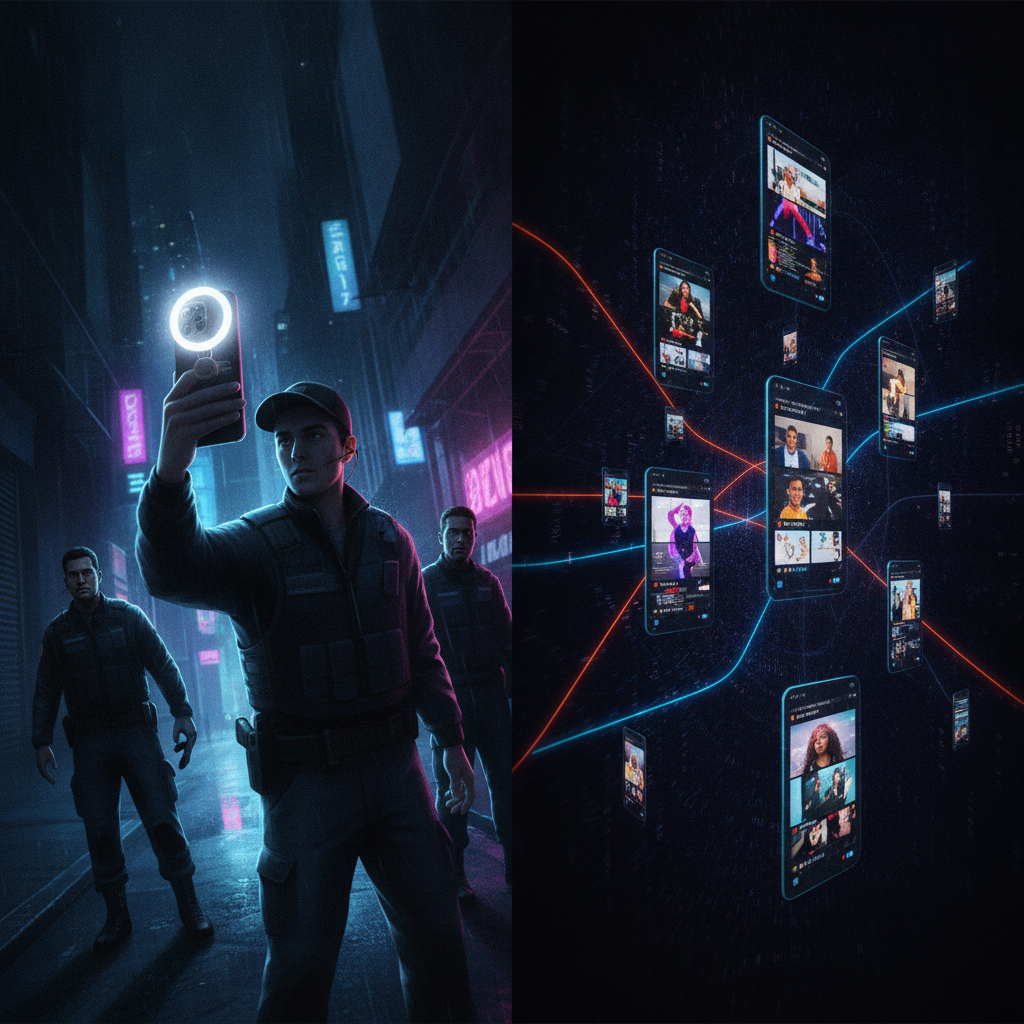
N3on (Rangesh Mutama) operates one of the most aggressive IRL streaming operations in the creator economy. His model centers on high-risk, high-attention environments: confrontations with celebrities, visits to gang-affiliated neighborhoods, and unpredictable public interactions. The content strategy is simple. Generate enough volatile moments per stream that clippers have constant material to harvest. The result is a distribution flywheel where N3on streams on Kick, clippers extract the most shareable 15 to 60 second segments, and those clips circulate across TikTok, Instagram Reels, and YouTube Shorts, driving new viewers back to the live streams.
This case study examines the operational mechanics behind N3on's content velocity, his reliance on clipper economies, and the structural choices that make his IRL streams clip-friendly by design.
Content Velocity and Stream Frequency
N3on maintains a relentless upload cadence on Kick. Recent streams include a 4-hour IRL stream with Sean Paul at Baja Fest (426K views), a 3-hour Austin McBroom pool party stream (327K views), and shorter segments like a 7-minute wardrobe stream (141K views). The variety in runtime suggests flexibility: long-form streams capture extended scenarios, while shorter uploads isolate specific viral moments.
The operational advantage of this frequency is twofold. First, it creates multiple daily opportunities for viral moments. Second, it trains the audience to expect new material constantly, which sustains clipper interest. Clippers need fresh content to compete for views, and N3on delivers it faster than most IRL streamers.
The Clipper Distribution Model
N3on's content does not primarily succeed on Kick. It succeeds on TikTok. Clips of N3on circulate widely, often framed around confrontation or tension. Examples include N3on being pressed by a gang leader in Montreal after failing to ask permission to film in the area, and interactions with Blueface where playful banter (N3on calling Blueface "daddy" after being called "son") generated massive engagement.
These clips are not produced by N3on's team. They are extracted by independent clippers who monitor his streams, identify shareable moments, and repackage them with captions, zooms, and sound bites optimized for short-form platforms. The clippers monetize through ad revenue, affiliate links, or audience growth on their own accounts. N3on benefits from the exposure without paying for distribution.
This is a classic creator-clipper symbiosis. N3on provides raw material (long IRL streams with unpredictable moments). Clippers provide curation and distribution (identifying the 30 seconds that will perform on TikTok). The system scales because clippers compete with each other, meaning N3on gets hundreds of free editors working to amplify his content.
Designing Streams for Clip Extraction
N3on's IRL streams are structurally optimized for clipper extraction. The format prioritizes spontaneous, high-tension interactions over scripted narratives. A visit to O Block, a Chicago housing complex associated with drill culture, generated clips because the scenario itself was inherently tense. N3on gave away money and interacted with locals, which created multiple micro-events (reactions, confrontations, crowd responses) that clippers could isolate.
The operational pattern is consistent across streams. N3on enters environments where conflict or surprise is likely. He engages with celebrities, gang-affiliated figures, or large crowds. The camera stays on him, capturing reactions in real time. There is no post-production smoothing. The raw, unfiltered nature of the footage is what makes it clip-friendly. Clippers want moments that feel authentic and unscripted, and N3on's format delivers that by default.
Another structural choice is the use of security and entourage. Clips show N3on's security accidentally hitting a person while escaping a crowd, which itself became a viral moment. The presence of security signals that the situations are genuinely risky, which adds perceived stakes. This is not a controlled set. It is live, mobile, and unpredictable, which is exactly what clipper audiences want.
Monetization and Platform Strategy
N3on streams on Kick, not Twitch or YouTube. Kick offers higher revenue splits and fewer content restrictions, which is critical for IRL streamers who operate in legally and socially ambiguous spaces. The platform allows N3on to monetize live viewership through subscriptions and donations while maintaining the flexibility to stream in environments that might violate stricter platform guidelines.
The secondary monetization layer is the clipper economy. While N3on does not directly monetize most TikTok clips, the exposure drives new followers to his Kick channel, where he captures subscription revenue. The viral clips function as unpaid advertising. A single TikTok clip with 2 million views can convert thousands of new Kick followers, each of whom represents potential subscription revenue.
This is a distribution arbitrage play. N3on invests in high-risk IRL production (travel, security, coordination with celebrities or local figures). Clippers invest in curation and platform-specific optimization. The combined output is a content machine that operates at scale without N3on needing to manage a large in-house editing team.
Risk and Operational Trade-Offs
The model has obvious risks. N3on has been pressed by gang leaders and involved in situations where his security had physical altercations. These are not hypothetical risks. They are documented incidents that occurred during live streams. The operational trade-off is clear: higher risk environments generate more viral moments, but they also increase the likelihood of legal, physical, or reputational consequences.
From a content operations perspective, this is a calculated gamble. N3on accepts the risk because the upside (massive clip distribution and audience growth) outweighs the downside (occasional negative press or dangerous situations). The model works because the audience is drawn to the unpredictability. If the streams were safe and controlled, the clips would not perform.
What EditorDuel Readers Can Take From This
N3on's operation demonstrates three principles that apply to any business building content at scale.
First, design content for redistribution, not just primary consumption. N3on's streams are long and unpolished, but they are structured to produce dozens of shareable moments. If you are producing long-form content (podcasts, webinars, interviews), architect it so that clippers or internal editors can extract high-value segments. Build in moments of tension, surprise, or strong reaction. Make it easy for someone to pull a 60-second clip that stands alone.
Second, leverage external distributors when possible. N3on does not pay clippers, but he benefits from their work. If your content can support a clipper economy (or a community of fans who reshare excerpts), you get free distribution and curation. The trade-off is less control over framing, but the reach often justifies it.
Third, accept that high-output content requires operational risk. N3on's model works because he is willing to operate in environments most creators avoid. For businesses, this might mean publishing controversial takes, going live without a script, or producing content faster than you can perfect it. The risk is lower quality or negative feedback. The upside is velocity and attention.
Want to build content like this for your business? Post a competition on EditorDuel and get matched with editors who can deliver.