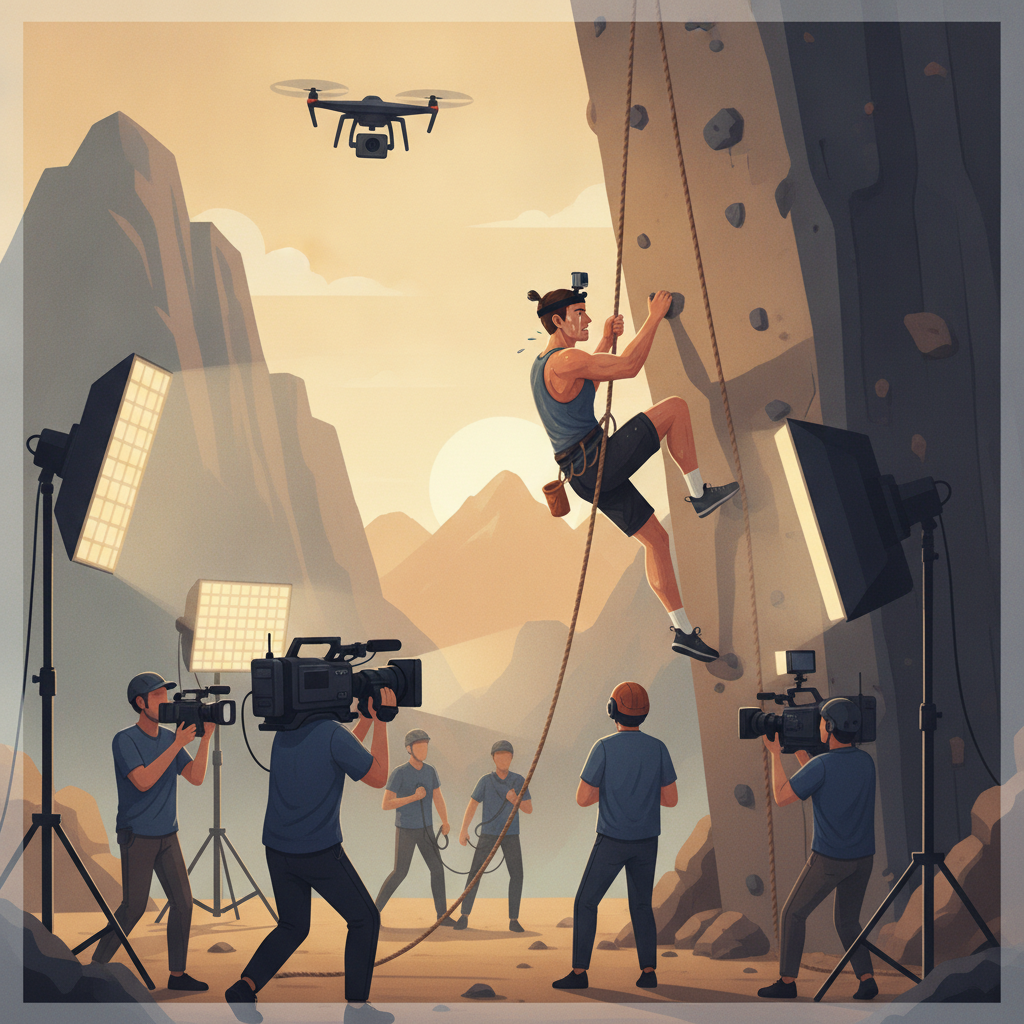
Michelle Khare's YouTube series "Challenge Accepted" successfully petitioned to join the Television Academy's ballot for Outstanding Hosted Nonfiction Series or Special, placing online production in direct competition with traditional television programming. The petition signals that the production infrastructure, narrative complexity, and audience reach of top tier YouTube content now competes with what legacy networks deliver. For businesses evaluating where to allocate video budgets, Khare's operation offers a roadmap: how to structure challenge based content that commands television level attention without television level gatekeeping.
The Challenge Format as Broadcast Infrastructure
Khare built her channel on immersive, long form challenges where she trains in extreme disciplines (Olympic boxing, Navy SEAL exercises, professional wrestling) and documents the physical and emotional arc. The format centers on difficult challenges, creating a repeatable structure that audiences recognize and anticipate. Each episode functions as a self contained documentary: setup, training montage, climactic test, reflection. The structure is episodic nonfiction with act breaks, character development, and resolution.
The Emmy petition validates what the production demonstrates: "Challenge Accepted" operates at the production values and narrative sophistication that compete with cable documentaries. Khare invests substantial production time per episode, embedding with institutions (military units, sports federations, entertainment guilds) that grant access traditional media cannot always secure as easily. The result is content that reads as authoritative rather than opportunistic.
For brands and businesses, this model proves that challenge content scales beyond fitness influencers and stunt channels. Any category with skill progression, institutional access, or transformation arcs can use this structure. The format is portable.
Brand Integration Without Disruption
Khare's approach to sponsorship reveals how high production creators monetize without breaking immersion. In a recent interview, she described pitching Red Bull on collaborations that expand reach beyond contracted deliverables: "Going to Red Bull and saying, 'would you be interested in collaborating on a Reel that hits a wider audience?'" The framing is partnership, not product placement. Brands appear as enablers of the challenge (providing training facilities, gear, expertise) rather than interruptions.
This mirrors how prestige TV handles sponsors: integration at the production level, not the ad break. Khare's content does not stop mid narrative for a sponsorship pitch. Sponsors are woven into the premise. If she trains like a stunt driver, an automotive brand supplies the cars and the track. The brand becomes infrastructure, not interruption. The viewer experience remains unbroken.
Businesses building branded content can adopt this logic. Instead of buying pre roll on someone else's video, fund the challenge itself. Provide the location, the expert trainers, the equipment. Let the creator build the narrative around your category. The brand association is structural, not transactional.
Production Team and Operational Scale
Khare's transition from BuzzFeed producer to independent creator demonstrates how YouTube enables television scale production without network bureaucracy. She worked at BuzzFeed before launching her channel, learning multi camera setups, story editing, and audience testing in a high volume environment. That training shows in her episode pacing and visual language. She shoots like a documentary crew, not a solo vlogger.
The production quality (multiple camera angles, location sound, color grading, motion graphics) indicates a professional operation. This is the emerging standard for top YouTube creators: hire editors, shooters, and producers as contractors or staff, but retain creative control and revenue ownership.
For businesses, this structure is replicable. You do not need a broadcast network to produce broadcast quality content. You need a producer who understands story structure, a crew who can execute on location, and an editor who can turn raw footage into a narrative. Platforms like EditorDuel exist precisely to connect businesses with editors who have this skillset.
What EditorDuel Readers Can Take From This
Khare's Emmy petition is a proof point for three operational principles:
First, format repeatability drives audience growth. Viewers return when they know what to expect. Khare's format (pick extreme challenge, train with experts, document struggle, complete test) is consistent enough to build habit, flexible enough to avoid monotony. Businesses should define a content format and repeat it until the audience internalizes the structure. Do not reinvent the wheel every episode.
Second, production value signals authority. Khare's content competes with television because it looks and sounds like television. Clean audio, stable shots, deliberate pacing, and professional color grading communicate seriousness. Invest in editing, sound design, and color correction. These are baseline expectations for content that competes at this level.
Third, brand integration works when it serves the story. Khare's sponsors do not disrupt the narrative because they enable the narrative. Businesses creating branded content should ask: does this brand solve a problem the story needs solved? If yes, integrate. If no, reconsider. The worst branded content is a good story interrupted by an ad. The best branded content is a story the brand makes possible.
Want to build content like this for your business? Post a competition on EditorDuel and get matched with editors who can deliver.