When Matti Haapoja posted about AI video platform Higgsfield in August 2026, the response from his community was immediate and harsh. The filmmaker, known for technical tutorials and gear reviews, found himself at the center of a controversy that had nothing to do with the quality of his content and everything to do with how he framed a paid relationship.
This case study examines what happened, why the backlash was so severe, and what content businesses can learn about sponsorship disclosure in 2026. The lesson is not about AI itself. It is about the operational mechanics of trust, the specific disclosure language that separates honest partnerships from deals that read as deception, and how quickly a creator can lose credibility when those mechanics break down.
The Disclosure Gap That Triggered the Backlash
The videos were not labeled as ads, and that omission became the core issue. According to reporting from The Verge, Haapoja and other creators including Sam Kolder posted enthusiastic demonstrations of Higgsfield without clear sponsored content labels. When other creators began sharing screenshots of partnership offers from PR firms tied to the company, audiences questioned whether the original videos had been organic recommendations.
The problem was not that Haapoja took a brand deal. The problem was that audiences could not tell it was a brand deal until after the fact. The disclosure gap created a perception of deception, even if no deception was intended. In one response video, another creator framed the situation as a broader issue in the filmmaking sponsorship space, noting that when paid relationships are not disclosed the way audiences expect, the trust contract breaks.
Why AI Sponsorships Carry Higher Disclosure Standards
The backlash was amplified because the product category was AI. Reddit discussions specifically called out that Haapoja was promoting services that used people's work to train models designed to replace them. What matters operationally is that AI tools in creative industries are polarizing, and polarizing products require more explicit disclosure, not less.
When a creator promotes a camera or a lens, the audience assumes some level of sponsorship is possible and watches for disclosure language. When a creator promotes a tool that many in the audience view as threatening to their craft, the disclosure standard becomes binary. Either the video clearly states it is a paid partnership upfront, or the audience will interpret any ambiguity as lack of clarity.
This is not a moral judgment. It is an operational reality. Content businesses working with controversial product categories need to understand that vague or delayed disclosure will be interpreted in the least charitable way possible.
The Structural Breakdown in Creator Response Videos
In a critical response video, another creator dissected Haapoja's Instagram posts and website, using screen recordings and text overlays to highlight perceived contradictions. The video employed a fast cut rhythm, with shots changing every one to two seconds during direct address segments. Jump cuts removed pauses, and the pacing only slowed when showing screen recordings, which still cut every two to four seconds to emphasize specific elements.
The structure followed a clear argumentative arc: provocative hook questioning AI filmmaking, introduction of Haapoja as the subject, systematic critique of his posts and site, and a strong opinionated conclusion. The energy peaked during passionate rants, and the editing reinforced the argument with visual evidence overlaid on screen.
This is the format that emerges when disclosure fails. The response video format is now a standard genre in creator accountability coverage. It works because it combines high energy direct address, visual evidence in the form of screenshots and screen recordings, and a clear narrative of setup, critique, and conclusion. For businesses, this means that when a sponsorship disclosure goes wrong, the response will not be a think piece. It will be a video that presents evidence and frames the situation as a breach of trust.
The Operational Playbook for Transparent AI Partnerships
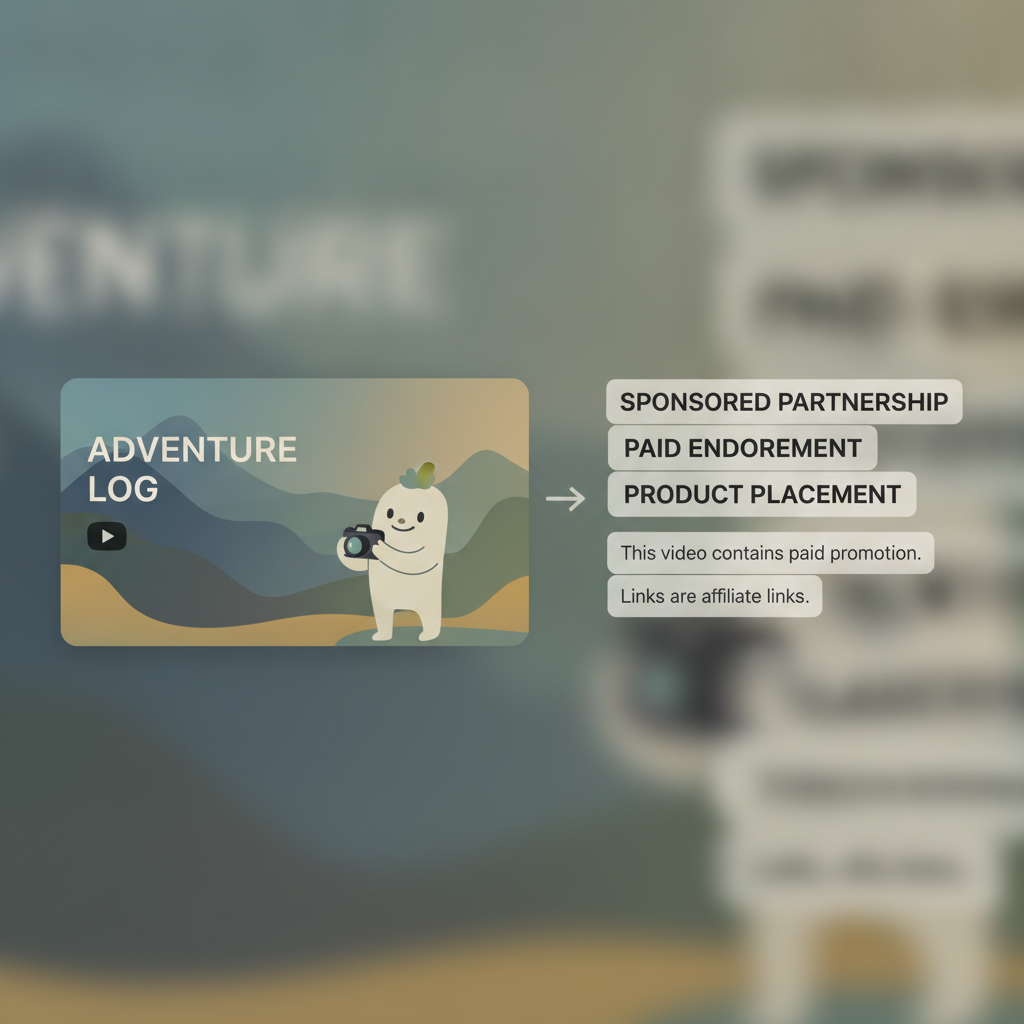
The solution is not to avoid AI sponsorships. The solution is to run them with disclosure language that removes all ambiguity. According to transparency guides published after the controversy, the key is upfront labeling. The video should state in the first 10 seconds that it is a paid partnership. The description should include clear disclosure language. The thumbnail or title should not imply organic discovery if the relationship is paid.
This is not about legal compliance. FTC guidelines already require disclosure. This is about operational trust mechanics. Audiences will forgive a creator for taking a deal they disagree with if the creator is transparent about it. Audiences will not forgive a creator for framing a paid deal as an organic recommendation and then getting caught.
For content businesses hiring editors to produce sponsored content, the disclosure language should be part of the creative brief. The editor should know that the first 10 seconds must include a clear verbal and visual disclosure. The description template should include standardized partnership language. The thumbnail should not use discovery framing if the video is paid.
What EditorDuel Readers Can Take From This
First, disclosure is not a legal formality. It is a structural element of the content itself. If you are producing sponsored videos, the disclosure must be as prominent as the hook. Treat it like a required beat in the script, not an afterthought in the description.
Second, polarizing product categories require higher disclosure standards. If you are working with AI tools, crypto products, or any category where a significant portion of the audience has strong negative opinions, you cannot rely on subtle disclosure language. The video must state upfront that it is a paid partnership, and the framing must acknowledge the controversy rather than ignore it.
Third, when disclosure fails, the response will be a video, not an article. The response video format is now the standard accountability mechanism in creator communities. If you are managing a creator partnership program, you need to plan for the possibility that a disclosure failure will result in a high energy, fast cut, screen recording heavy response video that examines your content closely. The way to avoid that outcome is to make disclosure so clear that there is nothing to question.
Want to build content operations that maintain audience trust even when running polarizing sponsorships? Post a competition on EditorDuel and get matched with editors who understand how to structure disclosure as a core content element, not an afterthought.