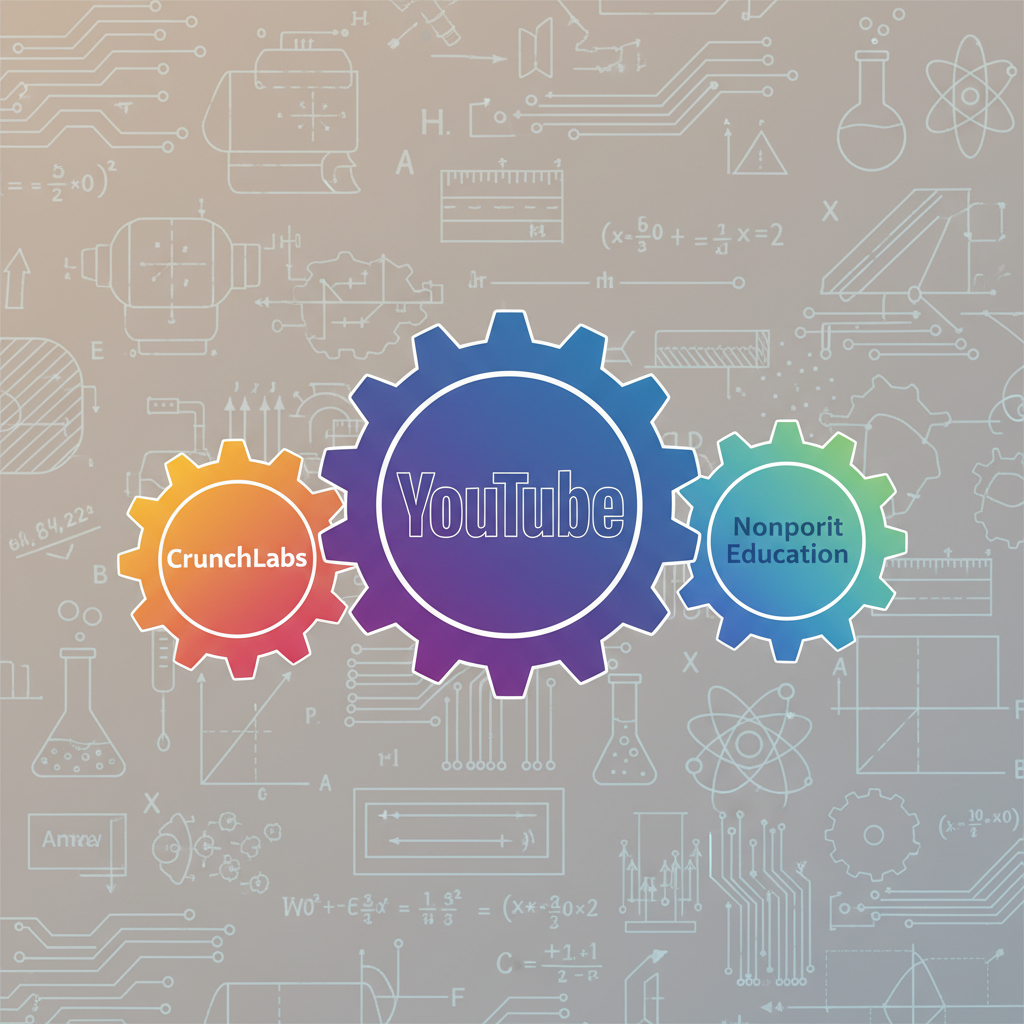
Most YouTube creators follow a predictable revenue model: CPM-based ad revenue, brand deals, maybe a merch line. Mark Rober, the former NASA engineer with tens of millions of subscribers, generates income through those channels, but his real operational achievement is vertical integration. He built CrunchLabs, a monthly subscription toy company that teaches kids to "think like an engineer," and uses the revenue stream to fund a nonprofit producing free, high-production STEM videos for classrooms. Rober is reportedly spending tens of millions to replace outdated educational content with modern video formats teachers can actually use.
This is not a typical creator business. According to CrunchLabs head of media Luke Hale, "If you think about the amount of revenue that gets funneled off of CrunchLabs into this nonprofit, no corporation would make that decision. But it's not a corporation, it's Mark Rober's business." The operation is worth studying because it demonstrates how a creator with engineering credibility and viral distribution can build a self-sustaining education platform that operates independently of traditional media economics.
The Viral Foundation: Engineering Spectacles That Cross Platforms
Rober's YouTube success began with engineering-driven spectacles designed for maximum shareability. In December 2018, he posted a video showing an engineered contraption that tricked parcel thieves: the device sprayed glitter, emitted fart spray, and captured video of the thieves. The video went viral, receiving 25 million views in one day. This established his format: take a real-world problem or curiosity, engineer an elaborate solution, document the process with high production value, and deliver a payoff that works as a standalone clip.
That clip economy matters. Rober's content spreads widely on TikTok and Instagram, where short excerpts circulate among teens and college students. The cross-platform reach means his influence extends beyond YouTube subscribers into memes, school projects, and classroom discussions. A recent Netflix series, CrunchLabs Season 1, features projects like a Jell-O pool, packaging childhood dreams as adult engineering skills. The format translates: big visual payoff, educational framing, repeatable structure.
CrunchLabs: Monetizing the Audience Through Product, Not Just Ads
Most creators treat product lines as ancillary revenue. Rober built CrunchLabs as the primary monetization vehicle. The company sells monthly subscription boxes that allow kids to build toys and learn engineering principles. Sponsorships from CrunchLabs appear in his videos, creating a closed loop: YouTube content drives awareness, CrunchLabs captures recurring revenue, and the business funds both the creator operation and the nonprofit educational initiative.
This structure insulates Rober from the volatility of CPM rates and brand deal cycles. Subscription revenue is predictable. The business scales independently of video upload frequency. And because the product aligns with the content (both teach engineering through hands-on projects), the audience self-selects for conversion. Parents who let their kids watch Rober's videos are pre-qualified buyers for a STEM subscription box.
The Nonprofit Play: Replacing Outdated Classroom Content at Scale
The most ambitious piece of the operation is the nonprofit. Rober is spending tens of millions to produce free, high-production STEM content designed specifically for teachers. The goal is to replace the outdated educational videos currently used in classrooms with modern formats that match how students consume media. This is not altruism disguised as marketing, it is a calculated move to position Rober's content as the default STEM resource for the next generation of students.
The distribution advantage is significant. YouTube CEO Neal Mohan has publicly compared Rober to prestige traditional content, saying, "I would put Ms. Rachel or Mark Rober or Cleo Abram against any quote-unquote traditional produced content." That endorsement signals platform-level support. Meanwhile, Samsung announced a live global event with Rober, and LG is launching creator-led original programming. Rober is positioning himself not just as a YouTube creator but as a content supplier for OEM streaming platforms and FAST channels.
The classroom strategy also builds long-term brand equity. Students who grow up watching Rober's videos in school become the next cohort of CrunchLabs subscribers and YouTube viewers. The nonprofit funds the top of the funnel, CrunchLabs monetizes the middle, and YouTube ad revenue covers the rest.
What EditorDuel Readers Can Take From This
Rober's operation demonstrates three lessons for businesses building content:
First, vertical integration reduces platform risk. Relying solely on ad revenue or brand deals leaves you vulnerable to algorithm changes and market downturns. Building a product that monetizes the same audience creates a more stable revenue base. If your content teaches a skill or solves a problem, consider whether a subscription product, tool, or service could capture recurring revenue from the same viewers.
Second, cross-platform clip economies extend reach without additional production cost. Rober's videos are designed with shareable moments that work as standalone clips on TikTok, Instagram, and Netflix. Each platform amplifies the others. When planning long-form content, identify the 10 to 30 second payoff moments that can circulate independently. Structure your videos so those moments land early and often.
Third, investing in free, high-value content builds long-term distribution advantages. Rober's classroom initiative is expensive, but it positions his brand as the default STEM resource for an entire generation. If you operate in a space where educational content can drive trust and awareness (SaaS, B2B services, technical products), consider whether a free, high-production content library could serve as both a lead generation tool and a moat against competitors.
The key insight is that Rober treats his content operation like a systems engineer would: identify the inputs (viral YouTube videos, subscription revenue, nonprofit funding), design the feedback loops (content drives product sales, product funds more content), and optimize for long-term sustainability rather than short-term CPM spikes.
Want to build content like this for your business? Post a competition on EditorDuel and get matched with editors who can deliver.