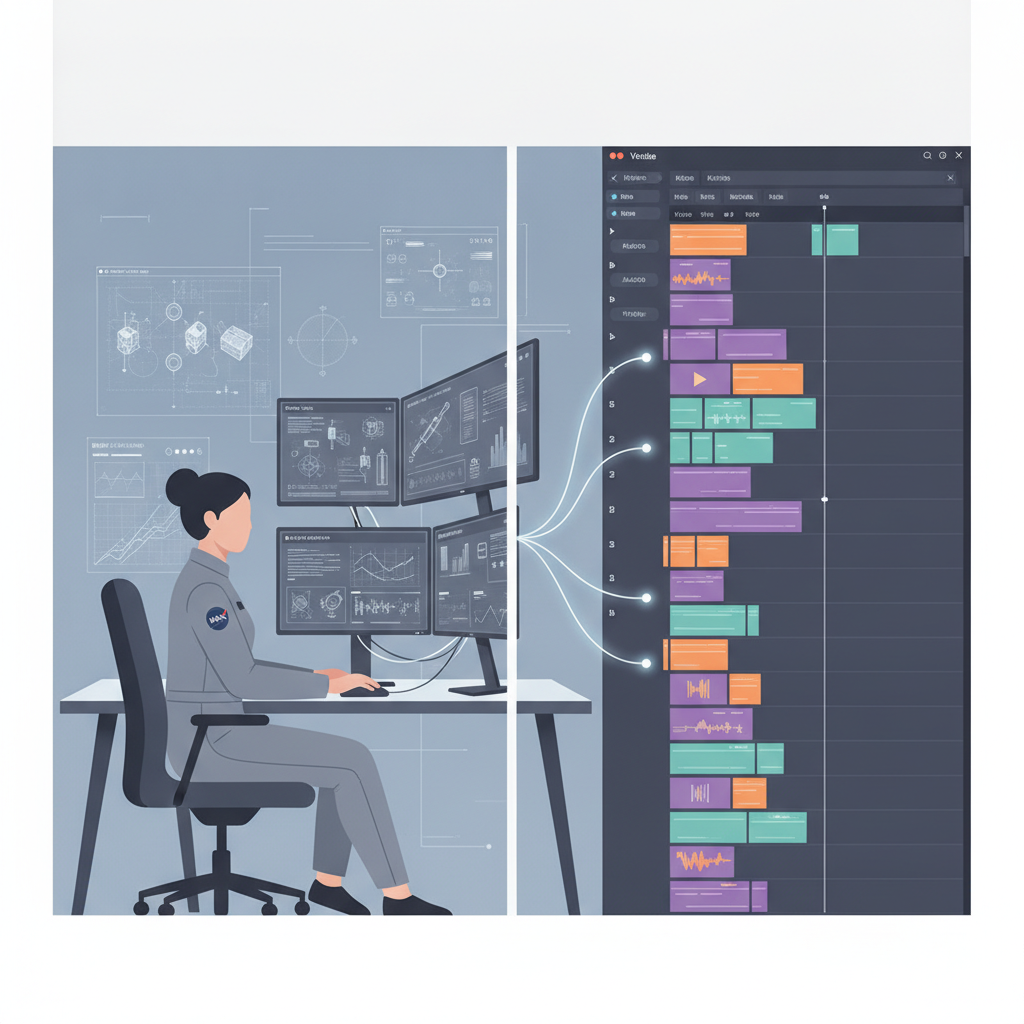
Mark Rober doesn't just make science videos. He engineers them with the same precision he once applied to Mars rovers at NASA. The result is a content operation earning approximately $25M annually from a format that turns complex engineering into compulsively watchable entertainment. For businesses trying to make educational or technical content stick, Rober's structural playbook offers a masterclass in retention mechanics.
The Hook Architecture: Immediate Value Promise
Rober's videos open with a direct statement of the problem or spectacle. No preamble, no channel intro, no meandering setup. The format is consistent: establish the hook in the first two seconds, often with a visual demonstration already in progress. This isn't accidental. His viral breakthrough in 2011 came from a Halloween costume video that showed the illusion first, explanation second. That pattern has remained his structural foundation.
The opening seconds promise either a solved problem ("This is why you're always tired") or an engineered spectacle (glitter bomb, dart board that guarantees bullseyes). The viewer knows within seconds what payoff is coming. This clarity of promise is what separates Rober's structure from typical educational content that buries the value proposition under context and credentials.
The Rapid Cut Rhythm: Maintaining Momentum Without Chaos
While Rober's content feels polished and deliberate, the underlying cut rhythm is aggressive. His explanatory segments frequently hit cuts every 0.5 to 0.8 seconds, using jump cuts to eliminate dead air while maintaining his direct address to camera. This isn't the chaotic meme-style pace of commentary channels. It's surgical removal of hesitation.
The technique serves two functions. First, it compresses information delivery without feeling rushed because Rober's vocal pacing remains conversational. Second, it prevents viewer attention from drifting during necessary explanation segments. The engineering details still get communicated, but the edit ensures no single shot lingers long enough to lose momentum. For businesses creating product explainers or technical walkthroughs, this balance between information density and watchability is the core challenge Rober has solved.
The B-Roll Integration: Visualizing Concepts Without Slowing Pace
Rober's use of B-roll follows a specific pattern: illustrate the concept being discussed without interrupting the narrative flow. When explaining sleep debt, the edit cuts to someone looking at a phone in bed, someone yawning, someone stressed at a desk. Each B-roll insert is brief (under two seconds), directly relevant to the sentence being spoken, and then immediately returns to direct address.
This differs from traditional documentary B-roll, which often lingers to establish mood or setting. Rober's B-roll is functional, almost diagrammatic. It exists to make abstract concepts concrete without sacrificing the pacing established in the opening. The viewer never loses the thread of the explanation because the visual and verbal tracks remain tightly synchronized.
The Text Overlay System: Reinforcing Key Information Visually
Rober deploys text overlays not as subtitles but as emphasis markers. Key phrases appear on screen with subtle animation (a pop or slight scale) exactly when spoken. "Sleep debt." "Cortisol." "Wake up at the same time every day." The text doesn't repeat everything said. It highlights the takeaways, the terms worth remembering, the actionable advice.
This technique addresses a specific retention problem: viewers watching on mobile, in distracting environments, or with partial attention can still extract value. The text overlays function as a secondary information layer, ensuring the core message lands even if audio focus wavers. For businesses creating content for social platforms or environments with competing attention, this redundancy is strategic, not decorative.
The Payoff Structure: Delivering on the Opening Promise
Rober's videos follow a tight problem to solution arc. The hook establishes what will be explained or demonstrated. The middle section builds understanding or anticipation. The payoff delivers exactly what was promised, often with a visual spectacle or clear action step. There are no bait and switch moments, no meandering tangents that abandon the original premise.
This structural integrity is what allows Rober to maintain high engagement rates even at significant scale. His engagement rate runs above category median despite having over 60 million subscribers, suggesting the format continues to deliver on viewer expectations consistently. The format is repeatable because it's formulaic in the best sense: a reliable structure that viewers trust will deliver value.
The Product Integration: CrunchLabs as Content Extension
Rober's business model demonstrates how content structure can support product monetization without disrupting the viewer experience. CrunchLabs, his subscription engineering kit service, functions as both revenue stream and brand reinforcement. The sponsorship essentially markets his own product to an audience that already trusts his engineering credibility. The content proves the concept; the product extends the experience.
This vertical integration works because the product aligns with the content promise. Viewers who watch Rober build elaborate contraptions can purchase kits to attempt similar projects. The content isn't interrupted by unrelated sponsor reads. The business model emerges from the content's core value proposition. For businesses building content operations, this alignment between content format and monetization strategy is the ideal outcome.
The Netflix Expansion: Format Portability Across Platforms
Rober's format has proven portable beyond YouTube. His CrunchLabs show on Netflix recorded 14.4M views for season two, with season three hitting 9.6M views. The structure translates because it's not platform dependent. The hook, pacing, visual clarity, and payoff delivery work whether the video is eight minutes on YouTube or a longer Netflix episode.
This portability matters for businesses considering content investment. A format that works across platforms multiplies distribution opportunities without requiring complete reinvention for each channel. Rober's structural approach (clear hook, tight pacing, visual reinforcement, reliable payoff) functions as a framework adaptable to different lengths and contexts.
What EditorDuel Readers Can Take From This
Rober's retention mechanics offer specific lessons for businesses creating educational, technical, or product-focused content:
Lead with the payoff, not the setup. State the value proposition in the first two seconds. Viewers decide whether to continue before you finish your intro.
Cut aggressively in explanation segments. Jump cuts aren't just for comedy channels. They're retention tools that compress information delivery without losing clarity.
Make B-roll functional, not atmospheric. Every visual insert should illustrate a specific point being made. If it doesn't clarify the concept, it's slowing the pace.
Use text overlays to create a secondary information layer. Key terms, action steps, and takeaways should appear visually to reinforce retention even with partial attention.
Structure around a clear promise and deliver it. The opening hook sets an expectation. The rest of the video exists to fulfill that expectation without deviation.
Align monetization with content value. The strongest business models emerge when the product extends the content experience rather than interrupting it.
Want to build content like this for your business? Post a competition on EditorDuel and get matched with editors who can deliver the pacing, structure, and retention mechanics that turn technical content into compulsively watchable media.