Logan Paul's content operation in 2025 looks nothing like the daily vlog machine that built his audience. While his main channel sits at over 23 million subscribers, the strategic shift isn't about growth anymore. It's about monetizing what's already there.
This is the business model of a creator who realized that adding subscribers delivers diminishing returns compared to extracting more value per existing viewer. The playbook: podcast anchoring, product integration at the ring level, and treating the YouTube audience as a launch pad for ventures that generate revenue outside the platform's ad share model.
The Podcast as Revenue Anchor
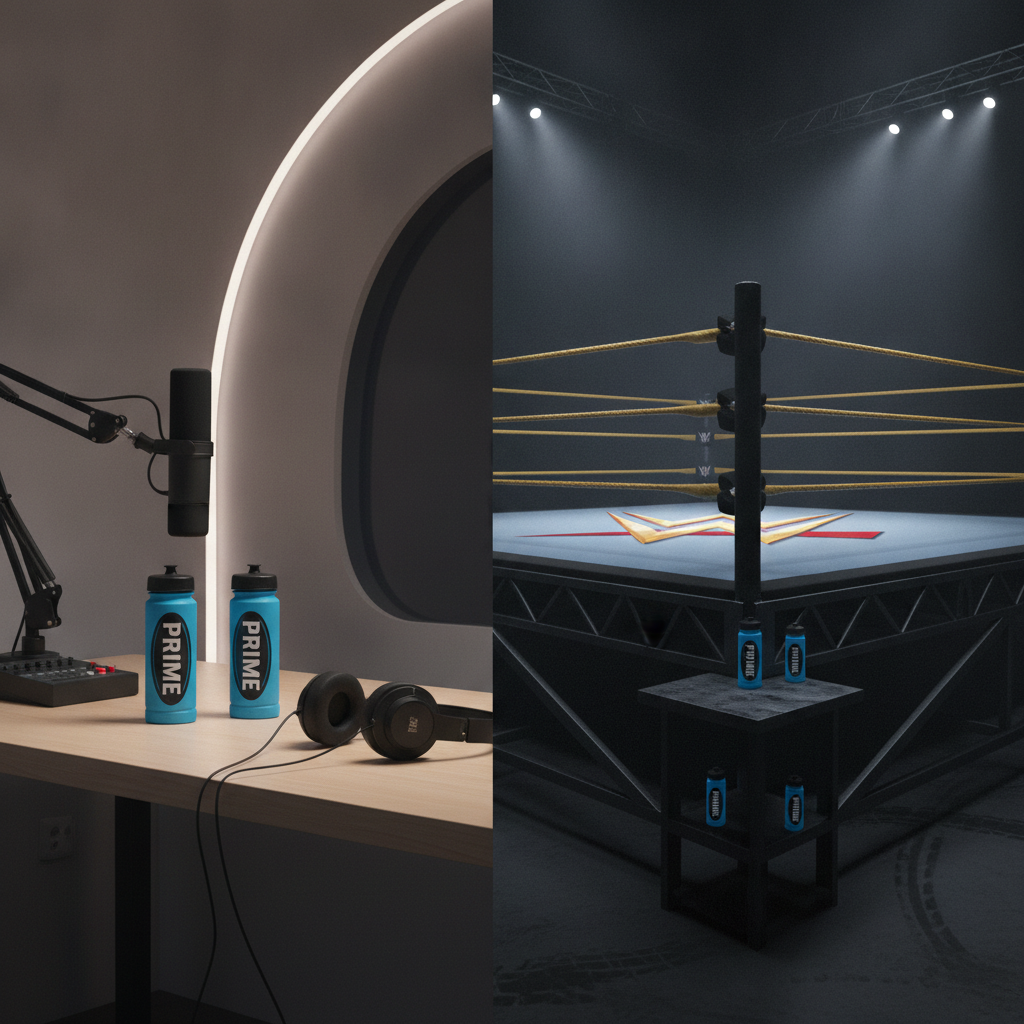
Paul's primary content vehicle is now The Daily Paul podcast, not the vlog format that built his name. The format shift is structural: long form conversation allows for native product placement (PRIME bottles on the desk), guest cross promotion (pulling audiences from combat sports, crypto, WWE), and multi platform distribution without the production overhead of location shoots.
The podcast format analyzed shows minimal editing complexity. A Shorts announcement about a survival fight series uses static framing, persistent text overlays, and zero editing beyond the title card, yet the format works because the announcement itself is the hook. The production is deliberately stripped down because the value isn't in the edit, it's in the conversation and the products visible in frame.
This is the inverse of the high velocity vlog era. Paul is monetizing his existing audience rather than chasing subscriber growth, and the content reflects that priority. Podcasts generate sponsorship revenue, YouTube ad share, and clip economies across TikTok and Instagram without requiring the location budgets or editing teams that vlogs demanded.
Ring Sponsorship as Distribution Hack
The most visible example of Paul's extraction strategy is the PRIME logo stamped in the center of WWE rings, starting at WrestleMania 40 in March 2024. Paul calls it his "greatest marketing move."
The mechanic: WWE Premium Live Events generate millions of impressions per broadcast. Every camera angle, every highlight clip, every social share includes the PRIME logo. Paul isn't paying for ad spots, he negotiated the canvas itself as a distribution channel. The brand appears in content created by WWE, shared by fans, and clipped by sports media without additional spend.
Paul acknowledged the fan backlash ("the fans hated, they hated that I stamped the middle of the mat with my logo") and framed it as a feature, not a bug. In wrestling, heat drives engagement. Controversy keeps the brand visible. The logo stays.
This is product placement at infrastructure level. Paul leveraged his WWE contract to secure a sponsorship position that turns every match into a PRIME commercial, distributed across broadcast, streaming, and social without incremental content production costs.
Crypto and NFTs as Audience Monetization Layer
Paul's approach to digital assets follows the same extraction logic: use the existing audience as a built in market, then build product around their willingness to spend. His NFT ventures, including the $100 million token sale for FAU and the Max Effort collectibles line, treated his tens of millions of YouTube subscribers as an army of early adopters.
The strategy: launch digital products with low marginal costs, high perceived scarcity, and direct to consumer distribution via social channels. No retail markup. No platform fees beyond minting costs. The revenue flows directly from audience to creator wallet.
Critics dismissed the NFT plays as gimmicks, but the numbers show a calculated bet on monetizing fandom intensity rather than fandom scale. Paul doesn't need every subscriber to buy. He needs the top 1% to buy repeatedly, and crypto products allow for that concentration of spend in ways that merch and ad revenue cannot match.
The Clip Economy He Doesn't Control
Paul's content generates massive secondary distribution through clips he doesn't produce. A recent video with his brother Jake addressing troops at the Pentagon hit over 47 million views, amplified by news coverage and social commentary. A Shorts announcement about a survival fight series uses static framing, persistent text overlays, and zero editing beyond the title card, yet the format works because the announcement itself is the hook.
These clips function as brand maintenance. Paul doesn't need to edit them tightly or optimize for retention because the distribution happens through shares, reacts, and news aggregation. The content is designed to be clippable, controversial, or newsworthy enough that others do the amplification work.
This is the mature creator economy playbook: let the audience and the media create the clips, while you focus on the revenue generating products those clips promote.
What EditorDuel Readers Can Take From This
Paul's operation demonstrates three principles businesses can apply:
- Shift from growth to extraction when audience scale plateaus. If you have 10,000 engaged followers, adding 1,000 more may matter less than increasing revenue per existing follower through products, memberships, or premium tiers.
- Podcast formats reduce production costs while increasing sponsorship surface area. Long form conversation allows for native integration, guest cross promotion, and multi platform clip distribution without location shoots or complex edits.
- Sponsorship at infrastructure level beats one off ad spots. If you can negotiate product placement into the environment (the ring, the set, the background), every piece of content becomes an ad without additional spend.
The editing is deliberately minimal because the business model doesn't require it. Paul's content works not because of craft, but because the distribution and monetization layers are engineered to extract maximum value from minimum production input.
Want to build content operations that prioritize revenue over vanity metrics? Post a competition on EditorDuel and get matched with editors who understand how to structure content for business outcomes, not just views.