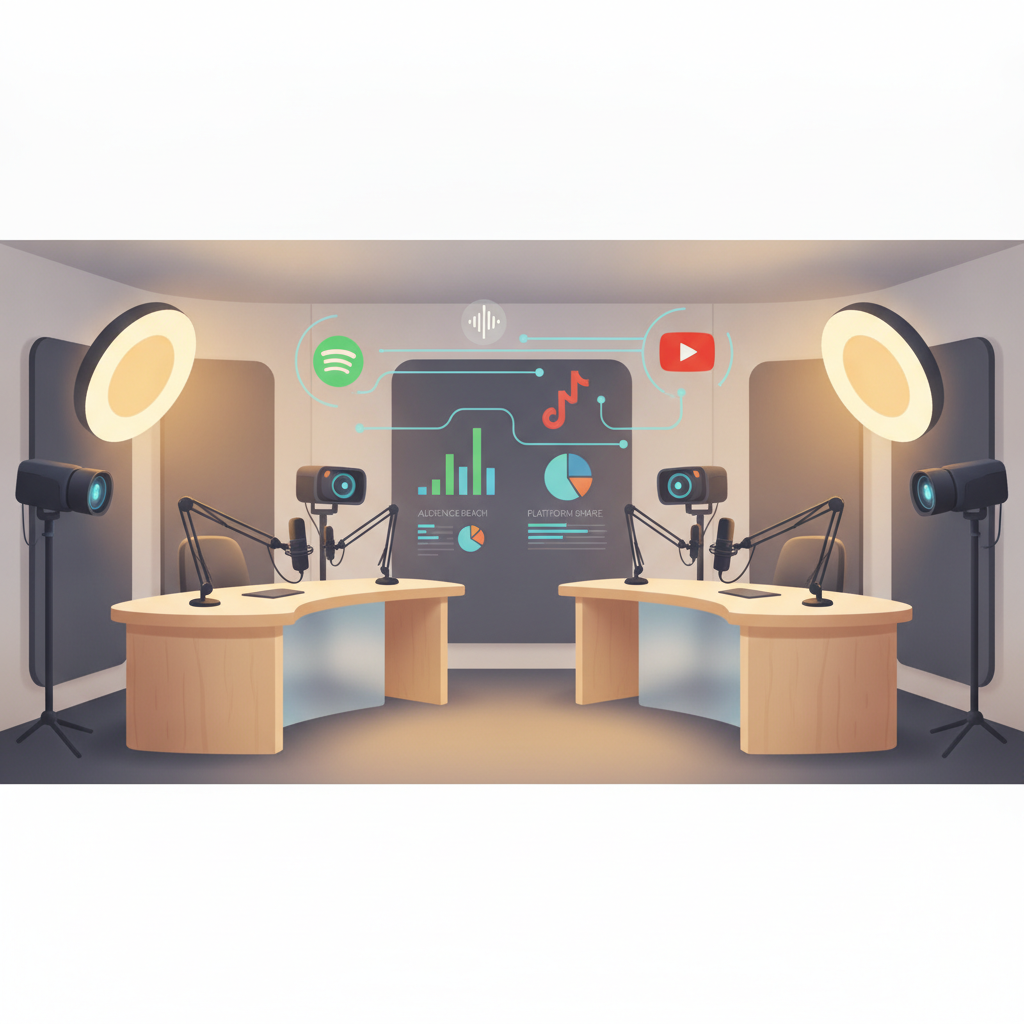
Joe Rogan's podcast operation isn't just the most listened to show in the world. It's a case study in how creators can extract maximum value from their audience by refusing to be locked into a single distribution platform. Forbes reports Rogan earned $82 million in 2026, leading all podcasters globally. The operational lesson isn't about his interview style or guest selection. It's about how he structured deals, distributed content, and monetized attention across multiple surfaces simultaneously.
The Spotify Deal Structure: Licensing, Not Exclusivity
In 2020, Rogan signed what was widely reported as a major deal with Spotify. But the 2024 renewal fundamentally changed the model. Spotify kept advertising rights while allowing the show to distribute across competing platforms. This is not an exclusive content play. It's a licensing arrangement where Spotify pays for the right to sell ads against Rogan's audience, but Rogan retains distribution freedom.
Spotify offsets its licensing costs by monetizing Rogan's multiplatform reach. Rogan maintains his YouTube presence (where the top 10 episodes account for 430 million views), his TikTok clip economy, and his direct relationship with listeners. The platform gets ad inventory. The creator keeps audience ownership.
For businesses building content operations, the takeaway is structural. If your content has proven demand, you can negotiate distribution deals that preserve your ability to reach audiences wherever they consume. Exclusivity is a trade, not a requirement.
Multiplatform Distribution as Revenue Diversification
The show generates over 2 million monthly downloads and integrates hundreds of premium sponsor deals. But the monetization happens across surfaces. Full episodes live on Spotify and YouTube. Clips circulate on TikTok, Instagram, and Twitter. Each surface serves a different function in the funnel.
Spotify and YouTube are the long form destinations where episodes can run for extended periods. These platforms capture the core audience and generate the bulk of ad revenue. Confirmed sponsors include AG1, Ketone IQ, BetterHelp, ZipRecruiter, and Visible, all of which buy multi episode integrations that Rogan reads live.
TikTok and Instagram are the discovery layer. Clips of Rogan discussing UFOs, gender roles, or LA wildfires go viral independently of the full episodes. These clips don't monetize directly, but they drive new listeners back to the long form content. The clip economy is user generated (fans and media outlets cut and post segments), which means Rogan gets free distribution and audience growth without additional production cost.
The operational model is: produce one long form asset, then let it fragment across platforms. Each fragment serves as a top of funnel acquisition tool. The full episode is where monetization happens.
Sponsor Integration and Direct Audience Relationships
Rogan's ad model is pre roll, mid roll, and host read integrations. He doesn't run programmatic display ads. Every sponsor is vetted, and Rogan delivers the pitch himself, often weaving it into the conversation. This maintains the conversational tone and keeps the audience from tuning out.
The show originally took sponsorships from Fleshlight in 2012, then moved upmarket as the audience grew. By 2026, the sponsor roster includes health supplements, hiring platforms, telecom providers, and mental health services. These are high ticket B2C and B2B categories where customer acquisition costs justify premium podcast rates.
The lesson for content businesses: direct sponsor relationships, where the host delivers the message, command higher CPMs than programmatic ads. But this only works if the audience trusts the host and the show has consistent volume. Rogan publishes multiple episodes per week, which gives sponsors frequency and allows them to test messaging over time.
The Clip Economy and Viral Reach
Rogan's most watched episode, featuring Elon Musk in 2018, has 69 million views on YouTube. But the viral reach extends far beyond YouTube. Clips of that episode, and others, circulate endlessly on social platforms. A single 90 second TikTok of Rogan reacting to a UFC fight or discussing a conspiracy theory can reach tens of millions of people who have never listened to a full episode.
This clip economy is largely organic. Fans, media outlets, and commentary channels cut segments and repost them. Rogan doesn't have to produce these clips himself. The sheer volume of content (over 2,500 episodes published since 2009) means there's always material to resurface. A recent clip of Rogan predicting LA wildfires went viral after the 2025 fires, driving new attention to the archive.
For businesses, the operational takeaway is: long form content creates a library that can be mined indefinitely. Every episode is a content asset that can be repackaged, re contextualized, and redistributed as news cycles or cultural moments make old material newly relevant.
Production Simplicity and Consistency
The show is recorded in a relaxed, conversational style with minimal editing. There are no elaborate graphics, no scripted segments, no complex post production. The format is: two people in a room, multiple cameras, long takes. This keeps production costs low and allows Rogan to publish multiple episodes per week without a large team.
The business advantage of simplicity is velocity. Rogan can book a guest, record, and publish quickly. There's no bottleneck in post production. The audience expects raw, unpolished conversation, which means the show can scale without adding layers of review or refinement.
For content operations, this is a reminder that production complexity is often a constraint, not a feature. If your audience values authenticity and frequency over polish, you can strip out the steps that slow you down.
What EditorDuel Readers Can Take From This
Rogan's operation demonstrates three principles that apply to any content business:
- Audience ownership beats platform exclusivity. If you build a loyal audience, you can negotiate deals that preserve your distribution freedom. Don't trade away your ability to reach people across platforms unless the check is large enough to justify it.
- Multiplatform distribution is a revenue multiplier. Produce one long form asset, then let it fragment across discovery surfaces. Clips drive new audience to the monetizable content. You don't have to produce the clips yourself if your audience is large enough to do it for you.
- Simplicity enables velocity. The more steps between recording and publishing, the fewer episodes you can ship. If your format allows it, strip out the post production complexity and focus on consistency.
Rogan's $82 million annual earnings aren't the result of a single viral hit. They're the output of a system that prioritizes volume, distribution flexibility, and direct sponsor relationships. The format is replicable. The guest list is not. But the operational structure, the multiplatform strategy, and the emphasis on audience ownership are lessons any content business can apply.
Want to build content like this for your business? Post a competition on EditorDuel and get matched with editors who can deliver.