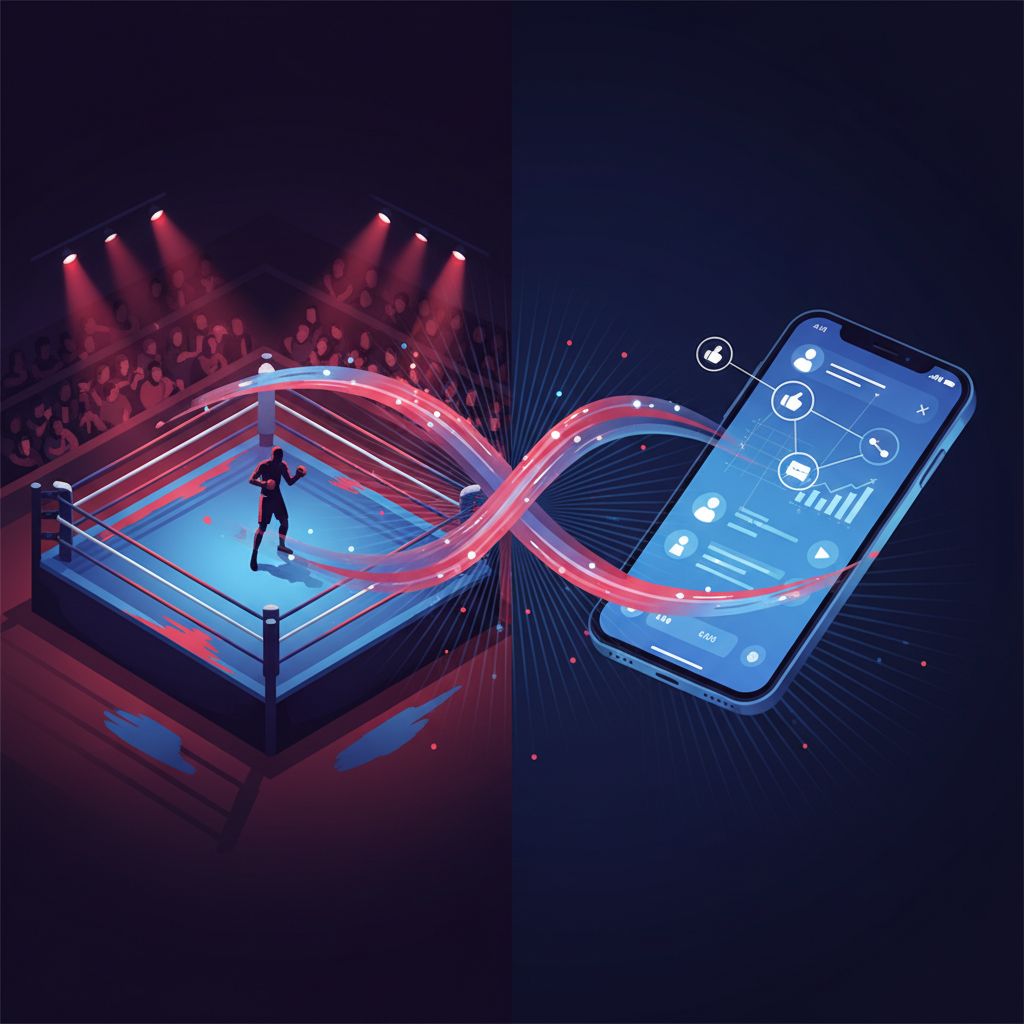
Jake Paul built Most Valuable Promotions (MVP) by applying creator economy principles to one of the oldest industries in sports: fight promotion. The company bypasses traditional middlemen, using Paul's massive digital footprint to negotiate unprecedented fighter pay and revitalize sports marketing. For businesses trying to understand how influencer-led enterprises can disrupt legacy markets, MVP offers a concrete case study in distribution-first business strategy.
The Core Asset: Owned Audience at Scale
Paul's promotional power stems from verifiable reach. A clip promoting a makeup palette racked up 25 million views. That clip demonstrates the fundamental advantage MVP brings to fight promotion: Paul can guarantee eyeballs without relying on cable broadcast deals or pay-per-view distributors. Traditional promoters spend millions buying media. Paul owns the media.
This owned distribution became the foundation for MVP's business model. Rather than paying networks to carry fights, Paul negotiated from a position of strength. Following successful viewership for its first MMA event on Netflix, MVP Promotions is looking to do more. The Netflix deal represents a reversal of the traditional power structure: the platform came to the promoter, not the other way around.
Strategic Partnership: Combining Creator Reach with Industry Expertise
The promotional power of Paul combined with the business acumen of Bidarian, who previously served as the chief financial officer and chief strategy officer at the UFC, has created a tremendous opportunity for MVP to carve out a decent chunk in the MMA landscape. This partnership structure is critical. Paul provides distribution and brand heat. Bidarian provides operational knowledge of fighter contracts, venue negotiations, and regulatory compliance.
The division of labor mirrors successful creator-led businesses in other verticals: the creator handles audience and marketing, experienced operators handle logistics and finance. Paul does not need to understand fight purses or athletic commission rules. He needs to understand what content moves his audience from scroll to purchase.
Monetization Model: Multiple Revenue Streams Beyond Gate Sales
MVP does not rely solely on ticket sales or broadcast rights. Paul partners with brands not just because he loves their products, but for the freedom they give him as a creator. Sponsorship integration is native to the content ecosystem Paul came from. Every fight card becomes an opportunity for brand partnerships, product placements, and content deals that extend beyond the event itself.
This integrated approach allows for rapid brand building using the promotional apparatus Paul already controls. When the promotional channels and product launch happen under one roof, execution velocity increases substantially.
Additionally, Betr, the Jake Paul-backed app, represents another revenue layer. By launching adjacent products in sports betting and prediction markets, MVP creates a flywheel: fight promotion drives app downloads, app engagement drives fight viewership, both generate data and revenue.
Distribution Playbook: Owned Channels, Earned Media, and Platform Partnerships
Paul's background on Vine, Disney Channel's Bizaardvark, and YouTube taught him how to generate attention across platforms. His early content, including viral moments and deliberately provocative videos, established a pattern that continues in his promotional work today.
This approach translates directly to fight promotion. Every press conference, weigh-in, and social media exchange is designed to generate clips. Those clips circulate on TikTok, Instagram, Twitter, and YouTube without paid media spend. Traditional promoters pay for billboards and TV spots. Paul gets millions of impressions by saying something inflammatory in a 15-second video.
The Netflix partnership extends this logic to premium platforms. MVP's first MMA event on Netflix demonstrated that Paul's audience will follow him to new distribution channels. The event faced mixed reception, with the crowd loudly booing MVP promoter Jake Paul at his own event, but the viewership numbers justified continued partnership discussions.
Operational Risk: Regulatory Scrutiny and Reputational Volatility
MVP operates in a regulatory environment that has already scrutinized Paul's business practices. In March 2023, Paul was among eight celebrities charged by the U.S. Securities and Exchange Commission with violating investor protection laws by promoting cryptocurrencies without disclosing that they had been sponsored to do so. This history creates ongoing compliance risk for any Paul-led venture.
Additionally, Paul's personal brand is volatile. His content history includes cringeworthy moments and apology videos that periodically resurface. For MVP, this volatility is manageable as long as attention remains high. The business model depends on reach, not likability. Negative attention still drives viewership.
What EditorDuel Readers Can Take from This
MVP's structure offers three lessons for businesses building content-driven operations:
Owned distribution beats rented distribution. Paul does not pay platforms to reach his audience. He built the audience first, then monetized it through multiple products. Businesses investing in content should prioritize owned channels (email lists, YouTube subscribers, podcast audiences) over rented reach (paid ads, algorithm-dependent social posts).
Pair creator talent with operational expertise. Paul's partnership with Bidarian is the key to MVP's credibility. Creators provide reach and brand heat. Operators provide structure and execution. Neither succeeds alone in complex industries.
Design for clip velocity, not just long-form content. Every MVP event generates dozens of short clips that circulate independently. Businesses producing long-form content (podcasts, webinars, product demos) should budget for clip production. The clips drive discovery. The long-form content drives conversion.
Want to build content like this for your business? Post a competition on EditorDuel and get matched with editors who can deliver.