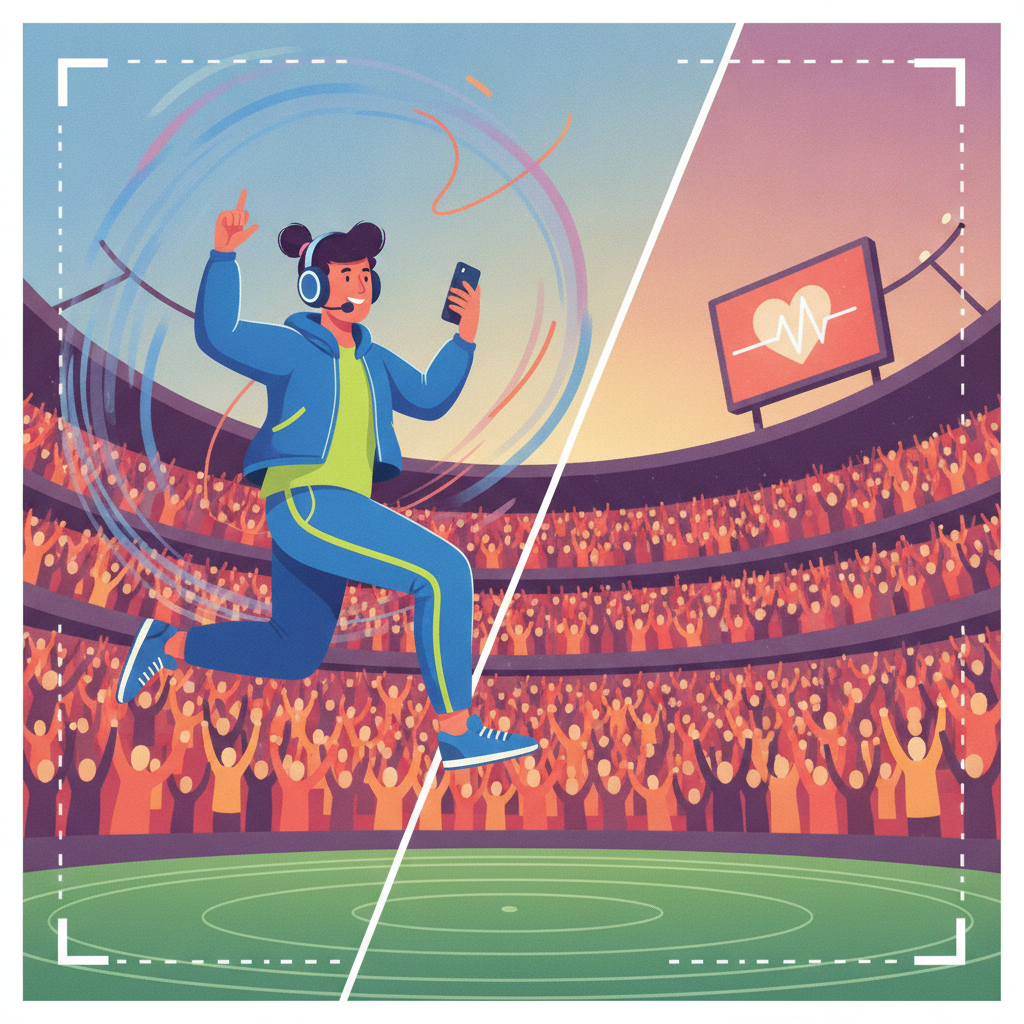
Darren Watkins Jr., known as IShowSpeed, operates one of the fastest growing content engines on YouTube through a format built on chaos, reaction, and velocity. His streams generate thousands of clips daily, each engineered for maximum shareability. The editing playbook behind Speed's operation is not subtle: fast cuts, zoomed reactions, sound spikes, and emotional peaks timed to the second. For businesses studying retention mechanics, Speed's work offers a masterclass in structuring content for the clip economy.
The Opening Hook: Immediate Energy and Clear Stakes
Speed's videos waste no time establishing what the viewer is about to see. In a World Cup short where he distracts Messi, the opening five seconds show Speed leaning over a barrier, shouting "Messi! Messi!" directly at the field. The hook is pure kinetic energy: the creator's exaggerated gestures, the crowd noise, and the direct address to a globally recognized athlete. There is no preamble, no context setup. The viewer knows within two seconds what the video is about and why they should care.
Another short opens with Speed pointing to his Portugal jersey and declaring, "This is how you start a wave at a Ronaldo Portugal game. Let's go!" The format is identical: state the goal, show the attempt, deliver the payoff. This structure appears across Speed's catalog. The first three seconds either show Speed mid-reaction or announce a specific challenge. No ambiguity, no slow build. The retention contract is signed immediately.
This approach aligns with Speed's broader strategy of using YouTube as the primary engine for ad revenue, sponsorship appeal, and traffic to music releases and merch drops. Every clip must work as a standalone unit that drives viewers back to the main channel or forward to a product.
Cut Rhythm: Fast Enough to Hold, Slow Enough to Land
Speed's editing team uses a variable cut rhythm that adapts to the emotional arc of each moment. In the Messi distraction video, the opening cuts hit every one to two seconds, building anticipation as Speed shouts at the field. When the goal happens, the edit slows: a quick cut to the field (under one second), then a sustained five second reaction shot of Speed's face, followed by a three second close up. The rhythm is not random. Fast cuts build tension, slower cuts let the payoff land.
The wave video uses a different pattern: a three second intro, a 15 second wide shot showing the wave spreading through the stadium, then shorter cuts for Speed's celebration. The longest take in the video is the payoff moment, the visual proof that the wave worked. The editing does not chop that moment into pieces. It lets the viewer experience the success in real time, then cuts back to Speed's reaction.
This is not the relentless one second cut rhythm of some YouTube Shorts creators. Speed's team understands that reaction moments need space to register. The fast cuts create urgency, the slower cuts create satisfaction. The balance keeps the average view duration high without exhausting the viewer.
Sound Design and Reaction Amplification
Speed's videos use sound as a structural element, not just atmosphere. In the Messi clip, the audio mix prioritizes Speed's shouts and the crowd roar. When the goal happens, there is a clear audio peak: the crowd noise spikes, Speed's voice hits maximum volume, and the mix emphasizes the chaos. The sound design tells the viewer when to pay attention.
A longer analysis video about Speed demonstrates how his team layers sound effects over reaction clips: comedic thuds, exaggerated "wah wah wah" disappointment sounds, and audio stings that punctuate punchlines. These are not accidental. The sound design creates emotional cues that guide the viewer through the narrative. When Speed's face contorts in shock, the audio reinforces the reaction with a sound effect that makes the moment more shareable, more memeable, more likely to be clipped and reposted.
This approach extends to Speed's IRL travel streams, which generate additional revenue through sponsorship agreements, livestream monetization, and exclusive content. The sound mix in those streams is designed to be clippable. Every scream, every reaction, every moment of chaos is captured with audio clarity that makes it easy for fan editors to extract and repost.
Multiple Angles and Perspective Shifts
The Messi video uses at least two camera angles: one from behind Speed looking at the field, another from the side capturing his face and body language. The edit cuts between these perspectives to show both what Speed is reacting to and how he is reacting. This is basic multi-cam coverage, but it is executed with precision. The viewer never loses spatial orientation. The cut from Speed's face to the field and back to Speed happens in under three seconds, but the geography is always clear.
The wave video uses the same technique: close up on Speed, wide shot of the stadium, back to Speed. The wide shot functions as B-roll, showing the result of Speed's action. The close up keeps the viewer anchored to Speed's emotional journey. The two angles work together to create a complete narrative in under 30 seconds.
This multi-angle approach is not expensive to execute. Speed's team films with multiple phones or cameras during IRL streams, then selects the best angles in post. The result is a video that feels more produced than a single locked-off shot, but does not require a full production crew.
The Payoff: Exaggerated Emotion and Conclusive Lines
Every Speed video ends with a clear emotional resolution. The Messi clip concludes with Speed smiling and saying, "It worked!" The wave video ends with Speed shouting "Siuu!" and high-fiving someone off camera. These are not ambiguous endings. The viewer knows the challenge succeeded, the reaction was delivered, the loop is closed.
This structure is critical for Speed's clip economy. His team leans on fast cuts, zooms, and meme inserts that translate live chaos into compact, replayable clips. A clip with a clear payoff is more likely to be shared, more likely to be edited into compilations, more likely to drive traffic back to the main channel. Speed's exaggerated facial expressions and conclusive one-liners make every clip self-contained.
Speed's income model depends on this virality: he earns around $2.2 million per year from YouTube ads, plus revenue from tips, donations, sponsorships, and music streams. Every clip that goes viral increases ad impressions, drives sponsorship value, and funnels viewers to his merch and music. The editing is not just about retention. It is about creating assets that multiply across platforms.
What EditorDuel Readers Can Take From This
Speed's playbook is not about expensive gear or complex effects. It is about understanding how clips travel. Businesses producing content for social platforms can apply these mechanics directly:
Open with clear stakes. State what the video is about in the first three seconds. No slow builds, no mystery. The viewer should know why they are watching before the five second mark.
Use variable cut rhythm. Fast cuts build tension, slower cuts let payoffs land. Do not chop every moment into one second pieces. Let the emotional peaks breathe.
Design sound for shareability. Audio spikes, sound effects, and clear dialogue make clips easier to extract and repost. If your content depends on virality, mix the audio so fan editors can clip it cleanly.
Shoot multi-angle when possible. Even basic two-angle coverage (subject and context) makes content feel more dynamic. This does not require a full crew. Two phones can deliver the coverage you need.
End with a clear resolution. Ambiguous endings do not get shared. Give the viewer a conclusive moment: a line, a reaction, a visual payoff that signals the clip is complete.
Speed's operation proves that retention mechanics can be systematized. The format is replicable, the structure is clear, and the results are measurable. Businesses do not need Speed's personality to apply his editing principles. They need to understand that every clip is a standalone product, and every product needs a hook, a build, and a payoff.
Want to build content like this for your business? Post a competition on EditorDuel and get matched with editors who can deliver.