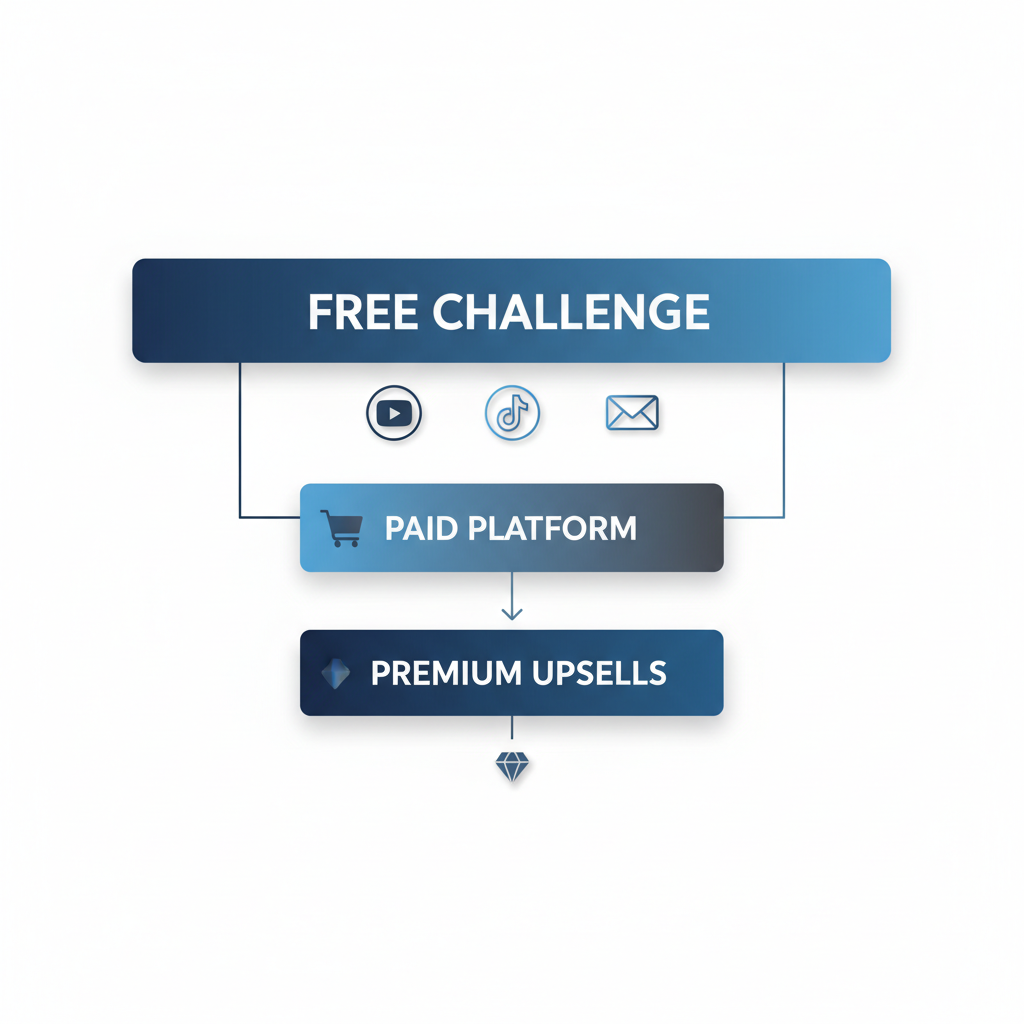
Iman Gadzhi operates one of the most studied course funnel businesses in the creator economy. At 23, he reportedly runs a substantial operation built on a tiered education model: free challenges that convert to paid programs, paid programs that upsell premium platforms, and a content machine that keeps prospects in the funnel for months. For businesses trying to understand how modern education funnels scale, Gadzhi's system offers a concrete case study in monetization architecture, retention mechanics, and upsell sequencing.
This is not an endorsement of the programs themselves. Customer reviews range from praising the marketing execution to criticizing the substance. What matters here is the operational model: how the funnel is structured, how content drives conversions, and what makes the system repeatable at scale.
The Multi-Tier Funnel Architecture
Gadzhi's business runs on a classic value ladder, but executed with precision. The entry point is typically a free challenge, often marketed as a multi-day intensive. According to user reports, these challenges deliver roughly 20 hours of content spread across several days, structured to build momentum toward a paid offer. The paid offer is usually access to a platform called Monetise, priced around $2,000.
The funnel does not stop there. Inside the paid platform, users encounter additional upsells for AI tools, advanced modules, and consulting access. One participant described it as "every day felt like a lead up to selling more of his AI programs, platforms and upsells." From a conversion standpoint, this is intentional: each tier qualifies buyers for the next, and the daily cadence keeps engagement high during the critical decision window.
The challenge format itself is a retention tool. By spreading content over multiple days rather than releasing it all at once, Gadzhi's team maintains control over pacing and can deploy real-time scarcity tactics (countdown timers, limited bonuses, live Q&A sessions). Some observers note that the $2K upsell push may impact retention for some cohorts, but live replays and evergreen funnels allow the system to run continuously without requiring Gadzhi's direct involvement in every launch.
Content Velocity and Platform Distribution
Gadzhi's content operation feeds the funnel. He maintains a YouTube presence, TikTok distribution, and podcast appearances that serve as top-of-funnel awareness. Job postings for editors specifically request "high retention YouTube video editor (Iman Gadzhi style)," indicating a defined editorial standard that the team replicates across hires. The style is recognizable enough that TikTok tutorials teach creators how to replicate it, and After Effects breakdowns circulate explaining his background compositing techniques.
The content itself is designed for algorithmic performance. Titles and thumbnails promise specific financial outcomes ("$373/day," "$15K monthly profit at 17"), and the videos are structured to hold attention through the critical first 30 seconds. TikTok clips referencing his work often feature motivational editing (slowed music, text overlays, wealth signaling), which extends his reach beyond his owned channels into the remix economy.
This distributed content strategy serves two purposes: it builds brand recognition (making paid offers feel less risky), and it segments audiences by intent. Someone who watches a 60-second TikTok motivational clip is in a different buying stage than someone who sits through a 45-minute YouTube breakdown of his agency model. The funnel accommodates both, moving each cohort through sequenced touchpoints until they convert or churn.
Monetization Timing and Metrics Tracking
Gadzhi's programs emphasize implementation timelines and metric tracking, which also function as retention mechanisms. Course materials reportedly state that "monetization and sales tend to accelerate after applying the proven funnel strategies taught in the course, usually around the 60 to 90 day mark." This framing does two things: it sets a concrete expectation window (reducing early refund requests), and it keeps students engaged long enough to attribute any success to the program.
The emphasis on "consistent implementation and tracking key metrics" is operationally smart. By teaching students to monitor specific KPIs (email open rates, landing page conversions, upsell acceptance rates), the program creates a feedback loop where students feel they are making progress even before revenue materializes. Case studies shared in promotional materials describe outcomes like "expanded her followers from 500 to 15,000, securing sponsored collaborations that paid her enough to replace her part-time income," which serve as social proof for the next cohort.
The 60 to 90 day window also aligns with typical payment processor chargeback windows, meaning most students pass the refund eligibility period before the promised monetization timeline expires. Whether intentional or not, this timing reduces financial risk for the business while maximizing lifetime customer value.
Team Structure and Delegation
Gadzhi's operation relies on delegation. Public content shows him working with assistants, and job listings for editors indicate he hires external talent rather than editing in-house. This allows him to focus on high-leverage activities (appearing in content, designing offers, managing partnerships) while the production and delivery infrastructure runs independently.
The editorial style he has developed is replicable enough that freelancers can execute it without his direct oversight. This is critical for scale: if every video required his personal editing input, content velocity would bottleneck. Instead, he has systematized a look (specific background treatments, motion graphics, pacing) that editors can reproduce, maintaining brand consistency across his content output.
What EditorDuel Readers Can Take From This
Gadzhi's funnel architecture offers several lessons for businesses building education or service offerings:
Tier your offers by commitment level. Free challenges lower the barrier to entry and allow you to demonstrate value before asking for payment. Paid platforms at the $2K price point filter for serious buyers. Additional upsells inside the platform maximize revenue per customer without requiring new traffic.
Use time-gated content to control pacing. Releasing challenge content over multiple days keeps engagement high and allows you to deploy scarcity tactics at optimal moments. This structure also reduces overwhelm and increases completion rates compared to all-at-once delivery.
Systematize your editorial style. If your content has a recognizable look, document it and hire editors who can replicate it. This allows you to scale production without becoming the bottleneck. The more repeatable your style, the faster you can produce content and the more consistent your brand presence becomes.
Set clear monetization timelines. Telling customers when to expect results (60 to 90 days, in Gadzhi's case) manages expectations and reduces early churn. Pair this with metric tracking so customers feel progress even before revenue hits.
Distribute content across platforms with different intent signals. TikTok clips build awareness. YouTube long-form builds authority. Email sequences convert. Each platform serves a different stage of the funnel, and the best systems move prospects seamlessly between them.
Want to build content like this for your business? Post a competition on EditorDuel and get matched with editors who can deliver.