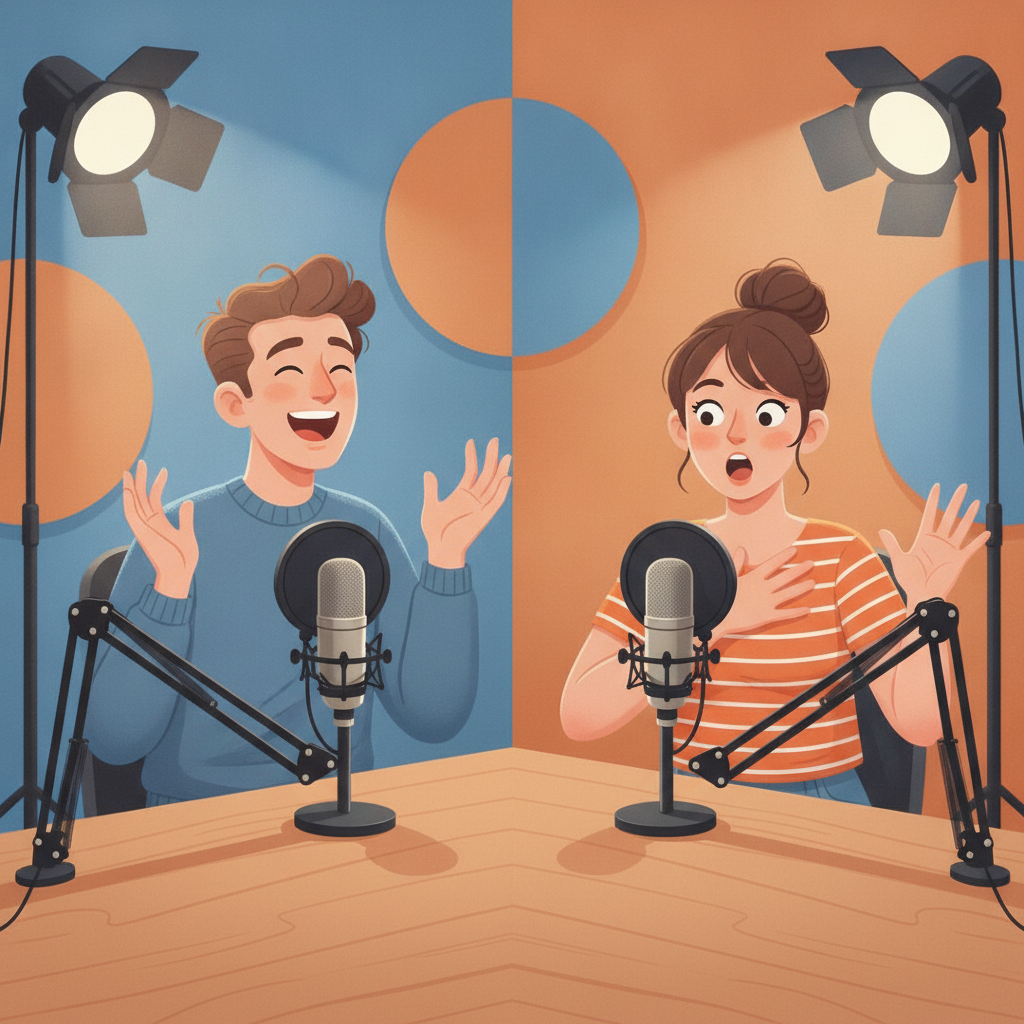
Bobby Lee and Andrew Santino's Bad Friends podcast consistently generates strong viewership on YouTube, outperforming most scripted comedy content. The show operates as a controlled chaos machine, where seemingly improvised banter follows a disciplined structural formula that maximizes clip potential and watch time. For businesses building video content, Bad Friends reveals how personality-driven formats can scale when editors understand the difference between raw conversation and engineered retention.
The Cold Open Hook: Surprise as System
Bad Friends episodes open with manufactured surprise. In a recent upload, the first five seconds deliver a loud, unexpected "MAAAOOO!" from one host, hands thrown up, followed by a guest entering frame from the left. The other host reacts with visible shock and laughter. This is not accidental. The format consistently uses sudden guest entrances, unexpected sound effects, or physical comedy in the opening beat to grab attention before the viewer can assess whether to click away. The energy peak happens in seconds zero to ten, then the episode settles into its narrative rhythm. Businesses often bury their hook 30 seconds in, after logos and intros. Bad Friends proves the first moment must deliver immediate payoff.
Medium Cut Rhythm with Reaction Shot Density
The editing operates at a medium pace, averaging one to three seconds per shot, with frequent jump cuts to tighten dialogue and remove dead air. What separates Bad Friends from slower podcast formats is reaction shot density. During any punchline or surprising statement, the editor cuts to the other host's face, capturing genuine laughter or disbelief. This creates a laugh track effect without adding artificial audio. The viewer watches two people react to each other, not just one person talking. When Bobby Lee tells a story about being too afraid to speak to Eddie Murphy at a brunch, the editor cuts between Bobby's animated storytelling and Andrew's skeptical facial expressions every two to three seconds. The rhythm never lets the viewer zone out because the frame constantly shifts between speaker and reactor.
Visual Evidence as Narrative Payoff
Bad Friends frequently integrates photos, videos, or screenshots into episodes, treating them as narrative payoffs rather than supplemental B-roll. In the Eddie Murphy brunch story, the hosts discuss a group photo for 30 seconds before revealing it. When the image appears, the editor uses split screen layout, showing the photo prominently alongside smaller windows of the hosts' reactions. Then the editor zooms into specific details, highlighting one comedian blocking another's face or someone's miserable expression. A distinct sound effect (a "ding") punctuates the photo reveal, signaling to the viewer that this is the moment the setup was building toward. This technique transforms a static image into dynamic content. The lesson for businesses is that visual evidence (charts, before/after comparisons, product demos) should arrive as earned payoffs, not as background filler.
Comedic Storytelling with Structural Peaks
Bad Friends episodes follow a loose three-act structure within each segment. The hosts introduce a premise (a past event, a hypothetical scenario, a guest's background), build tension through banter and interruptions, then deliver a punchline or revelation. The Eddie Murphy story moves from setup ("there was a brunch at Ted Sarandos's house") to complication ("Tom Segura sabotaged the photo") to payoff (zooming into the photo evidence). Energy peaks occur at the payoff moments, marked by louder laughter, faster cuts, and visual emphasis. Between peaks, the hosts maintain engagement through conversational flow and smaller comedic beats. The structure is not rigid, but every segment has a discernible arc. Businesses producing interview or discussion content often let conversations meander without peaks. Bad Friends demonstrates that even unscripted formats need engineered climaxes.
The Clip Economy: Designing for Redistribution
Bad Friends generates secondary revenue and audience growth through clips. Each full episode spawns multiple shorter clips (three to eight minutes) that circulate on YouTube, TikTok, and Instagram. The editing style supports this economy. Stories are self-contained within segments, requiring minimal context to understand. The Doc Willis reunion clip works as a standalone piece because the surprise entrance and emotional payoff happen in the first minute. The hosts rarely reference previous episodes or inside jokes that would confuse new viewers. For businesses, this means structuring long-form content with modular segments that can be extracted and redistributed without losing coherence. Each segment should have its own hook, build, and payoff.
What EditorDuel Readers Can Take From This
Bad Friends proves that personality-driven content scales when structure supports spontaneity. The hosts appear to riff freely, but the editing enforces discipline: cold open surprises, reaction shot rhythm, visual evidence as payoff, and modular storytelling. Businesses building video podcasts, interview series, or panel discussions can apply these lessons immediately. Open with surprise or conflict in the first five seconds. Cut to reactions during every punchline or revelation. Treat visual evidence (data, demos, case studies) as earned payoffs, not background decoration. Structure each segment with a clear arc so clips can circulate independently. The goal is not to copy Bad Friends' comedic tone, but to adopt its retention mechanics. Viewers stay when every minute delivers a reason to keep watching.
Want to build content like this for your business? Post a competition on EditorDuel and get matched with editors who can deliver.