Andrew Schulz's Flagrant podcast doesn't look like most podcasts. Where competitors film static two-shots and call it a day, Schulz's team engineered a visual format that behaves more like a documentary than a conversation show. The result is a retention engine that keeps viewers locked in through 90-minute episodes, pulling tens of thousands monthly through Patreon on top of YouTube ad revenue.
The operational insight worth studying: Schulz treats every episode as a multi-camera production with a post team ready to inject visual proof the moment a story demands it. This isn't accidental, it's a format convention that solves the fundamental problem of long-form video podcasts: how do you hold attention when two people are just talking?
The Quad-Split Screen as Narrative Infrastructure
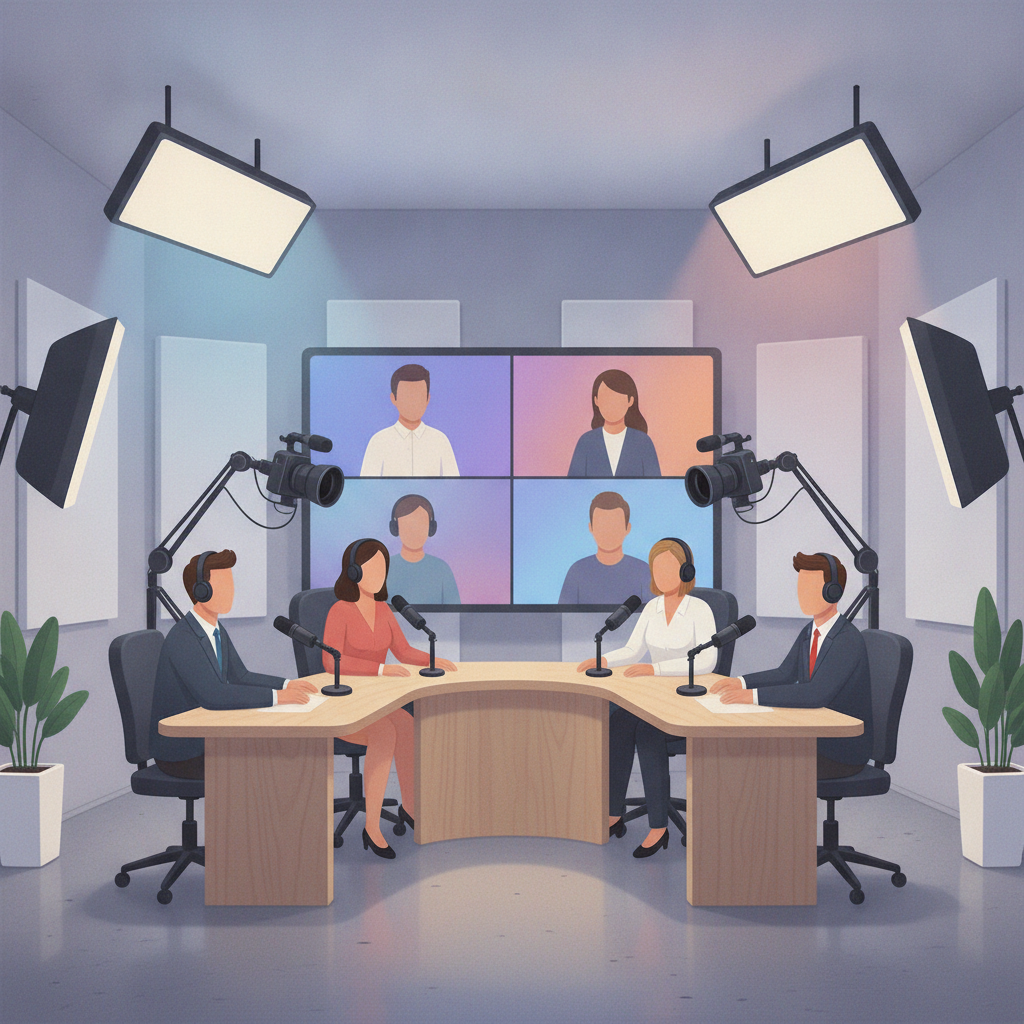
In a recent episode with Forrest Galante discussing Vantara, the format mechanics become visible. For the first 70 seconds, the edit alternates between two speakers every 3 to 5 seconds. Standard podcast cutting, then at 1:19, the frame splits into four quadrants. Top left and top right hold the two primary speakers. Bottom left and bottom right reveal two co-hosts who've been listening silently.
This isn't just a layout choice, the quad-split creates real estate for a secondary visual layer without abandoning the human reactions that make podcasts work. The bottom two quadrants immediately fill with rapid-fire B-roll: elephants receiving care, handlers working, facility shots. The B-roll cuts every 1 to 2 seconds while the speakers remain visible above.
The timing matters. Schulz introduces the topic ("Vantara, this facility in India") and lets the guest build narrative tension for 70 seconds before deploying visual evidence. By the time viewers see the elephants, they've been primed to care. The B-roll doesn't interrupt the conversation, it validates it in real time.
B-Roll as Emotional Proof, Not Decoration
Most podcasts that use B-roll treat it like garnish: a few generic shots to break up talking heads. Flagrant's approach is surgical. The B-roll arrives at the moment a story becomes difficult to believe or visualize. In the Vantara segment, Galante describes elephants reacting emotionally to chains after years of captivity. The edit immediately cuts to footage of exactly that: elephants recoiling, handlers responding, close-ups of the animals' eyes.
At 1:45, a text overlay identifies "Dr. Niraj Devidas Duhe, Veterinarian" over the B-roll. The production team isn't just pulling stock footage, they're sourcing specific, credentialed material that matches the narrative beat by beat. This level of visual specificity transforms a podcast into something closer to a mini-documentary embedded inside a conversation.
The sound design supports this. Ambient audio from the B-roll (elephant vocalizations, environmental noise) layers under the dialogue without overpowering it. Viewers get sensory proof while the speakers maintain narrative control.
Retention Through Pacing Shifts
The format works because it engineers a pacing shift exactly when long-form content starts to sag. Conversational podcasts lose energy around the 60 to 90 second mark of any single topic. Attention drifts, Flagrant's solution: maintain the conversation but accelerate the visual layer.
When the quad-split activates and B-roll starts cutting every 1 to 2 seconds, the viewer's brain registers movement and novelty without requiring a topic change. The speakers keep talking, the co-hosts keep reacting. But the bottom half of the screen becomes a fast-paced visual argument that re-hooks attention.
This isn't sustainable for an entire episode. The team deploys it strategically during high-value stories, then collapses back to simpler cuts. The variance itself creates rhythm, viewers learn to anticipate these moments, which trains them to stay engaged through slower sections.
The Operational Requirements Behind the Format
This production model demands infrastructure most podcasters don't build: Flagrant shoots with at least four cameras simultaneously: two tight on primary speakers, two wide on co-hosts. That's four video feeds to sync, store, and edit. The post team needs access to licensed or sourced B-roll that matches whatever topics come up in a 90-minute conversation. That means either a researcher pre-pulling material based on a guest's likely topics, or a fast turnaround editor who can source and clear footage during post.
The Patreon revenue model helps fund this. Flagrant Media reportedly pulls tens of thousands monthly from subscriber supporters, which finances a production budget that exceeds typical podcast economics. Schulz isn't just a host, he's running a media company with dedicated shooters, editors, and researchers.
The format also requires hosts who understand they're performing for a visual medium. Schulz and his co-hosts react visibly, hold eye contact with cameras, and structure stories with clear setup-payoff beats that editors can amplify. The quad-split only works if all four people on screen stay engaged. One checked-out co-host kills the format.
What EditorDuel Readers Can Take From This
If you're producing long-form video content (podcasts, interviews, panel discussions, webinars), the Flagrant model offers three actionable lessons:
- Build visual variance into your format from the start. Don't rely on a single static frame for 60 minutes. Design moments where the layout or visual layer shifts, even if your content is conversational. This could be as simple as picture-in-picture B-roll, split screens during key stories, or cutting to a secondary angle during high-energy exchanges.
- Deploy B-roll as narrative proof, not filler. If your guest tells a story about a specific place, product, or event, show it the moment the story peaks. This requires pre-production research or a post team with fast sourcing skills, but the retention payoff is measurable. Viewers stay longer when abstract claims become concrete images.
- Shoot multi-camera even if you edit single-camera most of the time. Flagrant's quad-split only works because they capture four feeds simultaneously. You don't need to use all angles in every episode, but having them available gives your editor the flexibility to create pacing shifts when a story demands it. Two cameras minimum: one tight, one wide. Four cameras unlocks the split-screen toolkit.
The format isn't cheap, but it's scalable. Start with two cameras and occasional B-roll during your strongest segments. Test whether those episodes hold retention better than static cuts. If they do, invest in a third camera and a researcher who can pre-source visuals. Build the infrastructure incrementally as your audience and revenue grow.
Want to build content like this for your business? Post a competition on EditorDuel and get matched with editors who can deliver.