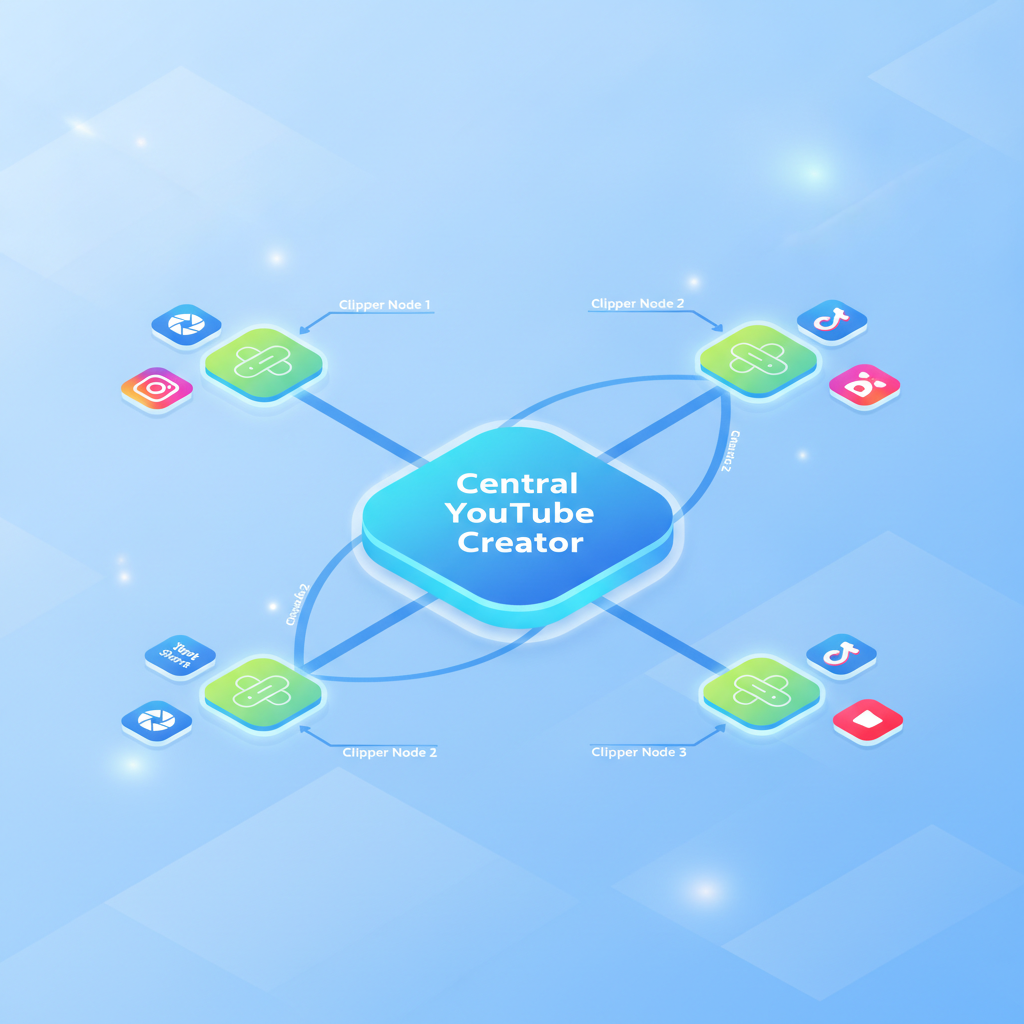
Eric Decker (Airrack) runs a 14M+ subscriber YouTube channel built on MrBeast-style challenge videos and viral stunts. But the operational story worth studying is not the main channel uploads. It is the distributed clipping infrastructure he built to compete for attention across platforms without becoming a livestreamer.
In 2024, Airrack launched Clip Farm in partnership with Whop, a platform that lets external clippers take viral moments from his content, cut short-form clips, and post them across TikTok, Instagram, and YouTube Shorts. Clippers reportedly earn money per view, with payouts structured around performance milestones. The model inverts the traditional creator workflow: instead of hiring in-house editors to repurpose long-form into short-form, Airrack outsources the entire short-form distribution layer to a crowd of independent clippers who are rewarded only if they achieve the desired sentiment and reach.
Why a Challenge Creator Needs a Clipper Economy
Airrack's core format is challenge and stunt content. His series includes attempts to hide in plain sight during live broadcasts and recorded videos, sneaking into streams hosted by Kai Cenat and the FaZe Clan house, and blending into productions by MrBeast and Ryan Trahan. In one recent short, he hid inside a fake armchair to infiltrate a mansion, revealing himself to a shocked group. The video opens with a jarring "Kill yourself" line, immediately followed by the chair being pushed into frame and Airrack emerging. The cut rhythm is under one second per shot, with large white text overlays highlighting key phrases ("OH MY GOD," "NO IT") and jump cuts maintaining relentless pacing. The structure follows a clean hook, setup, payoff arc: shocking opening, explanation of the prank premise, then the reveal and reactions.
This format generates high-energy moments that clip well, but challenge videos do not produce the continuous stream of reactive content that livestreamers generate. Kai Cenat and IShowSpeed can clip multiple moments from a single multi-hour stream. Airrack uploads scripted challenge videos on a less frequent cadence. The clipper economy solves the volume problem: it lets him compete for short-form reach without streaming.
How the Clip Farm Model Works
According to Airrack, clippers are only rewarded if they achieve the desired sentiment. Not all publicity is good publicity. The platform provides viral video moments, and clippers cut the best parts and post them across social media. The operational advantage is twofold: it scales content velocity beyond what an in-house team could produce, and it filters for quality through financial incentives. Only clips that hit view thresholds generate payouts, so clippers self-select for retention instincts.
The model also shifts risk. Traditional content operations pay editors upfront whether or not the content performs. Clip Farm pays clippers only after performance is proven. This lets Airrack test many clip variations across platforms without fixed labor costs. The clippers bear the risk of low performance, but they also capture upside if a clip goes viral.
Sponsors and the Content Flywheel
Airrack's business model layers brand deals on top of the clipper infrastructure. His sponsor roster includes Storyblocks, Musicbed, Epidemic Sound, and Sony, with sponsors providing free products for participants and larger-tier prizes. DraftKings runs an always-on sponsorship program with him, favoring integrated in-content reads over standalone ads. The clipper economy amplifies sponsor reach: every clip posted by an external clipper carries the same sponsor integrations as the original long-form video, multiplying impressions without additional media spend.
This creates a flywheel. Sponsors pay for integrated placements in long-form challenge videos. Clippers cut those videos into multiple short-form clips. Each clip redistributes the sponsor message to new audiences. Sponsors get more reach per dollar. Airrack gets paid upfront for the integration. Clippers get paid per view. The model aligns all three parties around virality.
Content Velocity Without Streaming
Airrack has stated that clipping lets creators compete for attention without straying from their craft, borrowing the strategy that grew IShowSpeed and Kai Cenat across platforms without having to become a livestreamer. This is the core operational insight: the clipper economy decouples content velocity from format. Livestreamers achieve high clip volume by streaming for hours. Challenge creators achieve high clip volume by outsourcing the clipping work to a distributed network.
The trade-off is control. In-house editors can be directed to emphasize specific moments or sponsor callouts. External clippers optimize for whatever drives views, which may or may not align with brand safety or narrative intent. The "desired sentiment" filter mitigates this, but it still requires post-hoc review rather than upfront direction.
What EditorDuel Readers Can Take From This
If you are producing long-form content and struggling to maintain short-form velocity, the clipper model offers a scalable alternative to hiring full-time editors. The key is structuring incentives around performance rather than hours worked. Pay clippers per view or per viral clip, not per hour of editing. This filters for retention instincts and scales without fixed labor costs.
If you are a brand buying creator integrations, negotiate for clipper amplification. Ask the creator to include your product in the source material that clippers will repurpose. This multiplies impressions without additional media spend.
If you are a content operation trying to compete with livestreamers for short-form reach, consider whether your long-form content generates enough high-energy moments to support a clipper economy. Challenge videos, interviews, and reaction content clip well. Explainer videos and tutorials do not. The format dictates whether the model works.
Want to build content like this for your business? Post a competition on EditorDuel and get matched with editors who can deliver.