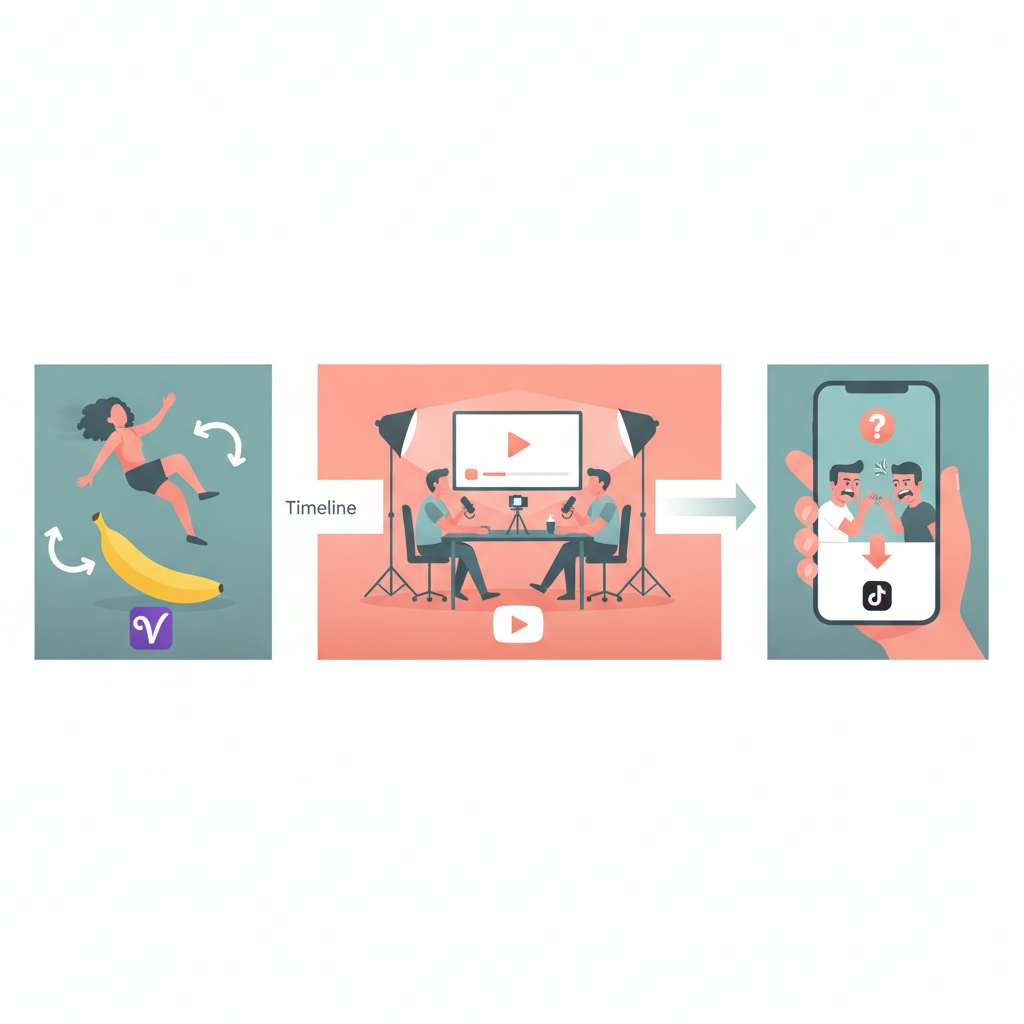
Hannah Stocking's content career spans three platform extinctions and two format revolutions. She posted her first Vine in 2013 and built an audience with fast, physical six second sketches. When Vine closed, she migrated to YouTube with Shots Studios for longer sketches that regularly pass millions of views. By 2026, she's starring in vertical video microdramas co-produced with TikTok, holding equity positions rather than flat talent fees. The through line is format fluency: her ability to identify emerging content containers, understand their structural constraints, and produce repeatable work that fits the feed.
For businesses trying to build durable content operations, Stocking's trajectory illustrates a critical principle: platform longevity comes from mastering format conventions, not chasing viral moments. Her 70M+ cross platform following exists because she rebuilt her production playbook three times without losing her comedic voice.
The Vine Foundation: Constraint as Creative Advantage
Vine's six second limit forced creators into extreme structural discipline. There was no room for setup, context, or slow builds. Stocking's early work leaned into physical comedy and sight gags that delivered punchlines in under four seconds, leaving two seconds for the loop to reset. This constraint trained her in comedic economy: every frame had to carry weight.
When Vine shut down in 2017, most Vine stars failed to translate. The creators who succeeded were those who understood that Vine had taught them compression, not just how to be funny in six seconds. Stocking's move to YouTube wasn't an expansion of runtime for its own sake. Her longer sketches maintained tight edit pacing and preserved the physical comedy vocabulary she'd developed in the Vine era.
YouTube and Shots Studios: Scaling Without Losing Speed
Stocking's YouTube work, produced under Shots Studios, represented a format shift but not a tonal one. Her sketches extended beyond Vine's six second constraint, but the edit rhythm stayed fast. Cuts still hit frequently. Setups remained visual first, dialogue second. The production value increased (better lighting, location diversity, guest appearances), but the core loop structure persisted: hook in the first three seconds, escalate through physical beats, land the punchline, end abruptly.
This approach aligned with YouTube's retention priorities. The platform rewards videos that hold viewers through the opening seconds and maintain watch time. Stocking's Vine trained instincts (front load the comedy, no dead air, loop compatible endings) mapped directly onto YouTube's algorithmic preferences. Her videos weren't optimized for YouTube; her format instincts were already pre adapted.
By 2018, she was also experimenting with educational hybrids. She launched The Science of Beauty on Instagram's IGTV platform, partnering with NASA to create science based videos. The format was different (explainer rather than sketch), but the production principles held: short segments, visual hooks, personality driven delivery. The content diversification mattered less than the format adaptability.
Brand Integration: Sponsored Content as Native Format
Stocking's brand work demonstrates format first thinking. Her commercial profile includes partnerships with Glossier and Dunkin', but these aren't traditional endorsements. The integrations appear as sponsored series, not one off posts. A Dunkin' campaign becomes a multi episode arc. A Glossier product launch gets woven into her existing sketch format.
This model works because Stocking treats brand deals as content opportunities, not interruptions. The sponsor gets native placement within her established comedic structure. The audience gets content that feels consistent with her non sponsored output. The result is repeat view behavior that sustains engagement across both organic and paid work.
For businesses evaluating creator partnerships, this is the key insight: the strongest integrations happen when the creator's format can absorb the brand message without structural disruption. Stocking's sketch comedy format is flexible enough to accommodate product placement, location partnerships, and co branded narratives because the format itself (physical comedy, tight pacing, visual gags) doesn't depend on being ad free.
The Microdrama Pivot: Equity Over Talent Fees
In 2026, Stocking entered a new format category: the vertical video microdrama. TikTok partnered with Made By Us Studios to co produce creator led micro series, including Player, a romantic revenge thriller starring Stocking. This wasn't a brand deal or a sponsored series. It was a multiyear slate deal where Stocking holds an equity position and executive producer credit.
Made By Us Studios positions creators as upstream IP partners who share long term monetization, not hired talent paid a flat fee and sent home. For a creator economy where most brand work ends when the campaign does, this represents a structural shift. Stocking isn't being paid to appear in someone else's content. She's building owned IP that can generate revenue across distribution windows, international licensing, and potential format adaptations.
The microdrama format itself is a return to constraint. Episodes are short form, vertical only, optimized for in feed consumption on TikTok. The narrative structure borrows from soap operas and telenovelas: cliffhanger endings, episodic arcs, character driven conflict. Stocking's Vine era training (deliver story beats in compressed time, end on a hook that drives the next watch) maps directly onto the microdrama format.
What EditorDuel Readers Can Take From This
Stocking's career offers three operational lessons for businesses building content teams:
First, format fluency beats platform loyalty. Stocking didn't try to keep Vine alive or force YouTube conventions onto TikTok. She identified the structural rules of each new format (six second loops, longer sketches, short episodic cliffhangers) and rebuilt her production process to match. Businesses should train editors and producers to recognize format constraints as creative parameters, not limitations.
Second, brand integrations work best when the content format can absorb them natively. Stocking's sponsored series succeed because her sketch comedy structure is flexible enough to accommodate product placement without feeling like an ad. If your content format requires structural disruption to include a sponsor, the format needs redesign, not better sales.
Third, owned IP and equity deals represent the next monetization layer beyond sponsorships. Stocking's move into microdramas with executive producer credits and long term rev share changes her relationship to the content. She's not a hired performer; she's a rights holder. Businesses working with creators should explore co ownership models where the creator's audience and production expertise translate into shared upside, not just project fees.
Build Content That Survives Platform Shifts
Hannah Stocking's 70M+ following exists because she rebuilt her format playbook three times without losing her comedic identity. From Vine's six second sketches to YouTube's longer form comedy to TikTok's microdrama slates, her work demonstrates that platform durability comes from mastering format conventions, not chasing viral moments.
Want to build content like this for your business? Post a competition on EditorDuel and get matched with editors who can deliver.