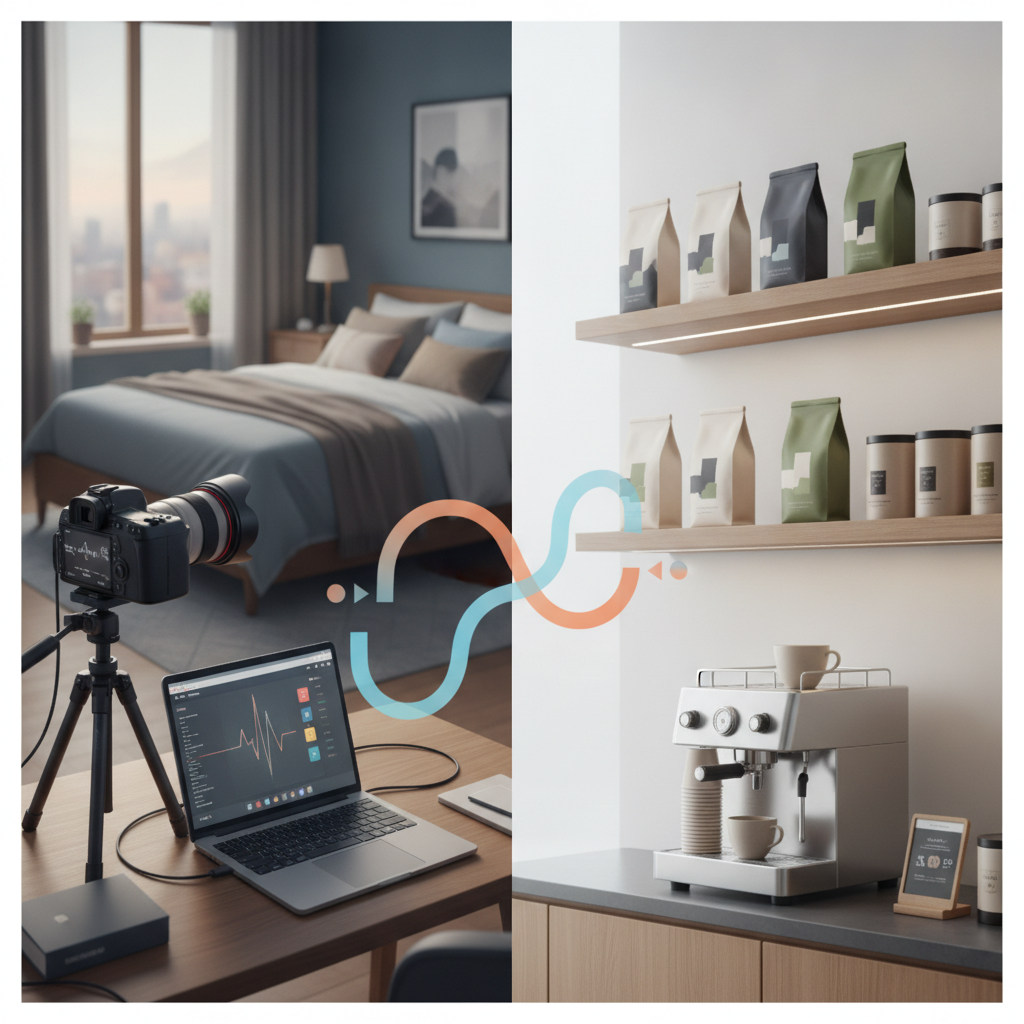
Emma Chamberlain did not scale through virality alone. She scaled through commerce. According to industry observers, she turned a vlog channel into a consumer brand built on storytelling, taste, and identity. The operational playbook is worth dissecting: Chamberlain used YouTube as a trust engine, not a revenue center, then monetized that trust through owned product lines and strategic brand partnerships. For businesses trying to understand how content converts to commerce, this is a textbook case.
The Content Foundation: Lo-Fi Editing as Differentiation
Chamberlain's early videos redefined vlog aesthetics. VidPros reports she used jump cuts, self-deprecating humor, and lo-fi editing to connect deeply with Gen Z viewers. The style was intentionally unpolished: visible mistakes, rambling monologues, abrupt transitions. This was not laziness. It was strategic authenticity. The editing communicated intimacy and relatability, lowering the production barrier between creator and audience. TikTok commentary highlights her use of camera movement and subtle effects, calling her "the queen of adding cool but subtle effects." The technical vocabulary was simple, but the emotional payoff was high. Viewers felt like they were watching a friend, not a performance.
The lo-fi approach also enabled velocity. Chamberlain could produce multiple videos per week without requiring a crew, studio, or post-production team. This frequency compounded her reach and normalized her presence in subscriber feeds. By the time she had over 12 million subscribers, the channel was a daily habit for millions of viewers.
Monetization Model: Lifestyle Commerce Over AdSense
Chamberlain did not rely on YouTube ad revenue. She built owned and co-branded product lines. VidPros notes she monetized through lifestyle commerce, launching Chamberlain Coffee as a direct-to-consumer brand. The coffee line was not a merch drop. It was a full consumer packaged goods business with retail distribution. Recent coverage confirms a Chamberlain Coffee collaboration with Target, positioning the brand alongside legacy CPG competitors. This is rare for creator-led businesses: most influencer products live exclusively online. Chamberlain secured shelf space in physical retail, which requires supply chain, packaging, and margin discipline that most creators never attempt.
Before coffee, Chamberlain tested brand partnerships and co-branded fashion. Wikipedia documents early deals with Dote (clothing, later severed due to controversy) and Hollister (2019 swim collection). She attended Paris Fashion Week in March 2019 through a YouTube co-sponsorship, signaling her pivot from pure content to lifestyle branding. CreatorDB lists confirmed partnerships with Morphe Cosmetics, Apple, GoPro, Urban Outfitters, and Dunkin' Donuts, spanning beauty, tech, fashion, and food. The portfolio is diversified, not niche-locked. Chamberlain positioned herself as a taste arbiter, not a category specialist.
Distribution Playbook: Cross-Platform Presence Without Dilution
Chamberlain maintained YouTube as her primary trust platform but expanded to Instagram and TikTok for discovery and brand reinforcement. CreatorDB notes her partnerships appeared across YouTube, TikTok, and Instagram, indicating coordinated multi-platform campaigns. She did not fragment her content. YouTube remained the long-form narrative hub. Instagram and TikTok served as highlight reels and cultural touchpoints (Met Gala coverage, fashion moments, coffee lifestyle shots). This structure allowed her to own the full funnel: TikTok for awareness, Instagram for aspiration, YouTube for trust, and Chamberlain Coffee for conversion.
The Met Gala became a recurring brand moment. TikTok edits celebrate her Met Gala appearances, which function as earned media for her lifestyle positioning. She did not pay for these moments. She was invited because her audience and aesthetic aligned with Vogue's Gen Z strategy. This is distribution efficiency: content that generates press coverage and social virality without paid amplification.
Team and Operations: From Solo Creator to Brand Infrastructure
Chamberlain started as a solo operator, editing videos in her bedroom. As the business scaled, she built infrastructure. Chamberlain Coffee required product development, manufacturing partnerships, logistics, and retail sales teams. TikTok business analysis discusses the brand's marketing strategy and business challenges, suggesting operational complexity beyond typical influencer ventures. The transition from content creator to CEO is non-trivial. Most creators who attempt it fail because they lack the appetite for supply chain management, margin optimization, and retail negotiations. Chamberlain committed to the operational grind.
She also maintained content output during this transition. References to her 2018 all-nighter vlogs and collaborations with the Dolan Twins show she sustained content velocity even as she scaled the business. This is rare. Most creators reduce content frequency as they build external ventures. Chamberlain kept both engines running, using content to fuel commerce and commerce to fund content.
What EditorDuel Readers Can Take From This
First, lo-fi editing can be a strategic advantage, not a budget constraint. Chamberlain's jump cuts and unpolished style differentiated her in a market saturated with overproduced vlogs. If your brand is targeting younger audiences, consider whether polish is helping or hurting relatability. Velocity and authenticity often outperform production value.
Second, content is a trust engine, not a revenue center. Chamberlain used YouTube to build a relationship, then monetized that relationship through owned products and strategic partnerships. If you are producing content purely for ad revenue or sponsorships, you are leaving the largest revenue opportunity on the table. Think about what product or service your audience would buy from you directly.
Third, cross-platform distribution requires coordination, not duplication. Chamberlain did not post the same content everywhere. She used each platform for a specific function in the funnel. YouTube for depth, Instagram for aspiration, TikTok for discovery. If your content strategy treats all platforms identically, you are wasting reach.
Fourth, scaling from creator to brand requires operational discipline. Chamberlain did not just slap her name on a product. She built a CPG business with retail distribution. This requires supply chain expertise, margin management, and long-term capital. If you want to build a creator-led brand, hire operators who understand manufacturing and logistics, not just marketing.
Want to build content like this for your business? Post a competition on EditorDuel and get matched with editors who can deliver.