Casey Neistat did not invent the vlog, but he built the editing grammar that every lifestyle creator now borrows from. His 534-day daily vlog run, which started in May 2015, established a visual language: tight jump cuts, kinetic camera movement, B-roll that never stops, and pacing that refuses to let the viewer's attention drift. For 534 consecutive days, Neistat uploaded videos that felt like controlled chaos, a style so distinct that job postings now ask for editors who can replicate it. Understanding how his editing works is understanding how modern YouTube vlogging works.
The Jump Cut as Structural Foundation
Neistat's editing removes every breath, every pause, every moment of dead air. In recent analysis of his work, the cut rhythm in his talking-head segments averages one to three seconds per shot in setup phases, then accelerates to under one second per cut during payoff sequences. This is not accidental. The jump cut serves three purposes: it compresses time, it maintains energy, and it signals authenticity. By keeping only the verbal peaks and cutting out filler, Neistat makes five minutes of real-time conversation fit into 90 seconds without losing narrative thread. The technique became so associated with his style that hiring managers now specifically request editors familiar with "Casey Neistat-style" pacing when posting vlog editor roles.
The rhythm is not random. In setup moments, cuts happen every two to three seconds, giving the viewer just enough time to absorb a complete thought. When the narrative accelerates, cuts tighten to under one second, creating urgency. In his documentary clips, the latter half shifts to rapid-fire cuts, showcasing humorous snippets and demonstrating how he uses cut velocity to control emotional tempo. Slower cuts for context, faster cuts for payoff. This is not just speed for speed's sake. It is rhythmic control.
B-Roll as Continuous Visual Narration
Neistat rarely lets the camera sit still on a single subject for more than a few seconds. His B-roll does not supplement the story, it IS the story. When he talks about running, the camera is mounted on his chest, bouncing with every stride. When he discusses a product, the B-roll shows his hands manipulating it from six different angles in ten seconds. In his work, the transition from talking head to B-roll happens seamlessly, with the documentary clips retaining their original audio and ambient sound, layering the visual proof directly over the verbal claim.
This B-roll philosophy has become so embedded in vlog conventions that guides on vlogging now treat it as foundational: "Add B-roll footage: Supplement your main shots with extra visuals to make stories dynamic." But Neistat goes further. His B-roll is not supplemental. It is the primary visual track. The talking head exists to stitch B-roll sequences together, not the other way around. He shoots everything, constantly, because he knows the edit will demand visual variety every three seconds.
The Hook: First Five Seconds as Commitment Device
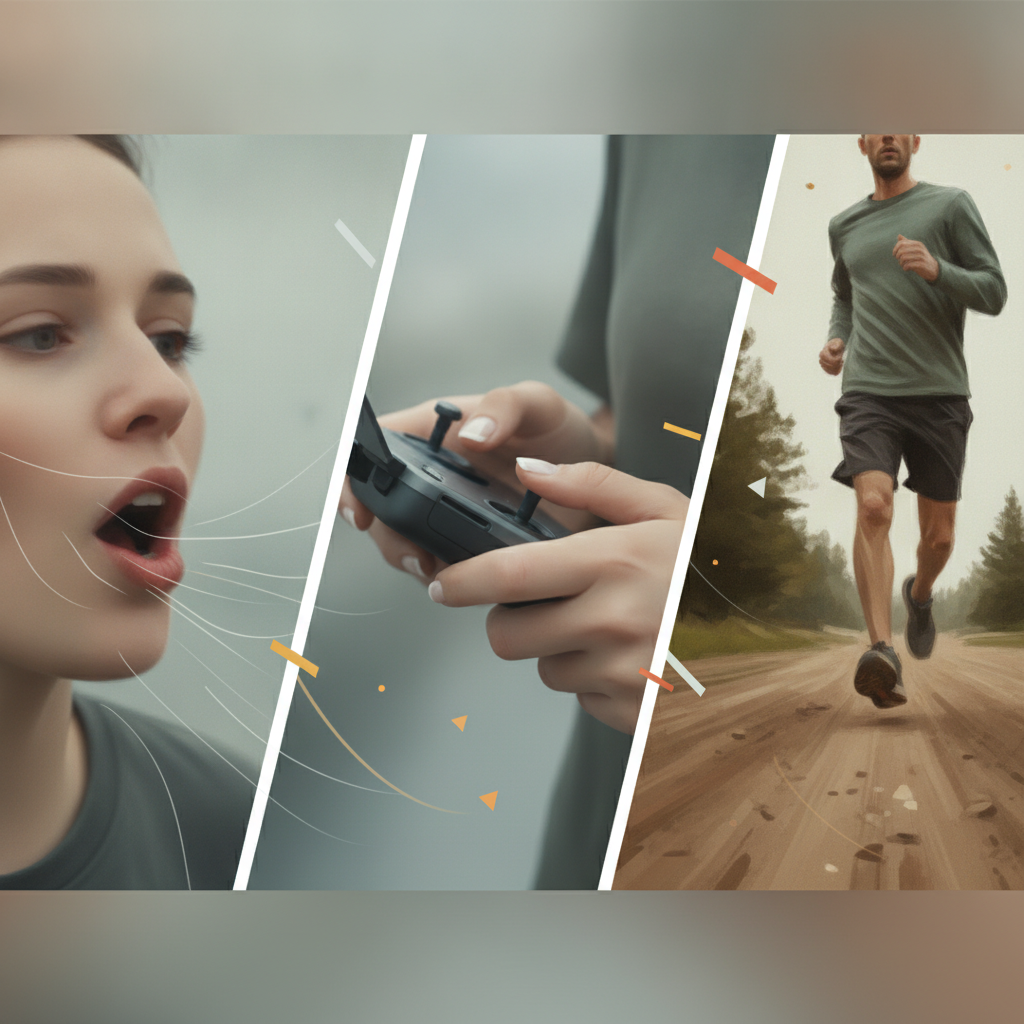
Neistat's openings do not ease the viewer in. In analyzed clips, the first five seconds deploy a three-panel split screen showing multiple speakers, with text overlays hitting every second: "HUGE FAN OF" at 0:00, "CASEY NEISTAT" at 0:01, "COMING" at 0:01, "BEGINNING AS WELL" at 0:02. This is not decoration. It is information density as retention mechanism. The viewer cannot look away because new visual or textual information arrives faster than they can process it.
Industry guidance now codifies this approach: "Keep intros short: Hook viewers in the first 5 to 10 seconds." For YouTube specifically, the recommendation is even tighter: "open with a 3-second hook shot. High contrast, tight framing, dynamic movement." Neistat's work demonstrates why. His openings use split screens, text overlays, and immediate narrative stakes to lock attention before the viewer's thumb can swipe.
Sound Design: Ambient Audio as Texture Layer
Neistat's audio is not clean. It is textured. In his clips, the talking head segments feature clear, direct voice audio, but the documentary B-roll retains original sound, including speech fragments and ambient noise. This layering makes the edit feel alive. You hear the city, the wind, the footsteps. The audio bed is never silent, never flat. Music enters and exits without fade, cutting hard to match visual beats. The result is a soundscape that feels like real life compressed, not like a studio production polished smooth.
This approach has become part of the vlog aesthetic. Creators now understand that overly clean audio can make a vlog feel sterile. Neistat proved that keeping ambient sound, even when it is messy, makes the viewer feel present in the moment rather than watching from a distance.
Color and Framing: Naturalistic Consistency
Neistat does not use heavy color grading. His work maintains naturalistic color across talking head and B-roll segments, with documentary clips retaining their original grading. This consistency is strategic. Heavy grading can make a vlog feel like a commercial. Naturalistic color makes it feel like a document. The framing is similarly utilitarian: tight on faces during dialogue, wide during action, always handheld, always slightly imperfect. The imperfection is the point. It signals that this is real, not scripted.
Branding experts now cite Neistat as a case study in visual consistency: "Casey Neistat built a visual style people associated with his content." That style is not about perfection. It is about recognizability. Within three seconds, a viewer knows they are watching a Neistat video because the color, framing, and cut rhythm are unmistakable.
What EditorDuel Readers Can Take From This
Neistat's editing is not magic. It is a system. Businesses producing vlogs, founder content, or behind-the-scenes series can apply these mechanics immediately. First, cut tighter. Most corporate video leaves pauses that kill pacing. Remove every breath that does not serve the narrative. Second, shoot more B-roll than you think you need. If your edit feels static, it is because you do not have enough visual coverage to cut every two seconds. Third, open with information density. Text overlays, split screens, immediate stakes. The first five seconds are not an intro, they are a commitment device.
Fourth, keep ambient sound. Overly clean audio makes content feel like an ad. Let the environment breathe. Fifth, do not over-grade. Naturalistic color signals authenticity, which is what makes vlog content work. Neistat's style is replicable because it is not about expensive gear or complex effects. It is about relentless editing discipline and understanding that pacing controls retention more than any other variable.
Want to build content like this for your business? Post a competition on EditorDuel and get matched with editors who can deliver.