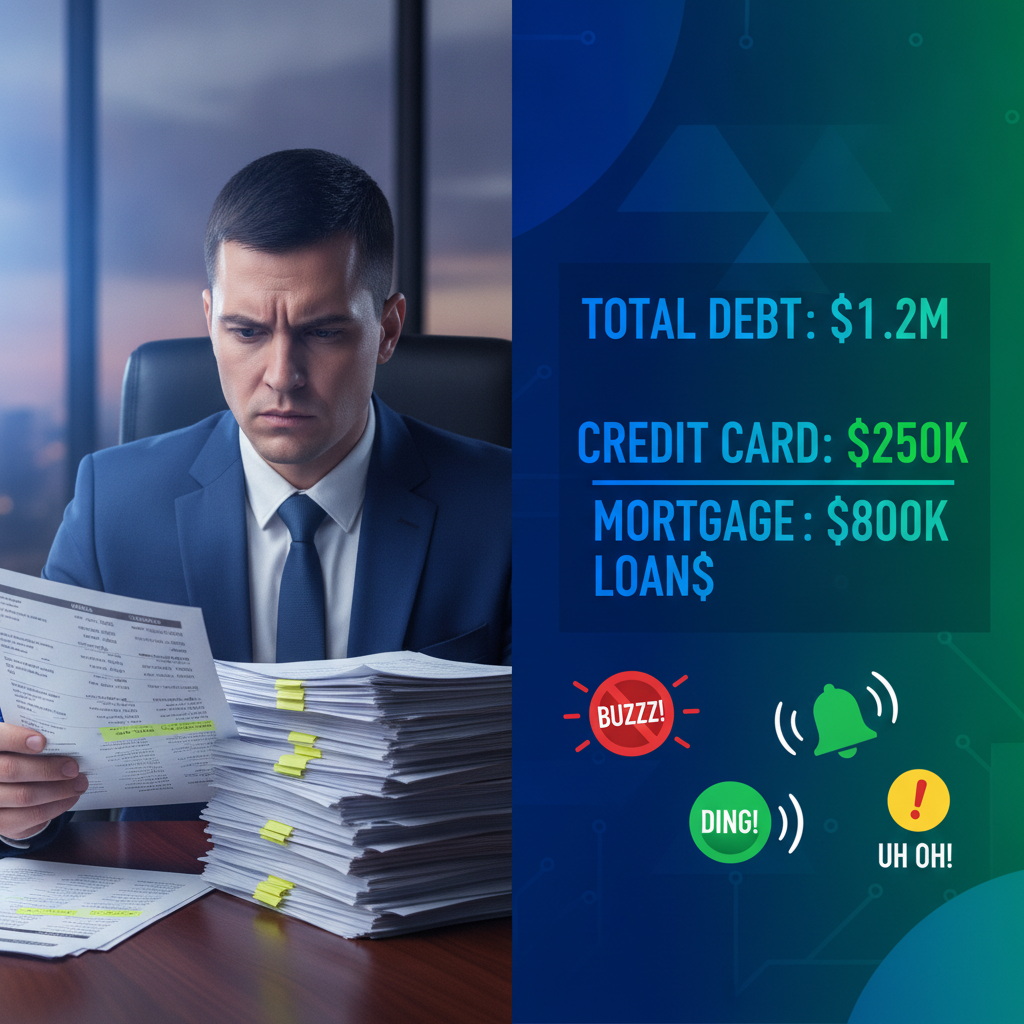
Caleb Hammer's Financial Audit has become one of the most watched personal finance shows on YouTube, not because it offers groundbreaking advice, but because it has perfected a format that turns budget reviews into compelling, binge-worthy content. The show's structure, a blend of rapid-fire editing, confrontational dialogue, and strategic sound design, offers concrete lessons for anyone building video content at scale.
The Two-Part Structure: Ad Integration as Cold Open
Every analyzed episode opens with a 30 to 33 second advertisement for Hammer's budgeting app, Dollarwise. In this recent upload, the ad segment uses cuts averaging under one second, with animated text overlays highlighting pricing and features. The rhythm is aggressive: "Dollarwise is finally here!" appears at 0:01, followed by rapid product shots and bold claims about "sending waves through the personal finance world."
The ad functions as a cold open, establishing visual momentum before the main content begins. At 0:33, the video shifts abruptly to the interview format, a jarring transition that resets viewer attention. The ad's fast pace conditions the audience for rapid information delivery, then the interview segment exploits that expectation by slowing down just enough to create tension.
The structure mirrors reality TV: establish stakes (the app exists to solve problems), then show the problem (a guest's chaotic finances). According to Business Insider, Hammer built his audience by "using his past money struggles to help people fight their huge debts," but the show's retention mechanics rely less on empathy and more on spectacle.
Jump Cuts and Audio Design: Manufacturing Confrontation
Once the interview begins, the editing shifts to a medium pace of one to three seconds per shot, but jump cuts dominate. In the "Dumbest Woman Ever" episode, Hammer's dialogue is heavily compressed via jump cuts, removing pauses and tightening sentences. The guest's responses are left slightly longer, creating an imbalance that makes Hammer appear more prepared and the guest more hesitant.
Sound design amplifies this dynamic. The same episode uses a "wrong answer" buzzer at 2:09 and a "smash" sound effect at 0:57, 4:12, and 10:34 during Hammer's reactions. These are editorial choices that frame the guest's answers as incorrect before Hammer even responds. The effect is comedic but also builds a narrative hierarchy: Hammer is the authority, the guest is the subject under examination.
In the "Blue-Haired Socialist" episode, the same pattern holds. Jump cuts keep dialogue moving, while background music transitions from upbeat during the ad to neutral during the interview, allowing Hammer's tone and the sound effects to carry emotional weight. The absence of music creates space for confrontation to feel more immediate.
This is not traditional podcast editing. It is closer to reality TV or YouTube drama channels, where pacing and sound cues guide the viewer's emotional response beat by beat.
Text Overlays and Visual Anchors: Simplifying Complexity
Financial content is inherently dense. Hammer's show solves this by using animated text overlays to highlight key figures. In the "Most INSANE Couple Ever" clip, on-screen text displays "Current Debt: $498,015" and "Miscellaneous BS Total: $1,002.01." These overlays appear with quick transitions, often animated or accompanied by a "ding" sound.
The overlays serve two functions. First, they anchor the viewer's attention during moments when the dialogue might lose momentum. Second, they create shareable moments. A screenshot of "$498,015 in debt" is more viral than a 30-second explanation of how the debt accumulated. The text does the work of summarizing complex information into a single, shocking data point.
Highlighting on financial documents (yellow markers on bank statements) reinforces this. The viewer does not need to parse a full statement, the edit directs their eye to the one number that matters. This is visual triage, reducing cognitive load while maximizing emotional impact.
The Retention Formula: Shock, Delay, Reveal
The show's narrative arc follows a predictable but effective pattern. Hammer asks a question, the guest hesitates or deflects, Hammer reacts with exasperation, then a financial figure is revealed via text overlay or document. The delay between question and reveal creates micro-suspense.
In the "Dumbest Woman Ever" episode, this rhythm repeats every 30 to 60 seconds. The pacing ensures that even if a viewer tunes out during one exchange, the next reveal is close enough to recapture attention. This is the same retention logic used by true crime documentaries and courtroom dramas: withhold information, tease it, then deliver it with emphasis.
Energy peaks occur when Hammer slams papers or raises his voice, moments that are visually and sonically distinct from the baseline interview tone. These peaks are spaced irregularly, preventing the viewer from predicting when the next outburst will occur. Unpredictability sustains engagement.
What EditorDuel Readers Can Take From This
Hammer's format demonstrates that educational content does not need to sacrifice entertainment value to remain credible. The lessons for businesses producing video at scale:
Use structure to manage pacing. The ad-as-cold-open model works because it establishes rhythm before the main content begins. If your videos start slow, consider front-loading a high-energy segment (a teaser, a provocative question, a visual montage) to condition the viewer for what follows.
Jump cuts are not just for YouTube vloggers. Even in interview or podcast formats, removing verbal pauses tightens dialogue and maintains momentum. The key is consistency: if you cut aggressively, do it throughout, not sporadically.
Sound design guides interpretation. Hammer's use of buzzers, smashes, and silence shapes how the audience perceives each exchange. If your content involves analysis or critique, consider how audio cues (music drops, sound effects, silence) can emphasize key moments without requiring the host to editorialize.
Text overlays reduce friction. Complex information (financial data, statistics, timelines) should be visualized, not just spoken. Overlays allow viewers to process information at their own pace while the dialogue continues.
Micro-suspense beats long-form suspense. Hammer does not build toward one big reveal at the end. He creates dozens of small reveals throughout each episode, ensuring that even a five-minute clip feels complete. If your content is long-form, structure it as a series of payoffs rather than a single climax.
The format is replicable. It does not rely on Hammer's personality (though his delivery is effective). It relies on editing choices: cut rhythm, sound design, text overlays, and narrative pacing. Any business producing interview or analysis content can apply these mechanics.
Want to build content like this for your business? Post a competition on EditorDuel and get matched with editors who can deliver.