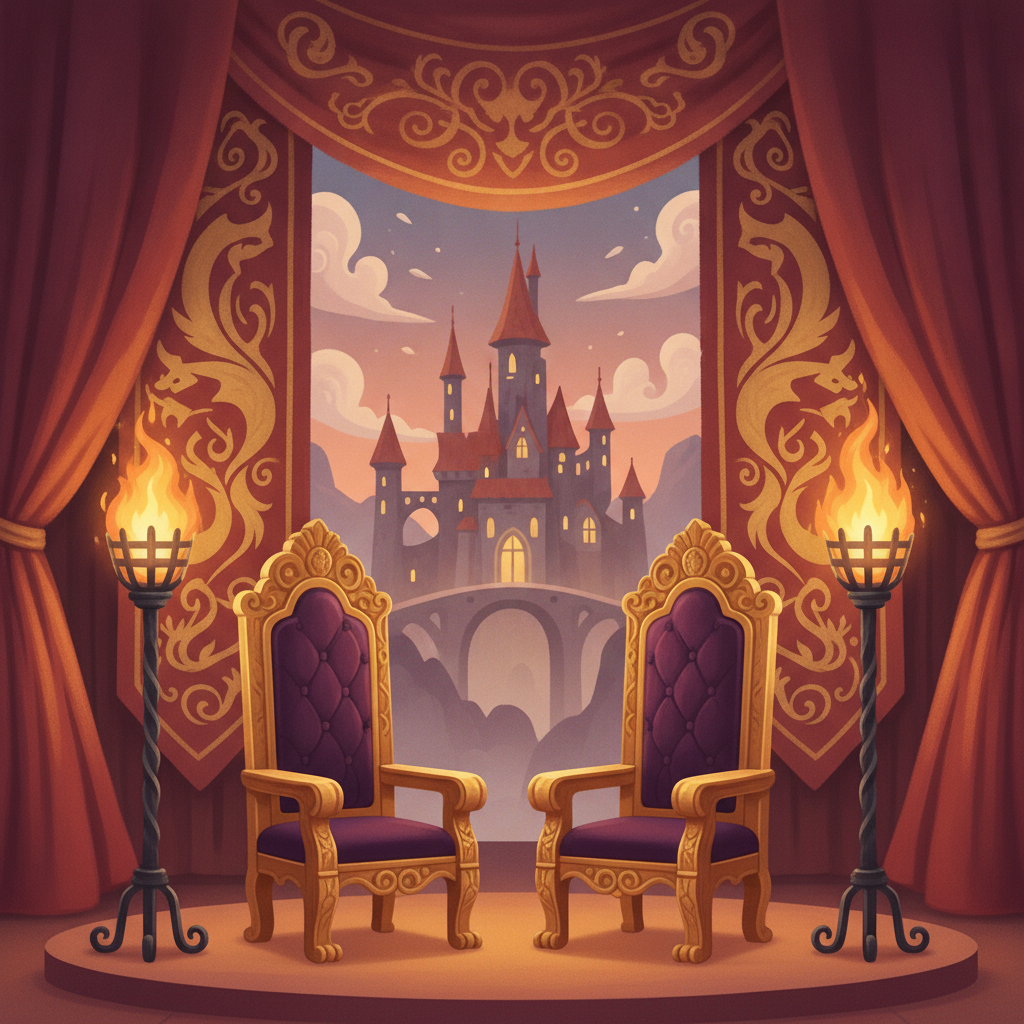
Brittany Broski's Royal Court has become a press tour stop for A-list celebrities including Matt Damon, Anne Hathaway, and Nicole Kidman, according to The Hollywood Reporter's 2026 Creator A-List. The show's format, a medieval fantasy talk show where Broski interviews guests in full costume, achieves this reach through a specific structural playbook: fast cut rhythm, reaction shot amplification, and segment based energy peaks that keep viewers engaged through unpredictability.
The Opening Hook: Pop Culture Debate in Under Five Seconds
In the McKenna Grace episode, the video opens with Broski asking, "You're Team Peeta?" followed by an immediate cut to Grace responding, "Well, yeah. Are you Team Gale?" The entire exchange happens in under five seconds. This is the structural template: no cold open montage, no intro music buildup, just an immediate conversational question about a widely recognized pop culture topic (Hunger Games fandom) that establishes tone and topic simultaneously.
The format works because it mimics the cadence of a social media argument, not a traditional interview. Viewers who recognize the reference are instantly engaged. Those unfamiliar still understand the playful conflict. The question and answer structure creates a narrative question (what will they debate next?) that justifies continued watching.
Cut Rhythm: Maintaining Sub Three Second Shot Duration
Across analyzed episodes, Royal Court maintains a cut rhythm of one to three seconds per shot during conversational segments. In the compilation of celebrities breaking Broski, the rhythm averages well under one second per shot during comedic exchanges. The pattern is consistent: speaker delivers line, cut to Broski's reaction (laughter or shock), cut back to speaker or next setup.
This is not arbitrary speed. The fast rhythm serves two functions. First, it removes dead air. Jump cuts within a single speaker's shot tighten delivery by eliminating pauses, visible especially when Broski reacts. Second, it creates anticipation. The viewer knows a punchline is coming because the rhythm telegraphs it. When the cut happens, the payoff (Broski's explosive laughter) feels earned.
The Vanilla Mace episode demonstrates the technique during rapid fire questions about Wii games. Cuts happen every one to three seconds as the conversation bounces between "What other Wii games did you like?" and "Wii Sports Resort" and "The Wii Fit in general was just a fun time." The rhythm prevents any single topic from overstaying its welcome, which is critical for retention in a format where the appeal is variety, not depth.
Reaction Shots as the Core Retention Mechanic
The structural innovation of Royal Court is treating Broski's reactions as the primary content, not the guest's answers. In the celebrity compilation, Harry Styles delivers the line, "Not a question, more of a command and an observation. Close your legs, girl, I smell the sea." The video immediately cuts to Broski laughing hysterically. The reaction shot is the punchline.
This inverts traditional interview structure. In a standard talk show, the host facilitates, the guest performs. Here, the guest sets up, Broski delivers. The format trains viewers to anticipate her reaction, which becomes the recurring payoff. Each segment functions as a mini sketch: setup (guest speaks), punchline (Broski reacts), reset (next guest or topic).
The technique works because Broski's reactions are visually loud. Close-ups emphasize facial expressions. Her laughter is unrestrained, often breaking into wheezing or table slapping. The sound design amplifies this by keeping natural audio high in the mix, making the laughter feel infectious. Viewers are not just watching someone laugh; they are hearing genuine, uncontrolled laughter that triggers social mirroring.
Costume and Visual Gag Layers
The medieval setting is not aesthetic window dressing. It is a structural tool that enables rapid visual resets. In the Vanilla Mace episode, Broski and the guest frequently change wigs, hats, and costumes mid conversation with quick cuts. These changes signal topic shifts without needing verbal transitions.
The animated intro sequences (stylized fantasy worlds, dragons, glowing title cards) and B-roll inserts (castle footage, Nintendo game screens in the McKenna Grace episode) provide visual variety that breaks up talking head shots. The color grading is warm and rich, enhancing the fantasy aesthetic while keeping skin tones flattering. Sound effects (a "thwack" when Broski hits her hand with a scroll, a "boing" for emphasis) punctuate comedic beats without overwhelming dialogue.
These layers create what retention analysts call "visual novelty." Even if a viewer loses interest in the verbal content, the next costume change or animated insert provides a new stimulus to recapture attention.
Segment Structure: Themed Questions with Built In Energy Peaks
The McKenna Grace episode follows a clear segment structure: Hunger Games debate, Pokémon preferences, Annabelle Comes Home discussion, hypothetical questions, Nintendo Switch product placement, closing ceremony. Each segment is three to five minutes. Each has a clear topic. Each ends with a natural energy peak (a joke landing, a reveal, a gift exchange).
This structure is borrowed from variety shows, not podcasts. The format assumes viewers will not watch the full episode in one sitting. By segmenting topics and front loading energy (the Hunger Games debate happens in the first 30 seconds), the show creates multiple entry points for clipper economies. A viewer can watch the Pokémon segment as a standalone Short and still get a complete narrative arc: question posed, banter, punchline, resolution.
Brand partnerships like Smirnoff Ice and Kohl's integrate into this structure as segments, not interruptions. The Nintendo Switch appears as a "Royal Tribute" gift exchange, complete with animated B-roll of game footage. The placement feels native because it follows the same question and answer rhythm as the rest of the episode.
Why This Format Travels to Press Tours
The format's appeal to celebrity publicists is mechanical, not personal. Traditional press junkets require celebrities to answer the same questions repeatedly across dozens of outlets. Royal Court offers differentiation through absurdity (medieval costumes, playful questions) while maintaining tight runtime control (segments are short, topics are pre planned) and guaranteed viral moments (Broski's reactions create clipable content).
The show is represented by UTA, the same agency that handles Emma Chamberlain and Bowen Yang, signaling institutional buy in from Hollywood's talent infrastructure. When a publicist books a client on Royal Court, they are buying access to Broski's audience and a format engineered for social media distribution.
What EditorDuel Readers Can Take from This
The Royal Court format demonstrates three exportable principles for businesses building interview or conversational content:
- Front load the hook with a debate or question, not a preamble. The first five seconds should establish conflict or curiosity, not context.
- Treat reactions as primary content. If your host or on screen talent has strong reactions, structure the edit to amplify them. Use close ups, keep natural audio high, and cut to reactions immediately after punchlines.
- Segment your content into three to five minute blocks with clear topics and energy peaks. This enables clipper distribution and gives viewers multiple entry points. Each segment should function as a standalone piece.
- Use visual novelty (costume changes, B-roll, motion graphics) to reset attention every 30 to 60 seconds. Even if the verbal content is strong, visual sameness kills retention.
- Engineer your format for talent, not just audience. Broski's format works for celebrities because it is low risk (playful tone, short runtime) and high reward (viral clips, differentiated content). If you are building content to attract guests or partners, design the format to make their participation easy and beneficial.
Want to build content like this for your business? Post a competition on EditorDuel and get matched with editors who can deliver.