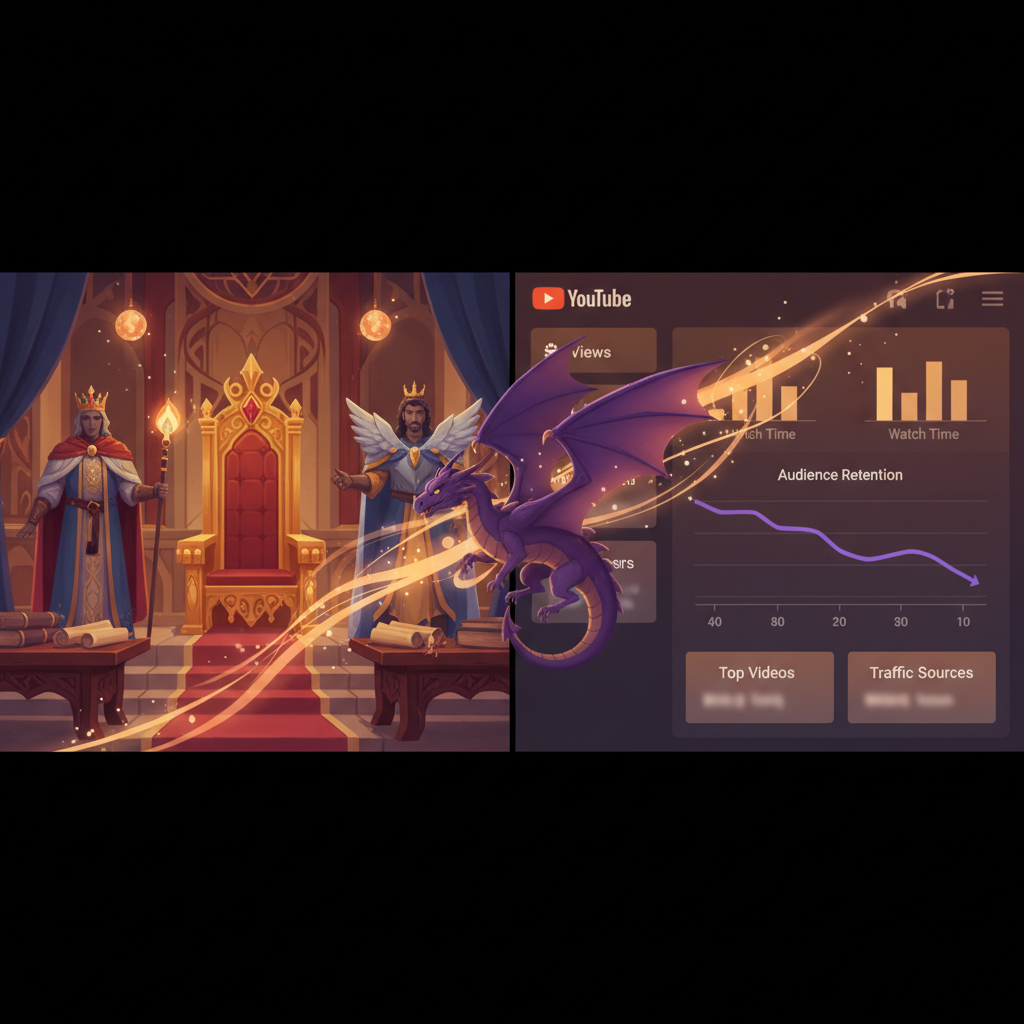
Brittany Broski's YouTube series Royal Court has quietly become one of the most effective interview formats on the platform. While traditional late-night shows struggle with declining viewership, Royal Court episodes pair celebrity guests with a medieval fantasy framing device that transforms standard Q and A into a structured, repeatable retention machine. The format works because it solves a fundamental problem: how to make celebrity interviews feel fresh when audiences have seen the same guests answer the same questions on every other platform.
The operational insight here is not about Broski's personality or her origin as the viral "Kombucha Girl" meme from 2019. It is about how she and her production team engineered a video structure that delivers consistent watch time across episodes, regardless of who sits in the guest throne.
The Opening Hook: Direct Question, Immediate Energy
Royal Court episodes open without preamble. In the Keke Palmer episode, the first five seconds are a medium shot of Broski asking, "What would you describe the current era as?" followed by an immediate cut to Palmer delivering a high-energy, singing response. No intro montage, no sponsor read, no table-setting. The video analyses confirm this pattern across episodes: the first question lands within seconds, and the guest's reaction is the hook.
This structure borrows from TikTok's cold open convention but applies it to long-form content. The viewer knows within five seconds whether the guest's energy will carry the episode. If Palmer's expressive delivery or Jinkx Monsoon's opening line about throat muscles does not grab attention immediately, the viewer scrolls. The format assumes the audience has no patience for buildup, so it front-loads the guest's personality.
The video model analyses note that opening shots are medium framing, not wide establishing shots. The viewer sees faces and expressions before they see the set. This is retention design: the human reaction is the content, and the medieval costumes are context that gets revealed as the episode progresses.
Segmented Trials: Predictable Structure, Variable Content
Every Royal Court episode follows the same segment structure. After the cold open, an animated transition (described in the analyses as featuring a fantasy village, castle, and purple dragon) introduces titled segments: "Royal Tribute," "Coat of Arms," and others. The Sam Fender episode follows this exact pattern, with each segment lasting three to five minutes before the next animated transition resets the pacing.
This segmentation serves two retention functions. First, it creates natural chapter breaks that YouTube's algorithm can surface as preview moments. A viewer scrolling through thumbnails sees "Royal Tribute" or "Coat of Arms" and understands they can drop into the middle of the episode without losing context. Second, it prevents energy sag. Traditional talk show interviews often lose momentum after the first ten minutes as the conversation meanders. Royal Court's segment structure forces the production to reset every few minutes with a new prompt, new visual cues (the animated transitions), and a new comedic beat.
The video analyses confirm that these animated sequences are consistent across episodes: stop motion style graphics with a warm, vibrant color palette. This consistency builds brand recognition. A viewer who enjoyed one Royal Court episode will recognize the format in their recommended feed when the next guest appears, lowering the friction to click.
Cut Rhythm and Reaction Shots: Tightening the Conversational Slack
The video model analyses describe Royal Court's cut rhythm as "medium," with shots changing every one to three seconds during conversation. This is faster than traditional talk shows but slower than pure viral clip content. The analyses note frequent use of jump cuts to remove pauses, close-ups to emphasize facial expressions, and J/L audio cuts (where audio from the next speaker starts before the visual cut) to smooth transitions.
In the Jinkx Monsoon episode, the analyses cite cuts at 0:01, 0:04, and 0:10 in the opening seconds alone. This rapid cutting during the cold open accelerates perceived pacing without requiring the speakers to talk faster. The editing removes dead air, making the conversation feel tighter and more energetic than it was in the raw footage.
Close-ups are deployed specifically during comedic beats. The analyses note close-ups at 0:08, 0:11, and 0:58 in the Monsoon episode, timed to moments of exaggerated expression. This is reaction shot economy: the editor knows the guest's face is the payoff, so the camera pushes in when the punchline lands. The result is that even a mediocre joke feels bigger because the visual framing amplifies the delivery.
Sound design reinforces this. The analyses describe exaggerated sound effects (a high-pitched scream at 0:12, a "poof" sound at 0:46, a "ding" for correct answers) that punctuate moments of humor or success. These are not subtle. They are designed to grab attention in the same way a TikTok sound effect does, signaling to the viewer that something worth noticing just happened.
Why the Format Outperforms Traditional Late-Night
Public commentary notes that Royal Court feels less stale than traditional late-night formats, with audiences preferring Broski's structure to established television shows. The operational reason is repeatability. Traditional talk shows rely on the host's charisma and the guest's promotional obligations to carry each episode. Royal Court relies on a format that works regardless of who fills the guest chair.
The medieval framing device is not a gimmick. It is a constraint that forces variety within structure. Every guest gets asked to draw a coat of arms, every guest goes through the same trials, but the answers and reactions are unique. This is the same principle that makes game shows durable: the format is the star, and the participants are variables.
The video analyses confirm that the fantasy setting (costumes, thrones, animated transitions) is consistent across episodes, creating a visual brand that is instantly recognizable. A viewer does not need to know who Sam Fender or Keke Palmer is to understand that they are watching Royal Court. The format telegraphs its identity within the first ten seconds, which lowers the cognitive load required to decide whether to keep watching.
What EditorDuel Readers Can Take From This
If you are producing interview content, video podcasts, or any long-form conversational format, Royal Court offers three actionable lessons:
First, cold open with the guest's energy, not your brand. The first five seconds should show the guest reacting, not your logo animating. The viewer clicked because they care about the guest or the topic. Prove you have something worth watching before you ask them to sit through an intro.
Second, segment your content with visual and structural resets. If your episodes run longer than ten minutes, break them into titled chapters with distinct visual transitions. This creates natural preview points for YouTube's algorithm and prevents energy sag. The segments do not need to be elaborate. Even a simple title card between topics will signal to the viewer that the pacing is about to shift.
Third, edit for reaction, not just information. Royal Court's close-ups and sound effects amplify moments that would otherwise pass unnoticed. If your guest says something funny or surprising, the edit should make that moment feel like an event. Use jump cuts to remove pauses, push in on faces during punchlines, and add sound cues if your format allows it. The goal is to make the viewer feel like they are watching something that was crafted, not just recorded.
The medieval costumes and fantasy set are not required. The structural principles are. Build a repeatable format, front-load the guest's personality, segment the runtime, and edit for reaction density. That is the operational playbook behind Royal Court's retention performance.
Build Content That Performs
Want to build interview content or long-form video that holds attention like Royal Court? Post a competition on EditorDuel and get matched with editors who understand retention mechanics, cut rhythm, and how to structure content that audiences actually finish watching.