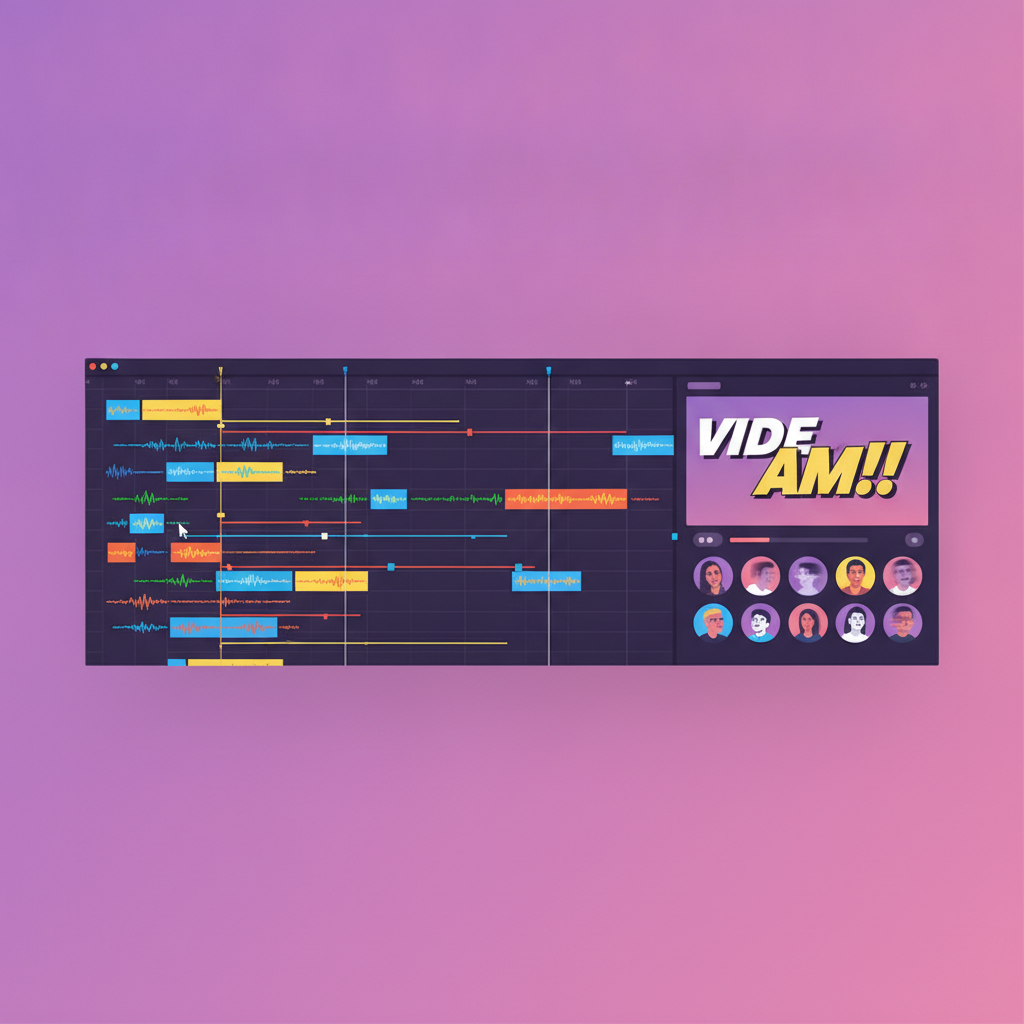
Tana Mongeau sits at an interesting inflection point in the creator economy. Forbes categorizes her among platform-dependent creators whose revenue flows from YouTube ads, social sponsorships, and brand deals rather than owned media companies. Her recent launch of the "Brand Safe" podcast signals a shift from controversy-driven content to advertiser-friendly formats, but the underlying retention mechanics remain consistent: hyper-fast editing, gossip-driven hooks, and a structural rhythm designed to prevent the viewer from clicking away.
For businesses producing video content at scale, Mongeau's work offers a blueprint for retention engineering. The techniques are observable, repeatable, and grounded in specific editorial choices that keep audiences engaged through sheer velocity and narrative payoff.
The Sub-Second Cut Rhythm
Mongeau's videos operate on an aggressive cut tempo. In this gossip commentary video, the opening five seconds contain four distinct shots: Mongeau addressing the camera with a microphone, a quick cut to another woman speaking, a close-up of a third woman's face, then back to Mongeau. The average shot duration throughout the narrative segments stays well under one second. During podcast interview clips, the rhythm slows to one to three seconds per shot, but only when the conversational content itself carries the engagement.
The technique relies on jump cuts to compress speech, removing pauses and filler words. This creates the sensation of constant forward motion. The viewer's brain never settles into a passive state because the visual information updates before habituation sets in. For brands producing explainer content or product demos, this rhythm can be adapted: cut on every new piece of information, not just on every sentence.
Hook Structure: Direct Address Plus Provocative Question
The opening of the gossip video uses a two-part hook: direct address ("You guys") followed by a specific, curiosity-gap question ("we have got to talk about Tana Mongeau calling out an influencer"). The phrasing assumes the viewer already cares about the topic, which creates social proof. The question withholds the identity of the influencer, creating an immediate information gap that can only be closed by watching.
In a game show format video, the hook combines a mysterious blurred image on a headband, a direct address mid-sentence ("I just don't know if... should be something that's going on people's heads"), and immediate reaction shots of two men laughing. The mystery object plus social proof (others find this funny) plus the promise of a reveal all work in concert.
For business content, the lesson is specificity. Generic hooks ("Today we're talking about marketing") lose to specific curiosity gaps ("This brand spent $400K on TikTok ads and got zero conversions. Here's what the data showed").
Text Overlays and Sound Design as Retention Scaffolding
Both analyzed videos use large, bold text overlays to anchor the viewer's attention. The gossip video displays "SPILL SESH" on the microphone and as a title card. Social media comments appear as on-screen text. The game show video reveals each guessed event with animated text: "EPSTEIN ISLAND," "COLD PLAY CONCERT CHEATERS," "JFK ASSASSINATION," "KATY PERRY IN SPACE," "OCEANGATE SUBMARINE IMPLOSION," "CHERNOBYL NUCLEAR DISASTER." The text bounces onto the screen with cartoonish motion graphics.
Sound effects punctuate every transition: whooshes for text reveals, dings for correct guesses, comedic sound bites like boings. Background music stays upbeat and energetic during intros and transitions. The audio layer provides a secondary retention mechanism. Even if the viewer looks away from the screen, the sound design signals that something is happening.
For corporate video, this translates to treating the audio mix as a retention tool, not an afterthought. Every section transition, every new point, every payoff moment should have an audio cue.
Meme Reaction Shots as Emotional Shorthand
The gossip video inserts two meme-style reaction shots: a woman drinking from a mug with a curious expression, and Jennifer Lawrence making a funny face. These function as emotional punctuation, giving the viewer permission to react and signaling the intended tone. The shots are brief, under two seconds each, and appear at moments of narrative tension or absurdity.
This technique works because it externalizes the viewer's internal reaction. Instead of hoping the audience feels surprised or amused, the edit shows someone else feeling that way, which creates social modeling. For business content, this can be adapted with client testimonial cutaways, team reaction shots, or even animated characters that respond to the information being presented.
The Reveal as Structural Payoff
Both videos structure around reveals. The gossip video follows a hook, setup, payoff arc: the opening question about an unnamed influencer, context from podcast clips detailing the claims, then the reveal of Mongeau's response to speculation about the identity. Energy peaks occur during fast-paced narration and when Mongeau expresses strong emotion or makes surprising statements.
The game show video treats each round as a mini-payoff loop. The blurred image creates mystery, clues build tension, the reveal provides satisfaction. The choice of controversial or absurd topics (Epstein Island, the Oceangate implosion, Chernobyl) ensures that each reveal carries inherent interest, even when the guessing process is the primary entertainment.
For business video, the takeaway is to structure every piece around a payoff the viewer wants. Product demos should build toward a capability reveal. Case studies should build toward a results number. Explainer videos should build toward a counterintuitive insight. The structure should make the viewer feel that watching to the end will resolve a specific curiosity.
The Platform Dependency Model
Mongeau's earnings come primarily from YouTube advertisements and social media sponsorships, with additional revenue from ventures like her wine brand Dizzy Wine and OnlyFans. Forbes categorizes her among platform-dependent creators whose trajectories differ from those who built operating companies behind the personality. Her recent launch of the "Brand Safe" podcast represents an attempt to derisk that dependency by courting advertisers with family-friendly content, but the core business model remains tied to platform monetization decisions and brand deal economics.
This creates a specific content incentive: maximize watch time and shareability to satisfy algorithmic distribution, while maintaining enough controversy or novelty to generate social conversation. The editing choices serve that goal. Every cut, every text overlay, every reaction shot exists to prevent the viewer from scrolling away.
What EditorDuel Readers Can Take from This
Mongeau's retention mechanics are not personality-dependent. They are structural choices that any video operation can implement:
- Cut on information, not on breath. If a shot contains no new visual or narrative data, it is a retention risk.
- Front-load specificity. Generic intros lose to curiosity gaps that promise concrete payoffs.
- Use text and sound as retention scaffolding. Viewers should be able to follow the narrative even if they look away momentarily.
- Structure around reveals. Every video should answer a question the viewer wants answered.
- Externalize emotion. Show someone reacting the way you want the viewer to react.
These techniques scale. A product demo can cut every 0.8 seconds during feature walkthroughs. A case study can open with a specific, withheld result. An explainer can use on-screen text to anchor each concept. The execution adapts to the brand and audience, but the retention logic remains constant.
Want to build content like this for your business? Post a competition on EditorDuel and get matched with editors who can deliver.