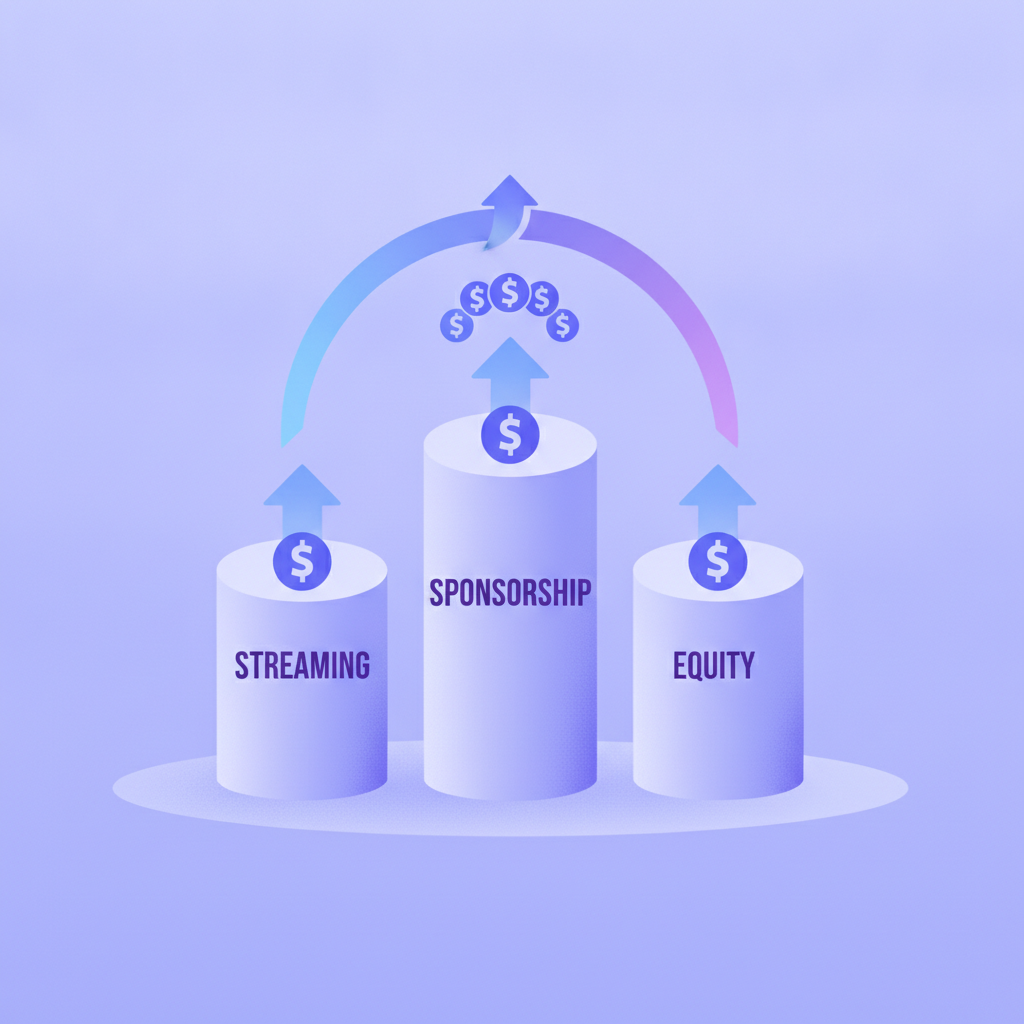
Ludwig Ahgren's 2026 income statement reads like a small holding company, not a content creator. A viral clip from his Streamer University session revealed June 2026 revenue dominated by $800K in sponsorships, but the sponsorship number is only one column. Between a Red Bull partnership, a Shopify Rebellion equity stake, and the now-closed Offbrand agency, Ludwig's business rests on three legs: streaming, sponsorship, and equity, where his 2019 income rested on one. That diversification is the operational story worth studying. For businesses hiring editors or building content operations, Ludwig's model demonstrates how to architect revenue streams that survive algorithm changes, platform migrations, and audience churn.
The Sponsorship Machine: $800K Per Month
The June 2026 breakdown showed sponsorships accounting for the largest single revenue source. Ludwig has structured his content calendar to accommodate integrated sponsorships without alienating his audience. Unlike creators who bolt ads onto existing formats, Ludwig builds sponsored segments into the editorial structure of his videos and streams. The Streamer University session where he disclosed the $800K figure was itself a teaching moment, turning transparency into content. The sponsorship volume suggests a media kit with tiered offerings: stream integrations, dedicated YouTube videos, event title sponsorships, and cross-platform packages. For businesses evaluating influencer partnerships, the takeaway is clear: creators who can deliver $800K monthly are running sales operations, not just making videos. They have account managers, fulfillment pipelines, and performance reporting.
Equity Over Fees: The Shopify Rebellion Stake
Ludwig took an equity position in Shopify Rebellion, an esports organization, rather than a flat sponsorship fee. The diversification strategy positions him as an investor, not just a spokesperson. Equity deals tie long-term upside to the success of the partner brand, aligning incentives in ways cash deals cannot. If Shopify Rebellion grows, Ludwig's stake appreciates. If the organization scales into new games or secures venture funding, his position multiplies. The model also reduces reliance on monthly cash flow from content production. For content businesses, the lesson is structural: negotiate equity in partnerships where you can add sustained value, not just one-off promotion. Ludwig's audience delivers user acquisition and brand credibility. In exchange, he gets ownership, not a paycheck that evaporates after the campaign ends.
The Offbrand Experiment: $3M in Subsidies Before Closure
Offbrand, Ludwig's talent agency and event production company, closed in 2024 after approximately $3 million of Ludwig's YouTube sponsorship earnings had been used to support the company's finances. Ludwig described discovering the shortfall while reviewing the books and said continuing to fund the operation could threaten his other businesses. The closure is instructive. Offbrand produced live events, managed talent, and published games, but the operational burn rate exceeded revenue. Ludwig subsidized the company for years, treating it as a long-term bet that never reached profitability. The $3 million figure is a case study in the cost of vertical integration. Building an agency in-house means absorbing payroll, office overhead, legal expenses, and event production risk. When Ludwig shut it down, he preserved capital for ventures with clearer unit economics. For businesses considering in-house production studios or talent management arms, the Offbrand story is a warning: calculate the subsidy cost before you commit. If the business cannot stand alone within 24 months, it may drain resources better allocated elsewhere.
Event Revenue: Thousands of Tickets, Bundled Sponsorships
A single show can sell thousands of tickets and sponsorships, generating revenue independent of platform ad rates or subscriber counts. Ludwig's live events, including game shows and tournaments, function as standalone products. Ticket sales cover venue and production costs. Sponsorships deliver margin. The event model also creates content: Ludwig films the shows, publishes highlight reels, and extends the lifecycle of each production across YouTube and social platforms. The operational advantage is leverage. One event generates ticket revenue, sponsorship deals, and dozens of video assets. For content businesses, the event playbook is replicable: package your expertise into a live experience, sell tickets, and monetize the recording afterward. The upfront production cost is higher than a YouTube video, but the revenue ceiling is uncapped by CPM rates.
Content Velocity and Format Shifts: 32% Short-Form Since 2023
Since 2023, videos under 3 minutes account for 32% of Ludwig's output, against 3% before. The shift reflects platform incentives. YouTube prioritized Shorts in recommendations, and Ludwig adapted his production calendar to capture that traffic. His most-viewed video, "This Joke ALWAYS Works," has 48.3M views, demonstrating the reach ceiling for viral short-form content. The format shift did not replace long-form content. Ludwig still publishes videos over 20 minutes, but he now operates a dual-track production system: short-form for reach and algorithm favor, long-form for depth and sponsor integration. For content operations, the lesson is portfolio management. Allocate production resources across formats with different objectives. Short-form drives top-of-funnel awareness. Long-form delivers sponsor value and audience retention. Running both simultaneously requires more editorial capacity, but the traffic and revenue upside justifies the overhead.
What EditorDuel Readers Can Take From This
Ludwig's operation demonstrates three principles businesses can apply. First, diversify revenue streams beyond ad rates. Sponsorships, equity deals, and live events create income that survives platform changes. Second, calculate the subsidy cost of any in-house venture. Offbrand cost Ludwig $3 million before he shut it down. If a new business cannot reach profitability within a defined window, redirect capital to proven models. Third, operate a dual-track content system. Short-form captures algorithmic reach. Long-form delivers sponsor value. Allocate editorial resources to both, and measure each format against its specific objective. Ludwig's $800K monthly sponsorship number is the output of a system that treats content as one input into a broader business portfolio. For companies building content operations, the takeaway is architectural: design revenue streams that compound, not just content that performs.
Want to build content like this for your business? Post a competition on EditorDuel and get matched with editors who can deliver.