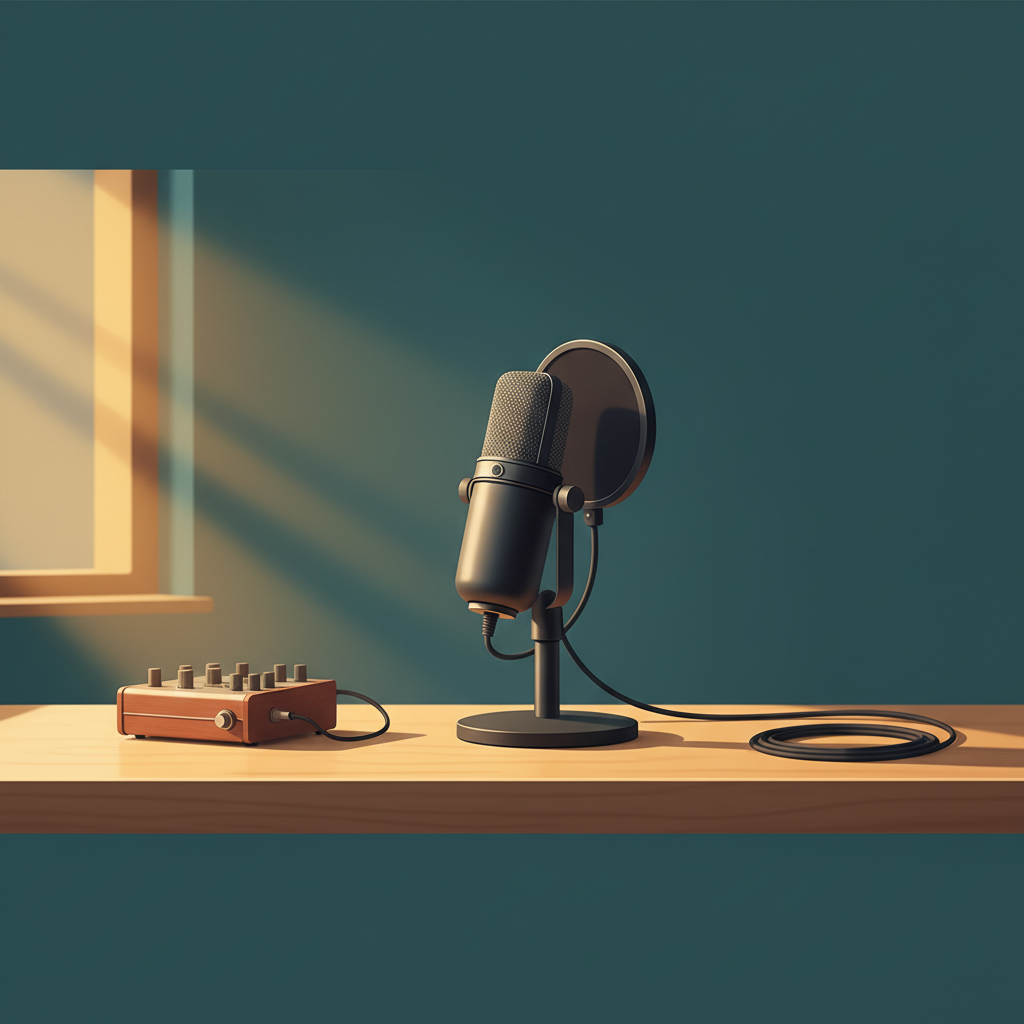
Joe Rogan's podcast operation is the inverse of what most content strategists would recommend. No cuts every 0.8 seconds. No motion graphics. No clipper army flooding TikTok. Just a guy, a microphone, and guests talking for two to three hours in a bare studio. Yet the show averages 11 million listeners per episode, commands as much as $1 million in revenue per episode, and operates on an annual revenue model that can reach $100 million.
For businesses evaluating their own content operations, the Rogan model offers a counterintuitive lesson: sometimes the most profitable content strategy is the one that scales through simplicity, not complexity.
The Studio Economics: Low Overhead, High Output
Rogan's production infrastructure is deliberately minimal. The studio is cheap, the format is repeatable, and the editing requirements are light. There are no elaborate set changes, no scripted segments, no post-production animation teams. The show records, uploads, and distributes with a lean crew.
This low overhead structure allows Rogan to maintain a consistent publishing cadence without the operational drag that kills most content businesses. Rogan has said that maintaining a consistent schedule was important in jumpstarting the podcast's growth, and the show quickly scaled to multiple episodes per week. The format's simplicity means production bottlenecks are nearly impossible. If a guest is available, the episode happens.
For businesses, this is the critical insight: content velocity often matters more than production polish. Rogan's audience grew because they could rely on new episodes appearing regularly, not because each episode was a cinematic masterpiece. The operational lesson is to design formats that your team can actually sustain, not aspirational formats that collapse under their own complexity after six weeks.
The Monetization Model: Sponsorships Before Platforms
In May 2010, the podcast acquired its first sponsor in a partnership with Fleshlight. That early sponsorship deal established a monetization model that would scale for over a decade: direct sponsor reads, promo codes, and audience trust. By the time Rogan signed a multiyear licensing deal with Spotify in May 2020 worth an estimated $200 million, the show was already a proven revenue machine.
The Spotify deal is often misunderstood. It was not a platform making a creator. It was a platform paying to acquire an audience that already existed. Rogan had built the distribution himself, episode by episode, and Spotify paid for exclusive access to that audience. The deal made The Joe Rogan Experience available on Spotify starting September 1, 2020, but the show's audience had been cultivated over a decade of consistent output and sponsor relationships.
Today, the show maintains a roster of sponsors that includes everything from athletic supplements to financial services. Each episode features multiple sponsor reads, and the promo code structure allows Rogan to demonstrate measurable conversion to advertisers. This is the opposite of hoping an algorithm will surface your content. Rogan controls the distribution, the audience relationship, and the monetization.
For businesses, the takeaway is clear: build your own audience infrastructure before you negotiate with platforms. Rogan's leverage came from owning the relationship with his listeners, not from renting attention on someone else's feed.
The Content Formula: Long Form as Competitive Moat
Rogan's episodes run two to three hours. This is not an accident. Long form content creates a moat that short form creators cannot easily cross. A 90-second TikTok can be clipped, remixed, and replicated by dozens of competitors within hours. A three-hour conversation requires the guest, the host, the audience's attention span, and a distribution channel that supports the format.
The length also changes the audience relationship. Listeners who commit to a three-hour episode are not passive scrollers. They are actively choosing to spend time with the content, often during commutes, workouts, or work sessions. This creates a different kind of engagement than viral clips. The audience is smaller than a viral TikTok, but the attention is deeper and more valuable to advertisers.
The top 10 most watched episodes on YouTube account for around 430 million views, with Elon Musk's first guest appearance from 2018 remaining the most watched at 69 million views. These numbers demonstrate that even within a long form format, certain episodes break through to massive audiences. But the baseline expectation is not virality. It is consistency and depth.
For businesses, this suggests a content strategy that prioritizes depth over breadth. If your competitors are all fighting for 15-second attention spans, a long form format that requires real engagement can differentiate you. The audience will be smaller, but the conversion rates and lifetime value will often be higher.
The Distribution Playbook: Platform Agnostic Audience Building
Rogan built his audience across multiple platforms before consolidating on Spotify. The show was available on YouTube, Apple Podcasts, and direct RSS feeds for years. This multi-platform presence meant that when Spotify offered the exclusive deal, Rogan was not dependent on any single platform's algorithm or policy changes.
The YouTube channel alone has 12 million subscribers, and even after the Spotify exclusivity began, clips and highlights continue to circulate. The show's reach extends beyond the official channels through fan-created clips, reaction videos, and social media discussion. This is distribution through cultural penetration, not paid media.
For businesses, the lesson is to treat platforms as distribution channels, not as your business. Build email lists, RSS feeds, and direct relationships with your audience. Use platforms to reach people, but do not let platforms own the relationship. Rogan's ability to command a $200 million deal came from his independence, not his dependence.
What EditorDuel Readers Can Take From This
The Rogan model is not replicable in its specifics, but the principles are universally applicable. First, design content formats that your team can sustain at high velocity. If your production process requires 40 hours of editing per episode, you will never build momentum. Second, monetize directly through sponsors and audience relationships before you chase platform deals. Third, choose a format that creates a competitive moat. Long form content, niche expertise, or unique access all work, but the format must be defensible. Fourth, build distribution across multiple platforms so no single algorithm can kill your business.
For businesses hiring editors, the Rogan model suggests that less can be more. The show's success does not come from elaborate post-production. It comes from consistent output, strong guest booking, and a format that audiences can rely on. Your editors should be optimizing for speed and consistency, not cinematic flourishes that add cost without adding retention.
If you're building a content operation that prioritizes sustainable output over production complexity, you need editors who understand the economics of minimal production and maximum reach. The right editor can help you design formats that scale, maintain publishing velocity, and focus on the elements that actually drive audience growth. Post a competition on EditorDuel to connect with video editors who specialize in high-volume content workflows, long-form formats, and sponsor-friendly production. Get proposals from multiple editors, compare their approaches to sustainable content systems, and hire the one who best understands how to build momentum without burning out your team.