The Chaos Is the Point
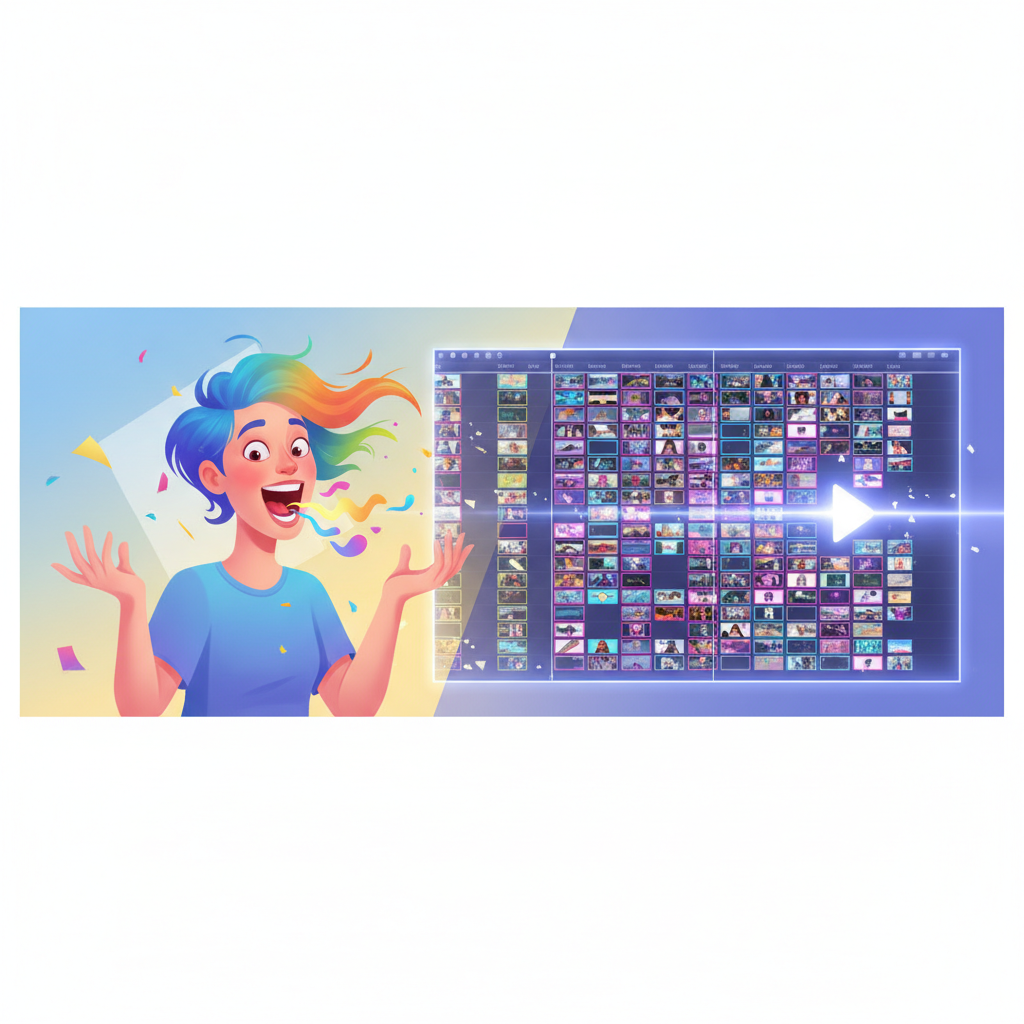
IShowSpeed (Darren Watkins Jr.) does not produce content in the traditional sense. He produces stimuli. His compilations open with rapid montages of him hitting a controller against his head, synced to percussive sound effects, cutting well under 1 second per shot. His challenge videos layer text overlays, split screens, and "woo!" sound effects in the first 5 seconds before any context is established. The structure is not narrative. It is stimulus delivery at maximum frequency. This is not an accident. It is a retention architecture designed around the assumption that viewers will leave unless something visually or audibly surprising happens every 1 to 2 seconds. The result is a channel with 33M+ subscribers and streams that consistently draw massive concurrent viewership across platforms.
For businesses trying to understand what high retention video looks like in 2025, Speed's work is a case study in engineering watch time through editing rhythm, not storytelling.
The Sub-Second Cut Rhythm
In his viral compilations, the cut rhythm averages well under 1 second per shot during high energy moments. The opening montage cycles through multiple settings, each showing Speed hitting a controller against his head, with cuts timed to match the percussive audio. This is not pacing for narrative clarity. It is pacing to prevent the viewer's thumb from scrolling. The technique extends throughout: jump cuts remove dead air, zoom ins punch on facial expressions, and match cuts link disparate clips through visual or audio continuity.
In challenge format videos, the rhythm shifts slightly. The first 5 seconds layer a "woo!" sound effect, a green text overlay reading "SPEEDRUN: MILLION DOLLAR MISSION," and a cut to a participant introducing the challenge. By second 5, the viewer has received three distinct stimuli: audio, text, and a new speaker. The rest of the video maintains fast cuts, especially during the "Speed Bark Challenge" segment, where participants bark like dogs in a store aisle. The cuts hit every 1 to 2 seconds, compressing the action and maintaining energy.
The pattern is consistent: no shot lasts long enough for the viewer to disengage. Every cut resets attention.
Reaction as Structure
Speed's content is built around his own reactions, not the underlying material. A gaming clip shows his character attempting an obstacle course. The character jumps, immediately falls into lava, and a "GAME OVER" screen appears. The hook is not the gameplay. It is Speed's surprised reaction to the failure. The structure is: action, immediate consequence, reaction. This loop repeats across formats.
The editing amplifies this. Picture in picture overlays keep Speed's face on screen during gameplay, TikTok reactions, or Omegle calls. Quick zoom ins on his expressions emphasize the reaction beats. Text overlays exaggerate the moment (one clip features a comically long string of the letter "i" to represent a scream). The viewer is not watching Speed play a game or react to a video. They are watching a highly edited sequence of reaction peaks, with all connective tissue removed.
This is why his clips dominate TikTok. The format is already optimized for clipping. Each reaction loop is self contained, requires no context, and delivers a dopamine hit in under 10 seconds. Fans create compilation edits by simply stacking these loops back to back.
The Hook, Setup, Payoff Compression
Speed's challenge videos follow a compressed narrative arc. The structure is: hook (energetic sound and text overlay), setup (challenge explanation), action (participants attempting the challenge), and payoff (winner reveal). The entire sequence runs under 60 seconds. Compare this to traditional YouTube challenge videos, which stretch the same arc across 8 to 12 minutes with extended intros, mid roll padding, and drawn out reveals.
Speed's version removes all buffer. The hook hits in the first 2 seconds. The setup is delivered in a single sentence by a participant. The action is shown in rapid cuts. The payoff (a woman finding a hidden briefcase) is revealed immediately, followed by a final text overlay announcing future challenges. The viewer receives the full narrative dopamine cycle in the time it takes a traditional creator to finish their intro.
This compression is why his Shorts and clips generate massive view counts. The format respects the viewer's impatience. It assumes they will leave unless the payoff arrives within seconds, not minutes.
Sound Design as Retention Hook
The audio layer in Speed's content functions as a secondary retention mechanism. His compilations use punchy sound effects synced to visual beats: the controller hitting his head, exaggerated game audio, sudden volume spikes during outbursts. His challenge videos layer "woo!" sounds, dog barking noises, and suspenseful tones during clue reveals.
The sound design is not subtle. It is deliberately aggressive, designed to grab attention even if the viewer is not actively watching. This is critical for mobile consumption, where viewers often scroll with partial attention. The audio spikes function as alerts: something is happening, look at the screen now.
This technique also makes the content more clipable. A 5 second clip of Speed yelling, paired with a punchy sound effect, works as a standalone piece of content. The audio carries the energy even without full context.
What EditorDuel Readers Can Take from This
Speed's retention formula is not about production budget or equipment. His overhead is almost nothing compared to creators like MrBeast. The retention comes from editing decisions: cut rhythm, reaction emphasis, sound design, and narrative compression.
For businesses producing content, the lessons are:
- Cut faster than feels comfortable. If your average shot length is above 3 seconds, you are leaving retention on the table. Speed's compilations cut well under 1 second during peak moments. Test cutting your B roll and reaction shots twice as fast as your current edit.
- Structure around peaks, not arcs. Traditional storytelling builds to a climax. Speed's content delivers a peak every 5 to 10 seconds. If your video has a single payoff at the end, restructure to deliver micro payoffs throughout.
- Amplify reactions, not actions. The underlying content (gameplay, challenges, TikToks) is secondary. The retention driver is Speed's reaction to the content. If you are producing reaction content, testimonial content, or review content, edit to emphasize the human response, not the thing being responded to.
- Use sound as a retention layer. Audio spikes, sound effects, and volume dynamics grab attention even when viewers are not actively watching. If your content plays silently on mute, it is invisible in the feed.
- Optimize for clipping. Speed's content is designed to be excerpted. Each segment is self contained and high energy. If your long form content does not clip well, the editing is too dependent on context. Structure episodes so that any 15 second segment can stand alone.
The broader insight: retention is not about keeping viewers interested. It is about preventing them from leaving. Speed's editing treats every second as a potential exit point and engineers around it.
Build Content That Holds Attention
IShowSpeed's 33M subscribers were not built on production value or brand partnerships. They were built on editing that respects the reality of modern attention spans: viewers will leave unless you give them a reason to stay every single second.
Want to build content like this for your business? Post a competition on EditorDuel and get matched with editors who can deliver.