Linus Sebastian has been making tech videos since 2007. What started as a side project from his job at a computer retailer became Linus Media Group, a production company operating multiple YouTube channels with over 16 million subscribers on the flagship Linus Tech Tips channel. The operation is worth studying not for any single viral hit, but for sustained content velocity at scale.
Due to high production costs and rising brand partner demands, Sebastian was originally instructed to create Linus Tech Tips as a cheaper offshoot that could produce content more rapidly at lower production values. That constraint became the foundation of a production model: prioritize volume and speed over polish, test hardware methodically, and turn benchmark data into entertainment.
The Multi-Channel Content Engine
Linus Media Group operates several distinct channels, each with its own upload cadence. The flagship Linus Tech Tips channel publishes multiple videos per week, covering product reviews, build guides, and tech experiments. Secondary channels handle different content types: unboxings, gaming content, behind-the-scenes material. This structure allows the company to segment audiences and maximize total output without diluting any single brand.
The production model relies on parallel workflows. While one team shoots a CPU cooler comparison, another edits yesterday's GPU review, and a third preps tomorrow's sponsor integration. This assembly line approach means the company can maintain daily or near-daily uploads across its portfolio without requiring any single creator to be on camera constantly.
Benchmark Methodology as Entertainment Format
Linus Tech Tips popularized a hardware-testing culture where benchmark methodology, thermals, and power behavior became entertainment for millions of viewers. The format is consistent: introduce a product, explain the testing setup, show charts and graphs, deliver a verdict. The predictability is the point. Viewers return because they know what they're getting.
The editorial approach treats technical specifications as narrative beats. A video might open with Linus holding a graphics card, cut to B-roll of the card being installed, then transition to benchmark results displayed as animated charts. In one Q&A video, the cut rhythm sits at roughly 1 to 3 seconds during direct address segments, quickening when motion graphics or B-roll appear. Sound effects punctuate transitions: whooshes, clicks, the sound of hardware clicking into place.
This editing vocabulary is replicable. The team uses text overlays to highlight key specs, motion graphics to visualize performance deltas, and jump cuts to compress explanations. The color grading stays bright and saturated, making the videos visually consistent across uploads. Every video follows a template, which means editors can work faster and viewers can navigate content intuitively.
The Sponsor Integration Model
Most Linus Tech Tips videos include a mid-roll sponsor segment. These are clearly delineated. Linus will pause the main narrative, address the camera directly, and deliver a scripted pitch for a VPN service, a website builder, or a PC component brand. The segments are typically 30 to 60 seconds and are edited to match the pacing of the surrounding content.
This model works because the audience expects it. The sponsor reads are not hidden or disguised. They are part of the format. The trade-off is explicit: free content in exchange for a brief commercial break. The consistency of this approach allows the company to maintain predictable revenue while keeping production costs sustainable.
Team Structure and Operational Scale
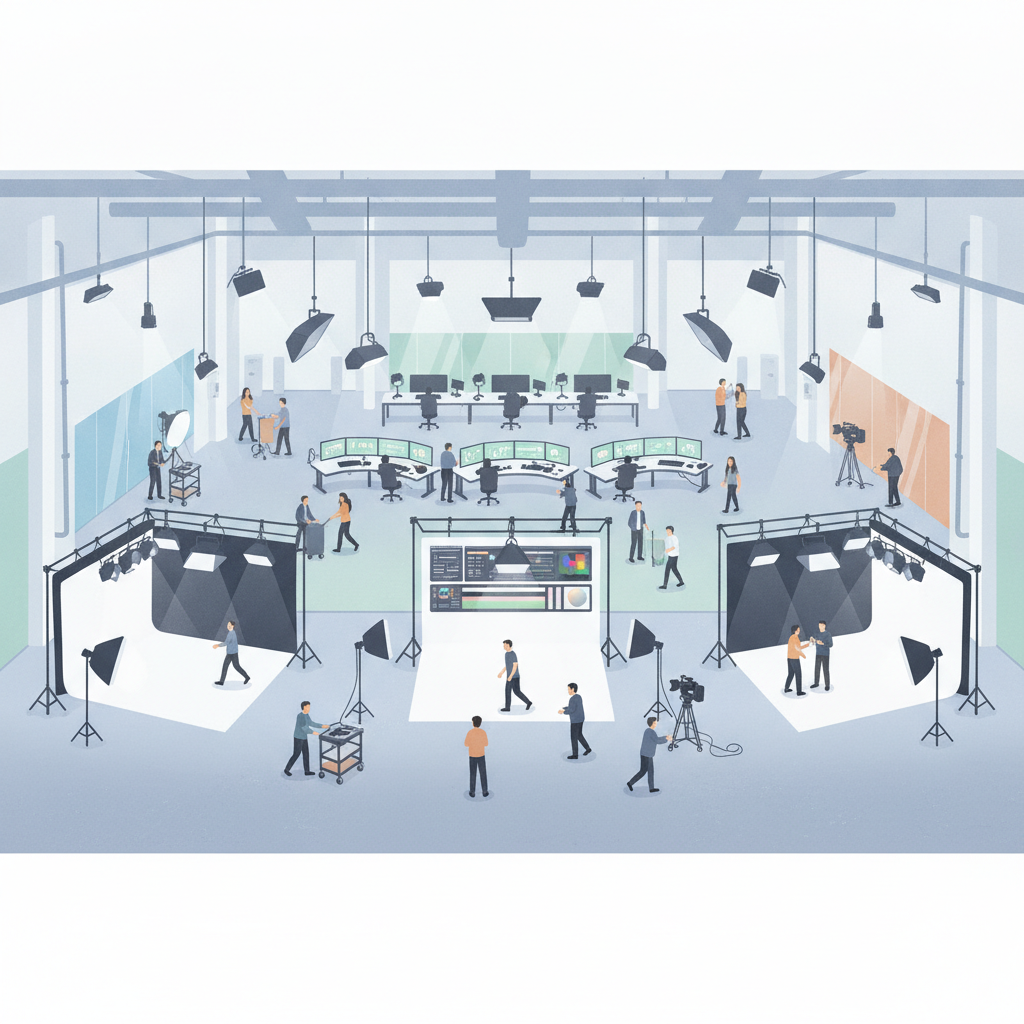
Linus Media Group employs a full production team: camera operators, editors, writers, set designers, logistics coordinators. The company operates out of a dedicated facility with multiple shooting stages, allowing simultaneous productions. This infrastructure investment is what enables the content velocity.
The operational philosophy is visible in the work. Videos are not labored over for weeks. They are shot, edited, and published on tight cycles. The production value is high enough to look professional but not so high that it bottlenecks output. This balance is the core of the model: good enough, fast enough, often enough.
One analysis of the operation notes the rapid cut rhythm across LTT content, with shots often changing in under 1 second during high-energy segments. Text overlays in red or yellow highlight key information. Motion graphics, speed ramps, and sound effects layer over the base footage. The editing is dense but not chaotic. Every element serves a function: maintain pace, clarify information, or emphasize a point.
What EditorDuel Readers Can Take From This
The Linus Tech Tips model offers several lessons for businesses building content operations:
Velocity over perfection. The company publishes frequently because it optimized for speed. If your content calendar is stalling because you are chasing perfection, you are leaving volume on the table. Set a quality floor, not a quality ceiling.
Format consistency enables scale. Every LTT video follows a recognizable structure. This makes production predictable and allows multiple teams to work in parallel. If you want to scale output, standardize your format first.
Benchmark data can be entertainment. Technical content does not have to be dry. LTT proves that charts, specs, and methodology can hold viewer attention if presented with energy and clarity. Find the narrative in your data.
Sponsor integrations work when they are transparent. The LTT audience tolerates sponsor reads because they are clearly marked and consistently placed. If you are monetizing through sponsorships, do not hide them. Make them part of the contract with your audience.
Infrastructure investment pays off at volume. Linus Media Group operates a full facility with dedicated stages and equipment. This upfront cost enables the production velocity that generates revenue. If you plan to publish daily or near-daily, invest in the infrastructure to support it.
The operation is not flashy. It is methodical. The company identified a format that works, built the infrastructure to execute it repeatedly, and optimized every step of the workflow for speed. That is the playbook.
Build Your Own Content Engine
Want to build content like this for your business? Post a competition on EditorDuel and get matched with editors who can deliver. Whether you need someone who can cut fast-paced tech reviews, integrate sponsor reads seamlessly, or maintain a consistent visual style across hundreds of uploads, the right editor is already on the platform. Post your project, review submissions, and hire the editor who understands your velocity goals.