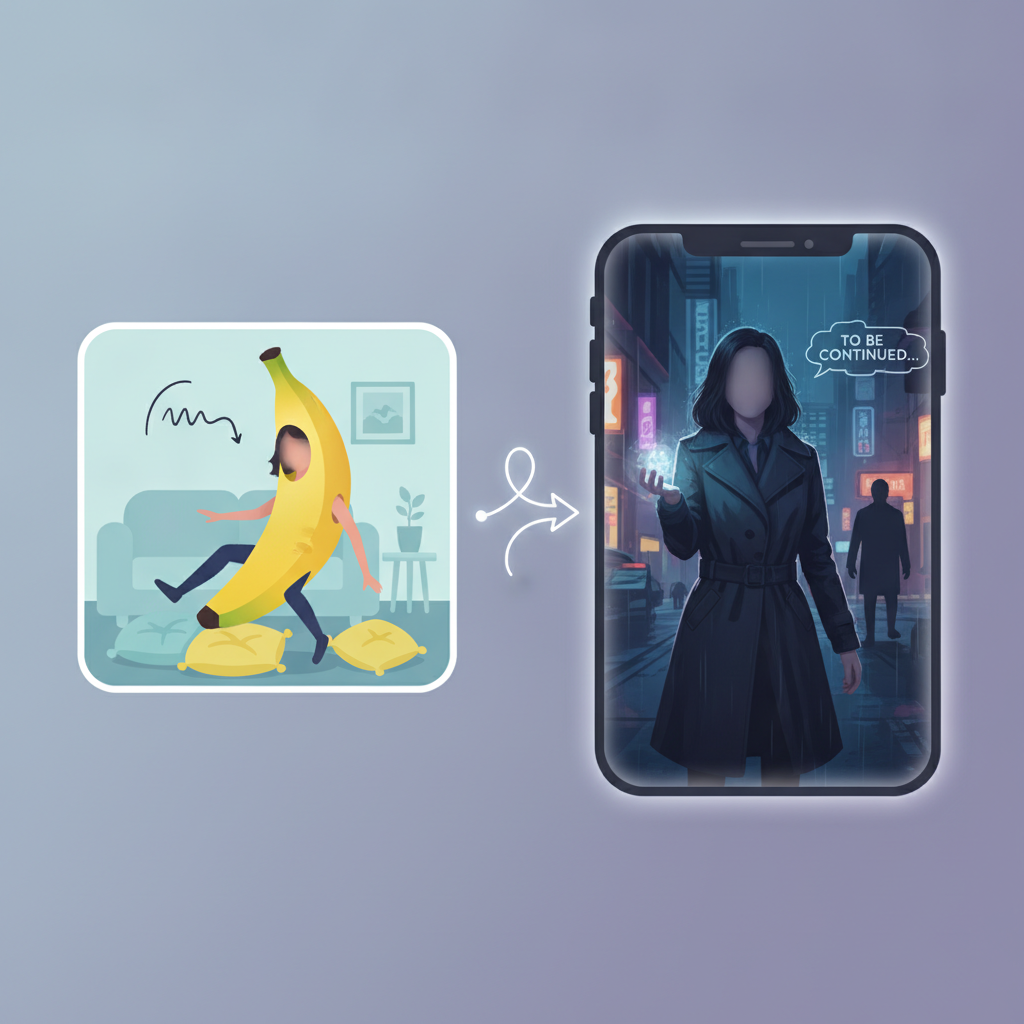
Hannah Stocking built an audience on physical comedy and repeat-view sketches, first on Vine starting in 2013, then YouTube, then Instagram and TikTok. By 2026, she has pivoted into a different content model entirely: vertical micro-drama series, studio partnerships, and serialized brand integrations. The shift is worth studying because it shows how a creator can move from viral-loop comedy into premium, episodic formats without abandoning the short-form platforms that made them.
From Six Second Sketches to Multi-Platform Repeatability
Stocking's early Vine work relied on fast, physical six-second sketches that looped seamlessly. When Vine shut down, she moved to YouTube with longer sketches produced under Shots Studios, where videos regularly passed millions of views. The content style remained consistent: physical comedy blended with millennial pop-culture references, designed for repeat viewing. The operational insight here is repeatability architecture. Stocking's videos were not built around one-time viral moments but around setups that audiences would watch multiple times or share as reaction content. That structure translated across platforms because the joke density, not the platform format, was the core asset.
By the time she reached 70M+ followers across platforms, the content had matured into a recognizable house style: tight setups, visual punchlines, minimal dialogue, high shareability. The comedy was platform-agnostic, which allowed her to port the same creative DNA to Instagram Reels, TikTok, and YouTube Shorts without rebuilding her brand from scratch.
Brand Integration as Content Format, Not Interruption
Stocking's commercial strategy has evolved into serialized brand content rather than one-off sponsored posts. In early 2026, she launched a Glossier product-launch partnership and a Dunkin' sponsored series. These are not 15-second ad reads. They are multi-episode arcs where the brand becomes a recurring narrative element. The Dunkin' series, for example, appears to structure episodes around coffee-shop scenarios, integrating the product into the sketch format rather than appending it as a CTA.
This approach solves a problem many brands face with creator partnerships: campaign fatigue. A single sponsored post disappears into the feed within 24 hours. A serialized integration keeps the brand visible across multiple uploads, building familiarity without repetition fatigue because each episode delivers new comedic value. For EditorDuel readers, the lesson is clear: if you are hiring editors to produce branded content, consider episodic formats that let the brand live inside the story rather than alongside it. Stocking's model shows that audiences will tolerate brand presence if the content remains entertaining and the integration feels native to the creator's voice.
The Studio Partnership Model: Equity Over Flat Fees
In 2026, Stocking starred in "Playback," a musical microdrama that premiered on Holywater's My Drama platform. She is also involved with Made By Us Studios, a vertical studio that positions creators as upstream IP partners with equity stakes rather than hired talent paid flat fees. This is a structural shift in how creator content gets financed and distributed. Instead of producing content on her own channel and monetizing through AdSense and sponsorships, Stocking is now co-producing premium series with studios that handle production, distribution, and monetization across multiple platforms.
The operational advantage is risk distribution and resource access. A solo creator funds production out of pocket and absorbs all downside if a series underperforms. A studio partnership spreads that risk and provides access to writers, directors, editors, and distribution deals that would be prohibitively expensive for an independent creator. The tradeoff is creative control and revenue share, but for creators at Stocking's scale, the upside is access to Hollywood-adjacent production budgets and cross-platform distribution that can reach audiences beyond their existing follower base.
For businesses evaluating creator partnerships, this model suggests a new question: should you hire a creator for a one-time campaign, or should you co-produce a series with them and share long-term monetization? The latter requires more upfront investment but can generate ongoing value if the content becomes a repeatable format.
The Vertical Drama Format: Episodic Storytelling in 60 Seconds
Vertical micro-dramas are a distinct content format. They are not traditional TV compressed into portrait orientation. They are serialized narratives designed for 60 to 90 second episodes, released daily or weekly, optimized for binge-watching on mobile. Stocking's move into this space reflects a broader trend: creators who built audiences on comedy sketches are now experimenting with scripted drama, romance, and thriller formats that sustain audience attention across multiple episodes.
The structural difference from sketch comedy is narrative momentum. A sketch resolves in one video. A micro-drama ends on a cliffhanger that pulls the viewer into the next episode. This format is particularly effective on platforms like TikTok and YouTube Shorts, where algorithmic recommendations can surface episode two immediately after episode one, creating a frictionless binge experience. For Stocking, this format allows her to retain the visual comedy and physical performance skills she honed on Vine while adding narrative depth and character development that sketches cannot support.
What EditorDuel Readers Can Take From This
First, repeatability beats virality. Stocking's content was never about chasing one massive hit. It was about creating a repeatable format that audiences would return to. If you are producing content for your business, ask whether your videos are designed for one-time views or repeat engagement. The latter builds stronger audience retention and makes your content more valuable to platforms and sponsors.
Second, serialized brand integrations outperform one-off sponsorships. If you are working with a creator or producing branded content in-house, consider multi-episode arcs that let the brand become part of the story rather than an interruption. This requires more planning and editorial coordination, but it delivers sustained visibility and deeper audience association.
Third, studio partnerships can unlock production scale that solo creators cannot reach. If your business is investing in original content, evaluate whether a co-production model with a creator or studio makes more sense than hiring talent on a flat-fee basis. The equity-and-EP model aligns incentives and gives you access to distribution channels and production resources that would otherwise require significant capital.
Finally, vertical micro-drama is a format worth testing. It combines the mobile-first consumption habits of short-form video with the narrative engagement of serialized TV. If your business produces educational, testimonial, or narrative content, consider whether you can structure it as a multi-episode series rather than standalone videos. The format works particularly well for product launches, case studies, and customer success stories that benefit from narrative momentum.
Want to build content like this for your business? Post a competition on EditorDuel and get matched with editors who can deliver serialized, platform-optimized video that keeps audiences coming back.