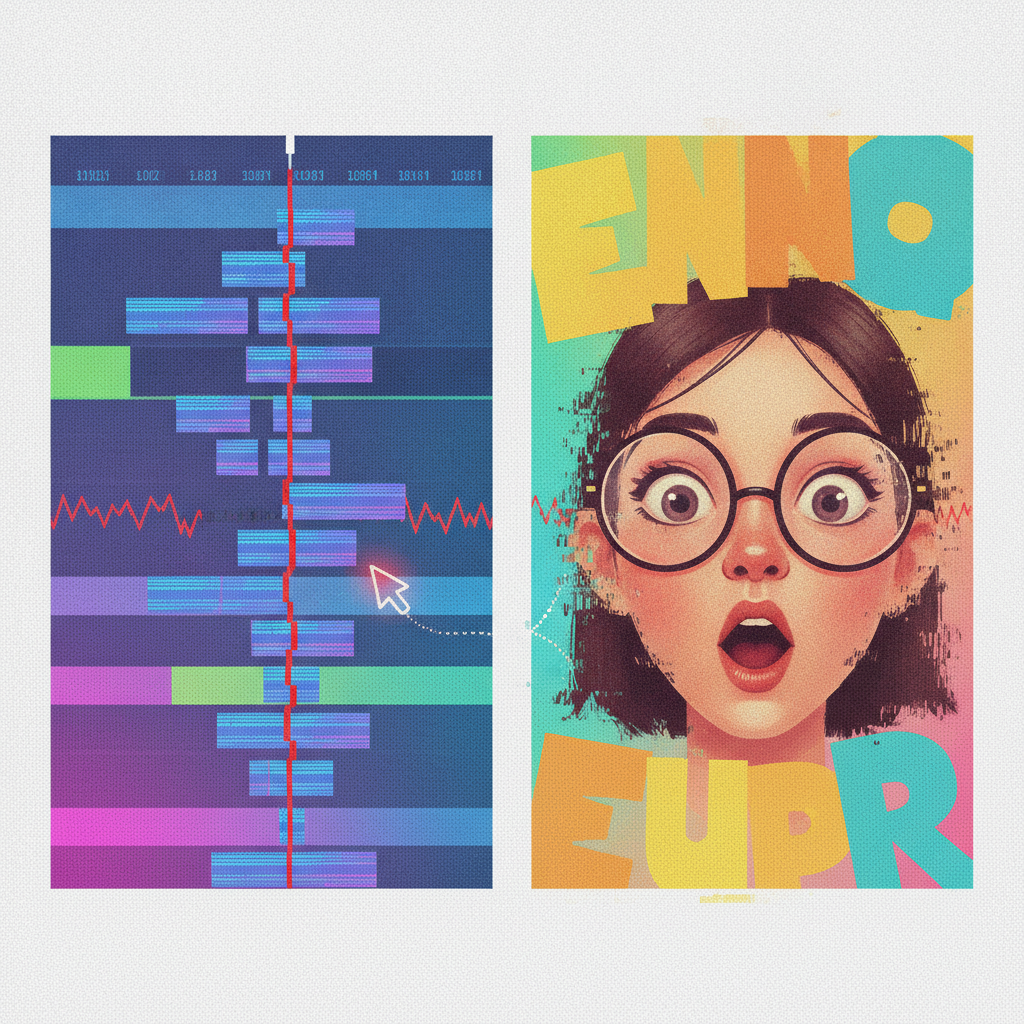
Emma Chamberlain did not invent the jump cut. But she turned it into a vernacular. Between 2017 and 2019, her vlogs established a visual grammar that made polished production feel dated. Fast, erratic cuts. Zooms on her own face mid-sentence. Unfiltered audio with room echo and laugh tracks left in. Self-deprecating text overlays. The style was so distinct that by 2026, TikTok users still reference "2017 Emma Chamberlain" as a specific aesthetic. For businesses trying to build personality-led content, understanding how her editing choices created intimacy at scale is worth dissecting.
The Jump Cut as Conversational Syntax
Chamberlain's signature technique was aggressive jump cutting within single takes. Where traditional vloggers might let a sentence breathe, she cut mid-word, mid-gesture, sometimes multiple times per second. The effect was not disorienting. It was propulsive. Each cut removed dead air, hesitation, filler words. What remained felt like talking to a friend who thinks faster than they speak. The rhythm mirrored how Gen Z actually communicates: in bursts, with interruptions, self-corrections baked in.
This was not accidental sloppiness. It was intentional compression. By stripping out pauses, she could pack more personality, more tonal shifts, more comedic beats into the same runtime. A three-minute vlog could cover a coffee run, a wardrobe crisis, and an existential aside without feeling rushed. The jump cuts became the grammar of her intimacy. They signaled: I am not performing for you. I am letting you inside my unfiltered thought process.
Raw Audio and the Illusion of Unmediation
Chamberlain rarely used external microphones in her early work. Room echo, traffic noise, the hum of a refrigerator, all stayed in. When she laughed, the audio peaked. When she whispered a sarcastic aside, it was barely audible. This was not technical ignorance. It was aesthetic choice. Polished audio creates distance. It reminds the viewer they are watching produced content. Raw audio collapses that distance. It makes the viewer feel like they are in the room.
The lo-fi sound design extended to her music choices. She used royalty-free tracks, often quirky or slightly off-kilter, that felt like they were pulled from a college student's Spotify liked songs. No epic cinematic scores. No licensed pop hits. Just background texture that reinforced the DIY ethos. The overall effect was a vlog that felt like it could have been made by the viewer themselves, if only they were funnier and more charismatic.
Self-Aware Text Overlays as Comedic Punctuation
Chamberlain used on-screen text not to clarify, but to undercut. Mid-rant, a caption would appear: "why am I like this." After a failed joke, the text: "ok moving on." These overlays functioned as a second voice, a running commentary on her own performance. They let her be simultaneously the subject and the critic. The viewer was invited to laugh with her at herself, which is a more powerful bond than laughing at polished punchlines.
This technique has since been adopted across TikTok and YouTube Shorts. But Chamberlain deployed it with restraint. The text was sparse, timed for maximum comedic impact, never cluttering the frame. It was punctuation, not narration. When J.Crew hired her in 2026 for a campaign described as "colorful, lo-fi, a little weird and rooted in the visual language of the early internet," they were explicitly buying her editorial sensibility, not just her audience.
Zooms, Speed Ramps, and the Vocabulary of Emphasis
Chamberlain used digital zooms liberally. Not smooth, cinematic push-ins, but jarring, comedic crash zooms that landed on her face at the punchline of a joke or the peak of an awkward moment. These zooms were her italics. They told the viewer where to focus, what emotional beat mattered. Combined with occasional speed ramps (slowing down a mundane action like pouring coffee to make it feel absurd), she built a visual vocabulary that communicated tone without dialogue.
In a recent short analyzing her Met Gala collaboration, the editing still carries these fingerprints: close-ups on texture, rhythmic cuts aligned to music, a focus on process over polish. Even when working with high-fashion subject matter, the editorial approach remains grounded in intimacy and detail. The video uses jump cuts and close-ups to highlight the paint application, maintaining the same raw, artistic energy that defined her early vlogs.
Why the Style Scaled
Chamberlain's editing choices were not just aesthetic. They were strategic. By making her production process appear effortless, she lowered the perceived barrier to entry for her audience. Viewers thought: I could do this. That perception drove engagement. It also made her content infinitely remixable. Fans could clip her videos, add their own text, remix the audio. The lo-fi style was native to platform vernacular.
More importantly, the style aged well. As she transitioned into lifestyle commerce, launching Chamberlain Coffee and securing brand deals with Hollister, Louis Vuitton, and Squarespace, the editing vocabulary remained consistent. Even polished brand integrations carried the same jump-cut rhythm, the same self-aware text overlays. The style became her signature, portable across formats. When she launched a podcast, the same editorial instincts translated: conversational, self-interrupting, intimate.
What EditorDuel Readers Can Take from This
Chamberlain's success offers three actionable lessons for businesses building personality-led content:
First, compression beats polish. Aggressive cutting that removes dead air makes content feel faster, more engaging, more rewatchable. Viewers forgive rough edges if the pacing is tight. If your brand content feels slow, the problem is not production value. It is editing rhythm.
Second, raw audio can build intimacy. Not every piece needs studio-grade sound. For behind-the-scenes content, founder diaries, or team vlogs, leaving in room tone and imperfect takes can make the content feel more human. The key is intentionality. Raw should feel like a choice, not a mistake.
Third, self-aware commentary disarms skepticism. Text overlays that acknowledge awkwardness, failed jokes, or production mistakes let the audience laugh with you, not at you. This is especially powerful for brands trying to build trust. Admitting imperfection is more persuasive than pretending perfection.
The lo-fi editing vocabulary Chamberlain pioneered is now standard across creator-led content. But most brands still default to overproduced, overly scripted video. The gap is an opportunity. Hiring editors who understand pacing, intimacy, and comedic timing, not just color correction and motion graphics, is how you close it.
Want to build content like this for your business? Post a competition on EditorDuel and get matched with editors who can deliver.