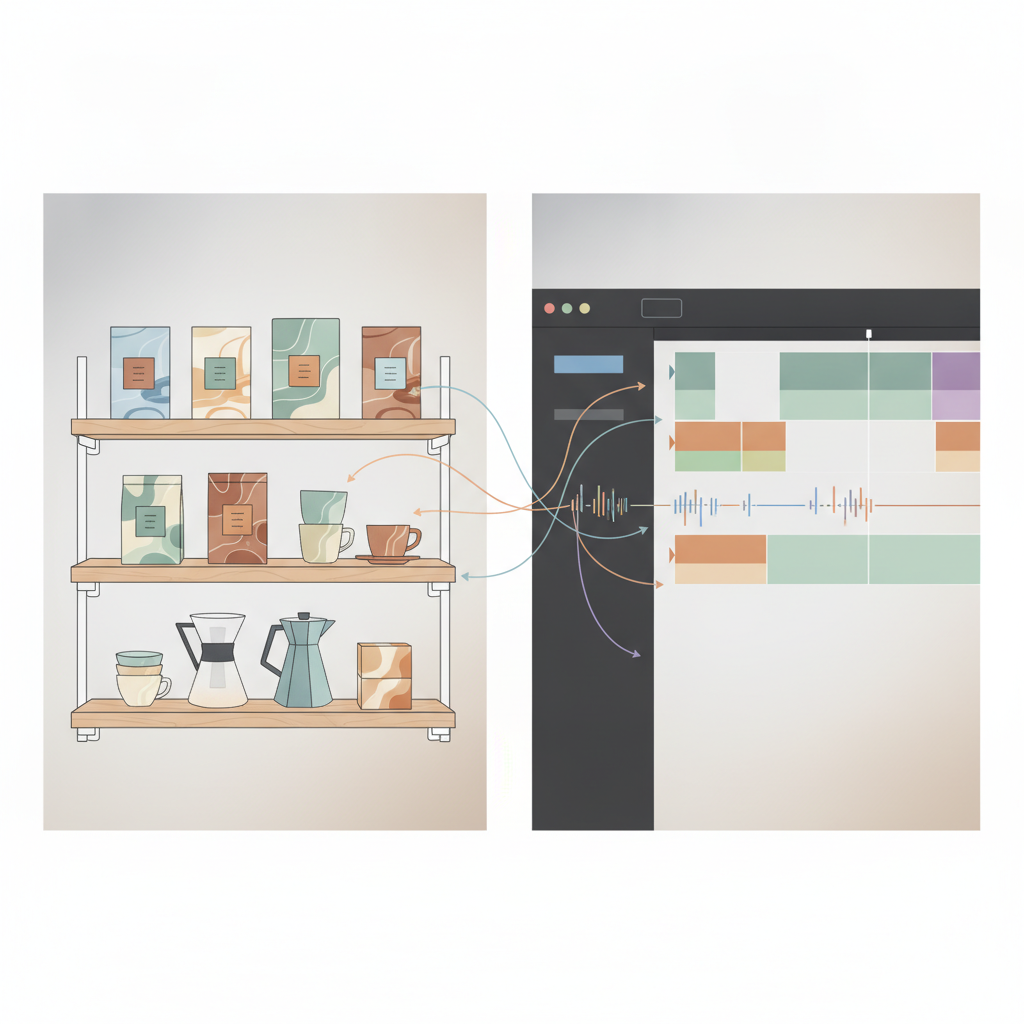
Emma Chamberlain started posting videos at 16, before most marketers understood what the creator economy would become. By her early twenties, she had 12 million subscribers, ambassador deals with Louis Vuitton, Cartier, and Lancôme, and a coffee brand sold in over 8,000 retail doors across Walmart, Target, and Costco. The operational insight is not that she went viral. It is that she built an editing style so distinct and replicable that it became a format other creators could study, copy, and iterate on, while she moved upstream into lifestyle commerce.
Unlike creators who scale via virality alone, Emma monetized through lifestyle commerce: she launched Chamberlain Coffee, a direct-to-consumer brand that proved retail viability without leaning on celebrity halo effects. The question for businesses is not whether Emma is relatable. The question is how a specific editorial approach, grounded in jump cuts and self-deprecating humor, created enough trust and parasocial density to move product at Target.
The Jump Cut as Format, Not Filler
Emma Chamberlain redefined vlog style with jump cuts, self-deprecating humor, and lo-fi editing, connecting deeply with Gen Z viewers. The jump cut, historically used to remove dead air or mistakes, became the primary rhythmic device. Where traditional vlogs used longer takes to establish scene and mood, Emma's videos cut every few seconds, sometimes mid-sentence, creating a caffeinated, stream-of-consciousness effect.
This was not accidental. The jump cut economy works because it compresses time without losing intimacy. A 10 minute video might contain 200+ cuts, each one removing hesitation, filler words, or low-energy moments. The result is content that feels spontaneous but is editorially tight. The viewer experiences unfiltered personality without the drag of unedited reality.
The format became so recognizable that TikTok users still reference her 2017 vlogs as a touchstone for YouTube editing style. The jump cut was not a technical choice. It was a branding choice. It signaled that the creator valued the viewer's time and attention over production polish.
Lo-Fi as Trust Signal, Not Budget Constraint
Emma became known for candid YouTube vlogs that turned everyday routines, travel, fashion, and personal observations into personality-led videos. The lo-fi aesthetic (natural lighting, handheld camera, minimal color grading) was not a limitation. It was a strategic contrast to the over-produced, aspirational content dominating YouTube at the time.
Lo-fi editing creates perceived authenticity. When a creator shows the rough edges (bad lighting, awkward pauses, self-deprecating commentary), the viewer interprets it as honesty. This is the operational insight: the editing style was not about looking amateur. It was about looking unmediated. The jump cuts and raw footage signaled that nothing was being hidden, even though the final video was heavily edited.
This trust signal became the foundation for commerce. When Emma launched Chamberlain Coffee, the brand did not rely on celebrity endorsement. It relied on the same lo-fi, personality-first approach. Chamberlain Coffee's team made a deliberate bet: prove the product could sell on its own merits, driven by ordinary people talking about it on TikTok, before leaning on Emma Chamberlain's name. The brand built a nano-creator seeding strategy with zero celebrity halo, and it paid off with placement at Target. Retail buyers increasingly discount celebrity-founder virality unless it is backed by grassroots, creator-driven proof that ordinary consumers are seeking the product out.
Sponsorship Density Without Audience Fatigue
Emma remains one of the most analyzed channels for YouTube sponsors in the lifestyle category. The jump cut format allows for high sponsorship density without breaking narrative flow. A 12 minute vlog might include a 60 second sponsored segment that feels like a natural aside, not an interruption. The cut rhythm stays consistent, the tone stays conversational, and the viewer does not experience the jarring shift that happens when a polished ad block interrupts a long-form video.
This is the editing mechanic that makes sponsorship scalable. Brands pay for integration, not interruption. The jump cut format allows the creator to move in and out of sponsored content without changing the editorial voice. The viewer tolerates the ad because it does not slow down the pacing.
The Retail Playbook: Editorial Style as Product Differentiator
Chamberlain Coffee's success at retail was not about Emma's subscriber count. It was about proving that the brand could generate repeat purchase data and category velocity independent of one person's fame cycle. Buyers at Target and Kroger do not just want cultural relevance. They want repeat purchase data, category velocity, and proof that demand is not tied to one person's fame cycle.
The brand's TikTok strategy was not influencer marketing in the traditional sense. It was a seeding strategy that used nano-creators to generate organic proof of demand before the brand ever showed up in trade conversations with Emma's name attached. The editorial approach that made Emma's videos work (raw, relatable, high-cut-density) became the brand's content strategy. The product moved because the content style was replicable by ordinary consumers, not just by Emma.
What EditorDuel Readers Can Take From This
The Emma Chamberlain playbook is not about copying jump cuts. It is about understanding how editorial rhythm creates trust, and how trust converts to commerce. Businesses hiring editors should ask: does the cut rhythm signal authenticity or interruption? Does the pacing respect the viewer's time or waste it? Does the lo-fi aesthetic feel honest or lazy?
The jump cut economy works because it compresses time without losing intimacy. For brands, this means shorter videos with higher information density. For creators, this means editing is not post-production cleanup. It is the primary tool for building parasocial trust.
The retail lesson is equally clear: celebrity-founder brands succeed when the editorial style is replicable by non-celebrities. If your content strategy depends on one person's charisma, it does not scale. If it depends on a format that ordinary users can adopt and remix, it moves product.
Want to build content like this for your business? Post a competition on EditorDuel and get matched with editors who can deliver.