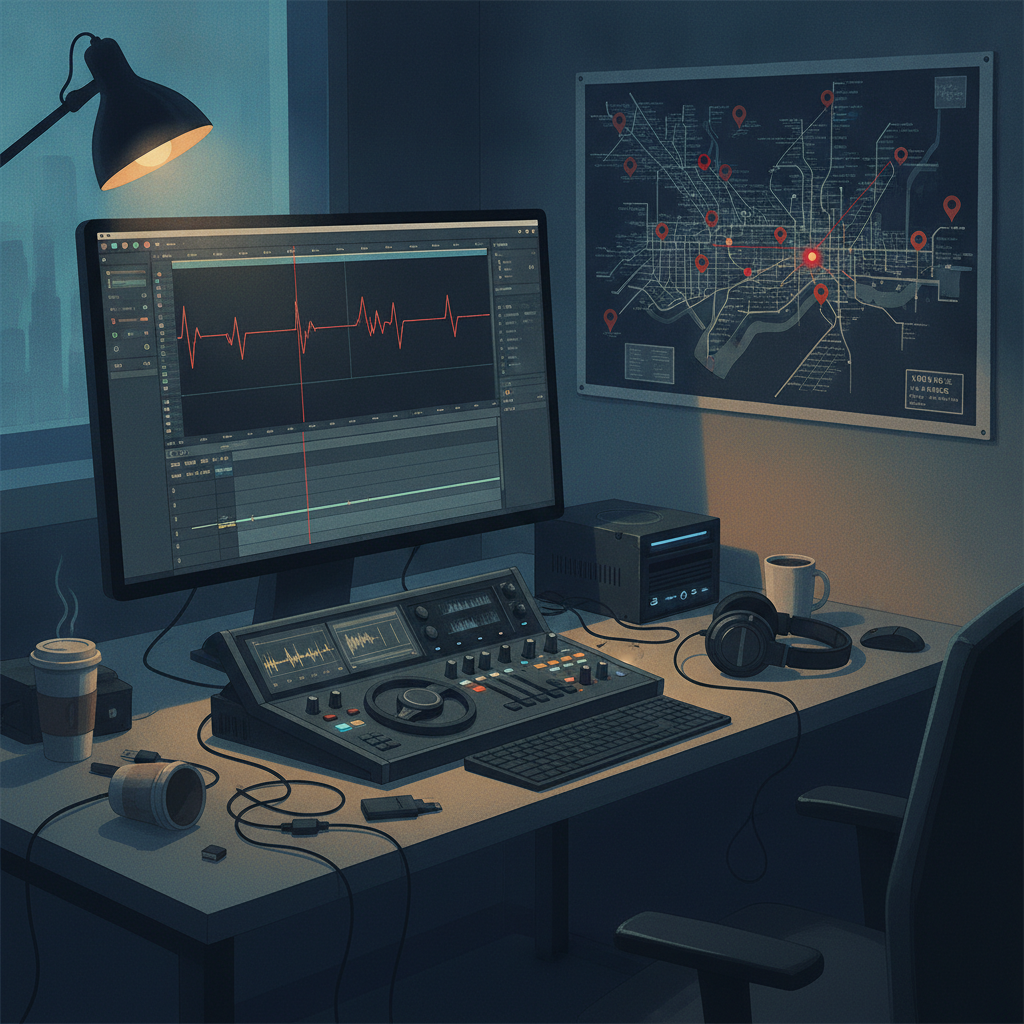
The Editing System That Made Daily Vlogging Viable
Casey Neistat didn't invent the daily vlog, but he made it sustainable at scale. From May 2015 through 2016, he published videos for 534 consecutive days, a cadence that would burn out most creators within weeks. The operational secret wasn't superhuman stamina. It was an editing vocabulary so refined that it could transform raw footage into watchable content at industrial speed. His technique, visible across both his vlog archive and recent work, relies on three core mechanics: aggressive jump cuts that compress speech, interactive B-roll that visualizes abstract ideas, and kinetic sound design that maintains energy across scene transitions.
The style is immediately recognizable. In a recent video breaking down the NYC Marathon route, Neistat sits at a table with a map, delivering his thesis that the race is "the meanest." The cut rhythm averages 2 to 3 seconds per shot, alternating between medium shots of Neistat and overhead angles of the map. Jump cuts tighten his delivery, removing pauses and filler words. Text overlays reinforce spoken phrases like "I've run 31 marathons" and "It's the meanest." The B-roll isn't passive illustration. Neistat draws the marathon route in red marker directly on the map, writes the word "HARD" in block letters, and uses the physical act of annotation as a narrative device. The video analysis notes that energy peaks occur as he describes each difficult section, his voice becoming more animated, his hand gestures more emphatic, especially when exclaiming "It's uphill!"
Jump Cuts as Compression Technology
The jump cut, once considered amateurish, became Neistat's primary tool for maintaining pace. In a longer video answering questions about New York City, the editing follows a question-and-answer structure. Neistat reads a question card, then answers while the video cuts rapidly between sustained shots (2 to 3 seconds) and quick cuts (under 1 second) to B-roll footage, map close-ups, or different angles of Neistat himself. The video analysis describes the rhythm as "predominantly medium to fast," with jump cuts used "frequently on Neistat to maintain energy and condense speech."
This isn't just stylistic preference. It's a production efficiency hack. By cutting aggressively, Neistat can deliver a 10-minute video's worth of information in 6 minutes of watch time, compressing rambling monologues into tight, declarative statements. The technique also masks the seams of single-take shooting. If he stumbles over a word or pauses to think, the jump cut removes the dead air. The result is content that feels spontaneous but plays at a pace no unedited conversation could match.
Interactive B-Roll and the Map as Narrative Anchor
Most creators treat B-roll as filler, cutting away to generic cityscapes or stock footage to cover gaps in the A-roll. Neistat uses it as a second narrative track. In the NYC favorites video, he places pins on a large map of New York City as he discusses locations, drawing routes with a marker and writing words like "Meaningful Places" directly on the map. The video analysis notes that this "provides a clear visual anchor for his stories, making abstract concepts (like marathon routes or past addresses) tangible and easy to follow."
The map interaction serves multiple functions. It gives the viewer something to watch beyond a talking head. It visualizes spatial relationships that would be hard to convey verbally. And it introduces a tactile, physical element that contrasts with the digital nature of the medium. The analysis describes the overall effect: "The personal anecdotes, combined with visual evidence, create a compelling narrative that retains viewers by making them feel like they're on a personal tour with a passionate guide."
This approach extends beyond maps. Neistat's B-roll library includes archival footage of himself and his brother, old clips showing past experiences, and location-specific shots (laundromats, tunnels, bridges, his studio). The B-roll isn't generic. It's curated to the story, often shot specifically for the narrative beat it supports. The video analysis notes that the footage features "a vibrant, slightly desaturated, and cinematic look," a consistent color grade that unifies disparate clips into a cohesive visual language.
Sound Design and the Energy Floor
Neistat's videos never go quiet. In the marathon video, the video analysis describes "an underlying, subtle, upbeat instrumental track throughout the video." In the NYC favorites video, sound effects punctuate action, such as "the 'thud' when he places pins on the map." The audio layer maintains an energy floor, preventing the video from ever feeling slow or static, even during expository sections.
This is critical for retention. YouTube's algorithm rewards watch time, and watch time correlates with energy. A video that dips into silence or monotony loses viewers. By layering music, sound effects, and Neistat's own high-energy delivery, the editing creates a sonic texture that keeps the viewer engaged even when the visual content is simple (a map, a talking head, a static location shot).
The Operational Constraint That Shaped the Style
Neistat's editing vocabulary didn't emerge from artistic experimentation. It emerged from operational necessity. Daily vlogging for 534 days required a production system that could turn around content in hours, not days. The jump cut allowed him to shoot loosely and tighten in post. The interactive B-roll gave him a visual vocabulary that didn't require complex setups or second units. The sound design masked rough edges and maintained energy without requiring elaborate scoring.
One analysis notes that "the channel's success is entirely tethered to Casey Neistat's highly distinct personal brand, physical stamina, unique editing style, and decades of built-up audience trust." The editing style isn't just aesthetic. It's infrastructure. It's what made the volume possible. And because the style became so recognizable, it became part of the brand itself. Other creators have cited Neistat's editing as inspiration, adopting the jump cut and kinetic B-roll vocabulary for their own work.
What EditorDuel Readers Can Take From This
Neistat's editing system offers three actionable lessons for businesses building content operations. First, compression beats perfection. Jump cuts allow you to shoot more loosely and fix pacing in post, reducing the pressure on talent to deliver perfect takes. Second, interactive B-roll turns exposition into demonstration. If you're explaining a process, a map, or a timeline, show it. Draw on it. Annotate it. Make the viewer watch the explanation unfold rather than just hear it. Third, maintain an energy floor with sound. Even simple background music or ambient sound effects prevent dead air and keep the viewer's attention from wandering.
The style also scales. Neistat's vocabulary doesn't require expensive gear or large crews. It requires a clear editorial point of view and a willingness to cut aggressively. That makes it replicable for teams producing content at volume, whether that's daily social clips, weekly long-form videos, or monthly case studies.
Want to build content like this for your business? Post a competition on EditorDuel and get matched with editors who can deliver.