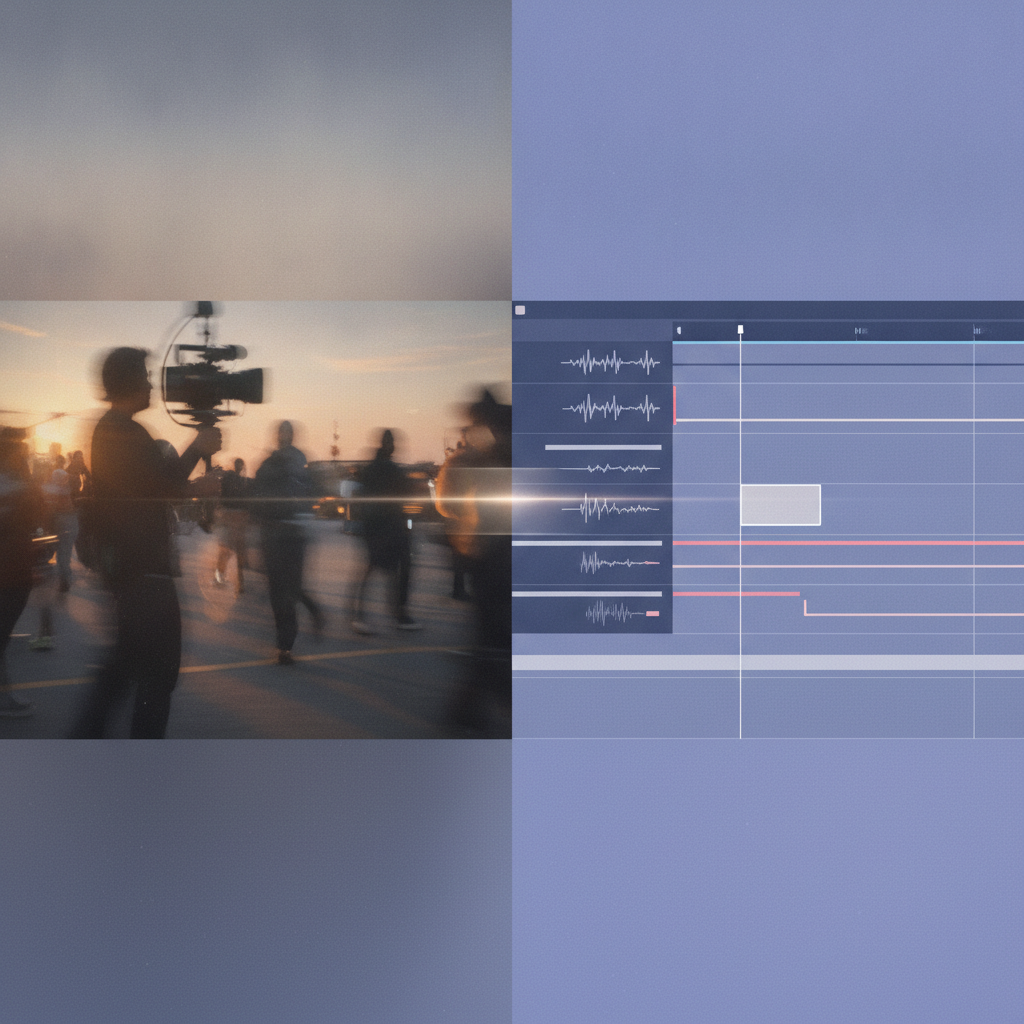
Casey Neistat didn't invent the vlog, but he engineered a specific editing vocabulary that turned daily life into compelling cinema. His approach combines what he calls "lean forward" content with a raw aesthetic that compensates for lower production values through narrative precision. For businesses trying to build sustainable content operations, Neistat's work demonstrates how editing choices drive retention and trust more effectively than budget or gear.
The Lean-Forward Editing Philosophy
Neistat has publicly distinguished between "lean forward" and "lean back" content, explicitly stating he's never been interested in chasing short-form video trends. This philosophy manifests in his editing: every cut demands active attention. Unlike passive consumption formats, his videos require viewers to piece together story beats themselves. In his travel content, he skips the typical welcome moment and instead captures key airport signs, letting audiences reconstruct the journey. This technique creates cognitive engagement, a retention mechanism that keeps viewers mentally invested rather than scrolling.
The editing rhythm supports this. Training resources cite Neistat's beginning-middle-end structure as a foundational framework for long-form retention. Unlike algorithmic hooks that front-load dopamine, his structure builds narrative momentum across the full runtime. The opening establishes a question or conflict, the middle develops tension through visual storytelling, and the end delivers resolution or insight. This classical three-act approach, executed through editing rather than scripting, gives his work a cinematic quality that distinguishes it from typical creator content.
Raw Aesthetic as Intentional Craft
Multiple analyses note that Neistat's raw authenticity compensates for lower production values. This isn't accidental. His editing choices prioritize emotional resonance over technical perfection. Handheld camera work, natural lighting, and visible production mistakes stay in the final cut because they serve the narrative. The imperfection signals honesty, which builds the audience trust he later monetized through sponsorships and direct fan support.
The craft lies in knowing which imperfections to keep. His edits are described as cinematic, not despite the rough edges but because of how those edges are curated. He directs viewer attention through pacing and shot selection, controlling emotion without relying on color grades or sound design polish. This editing philosophy scales better than high-production approaches because it doesn't require large teams or expensive gear. A single editor with strong narrative instincts can replicate the structure.
The Daily Vlog as Editing Discipline
Neistat's daily vlog era, popularized alongside creators like Emma Chamberlain, functioned as an editing boot camp. Turning mundane daily schedules into watchable narratives requires identifying the interesting moments in real time and structuring them into coherent arcs. This discipline, repeated daily, trains editors to see story in raw footage that others would discard.
The format also enforces efficiency. Daily uploads don't allow for extensive post-production, so the editing must be decisive. Cuts happen quickly, transitions stay simple, and the narrative structure does the heavy lifting. This constraint-driven approach produces a distinct rhythm: fast enough to maintain attention, but not so frenetic that it exhausts viewers. The result is content that feels urgent without feeling chaotic.
Storytelling Over Shortcuts
Industry training emphasizes that the best editors don't just cut clips; they direct viewer attention, control emotion, and make complex ideas feel effortless. Neistat's work exemplifies this. His famous Nike commercial, where he took the brand's budget and spent ten days traveling the world with Max Joseph instead of making the requested ad, succeeded because the editing turned rebellion into narrative. The opening confession, the rapid-fire travel montage, and the thematic payoff all serve the Make It Count message more effectively than a scripted spot would have.
This approach requires editors who understand story structure, not just software. The technical execution is secondary to the narrative choices: which moment opens the video, where tension builds, when resolution arrives. These decisions happen in the edit, not on set, which means the editor functions as a co-director.
What EditorDuel Readers Can Take From This
Neistat's editing vocabulary offers three concrete lessons for businesses building content operations. First, lean-forward editing creates deeper engagement than passive formats. Structure your videos to require active attention through narrative gaps, visual puzzles, or question-driven arcs. This trades raw view counts for higher retention and stronger audience relationships.
Second, raw authenticity scales better than production polish. Train editors to prioritize emotional truth over technical perfection. Keep the imperfections that serve the story, cut the ones that distract. This philosophy reduces production costs while building trust, the asset Neistat monetized more successfully than viral hits.
Third, daily or high-frequency content disciplines editing teams. The constraint forces editors to develop narrative instincts and efficiency. Even if you don't publish daily, simulate the constraint in your workflow. Give editors tight turnarounds on select projects to train decisive storytelling.
Neistat's career demonstrates that sustainable income comes from long-term control, not short-term payouts. His editing approach built the audience foundation for that control. The Beme acquisition, a $25 million deal with CNN in 2016, and his ongoing sponsorship relationships with premium consumer hardware, automotive, and athletic brands all stem from the trust and attention his editing style cultivated.
Want to build content like this for your business? Post a competition on EditorDuel and get matched with editors who understand narrative structure, retention mechanics, and how to turn raw footage into stories that hold attention.