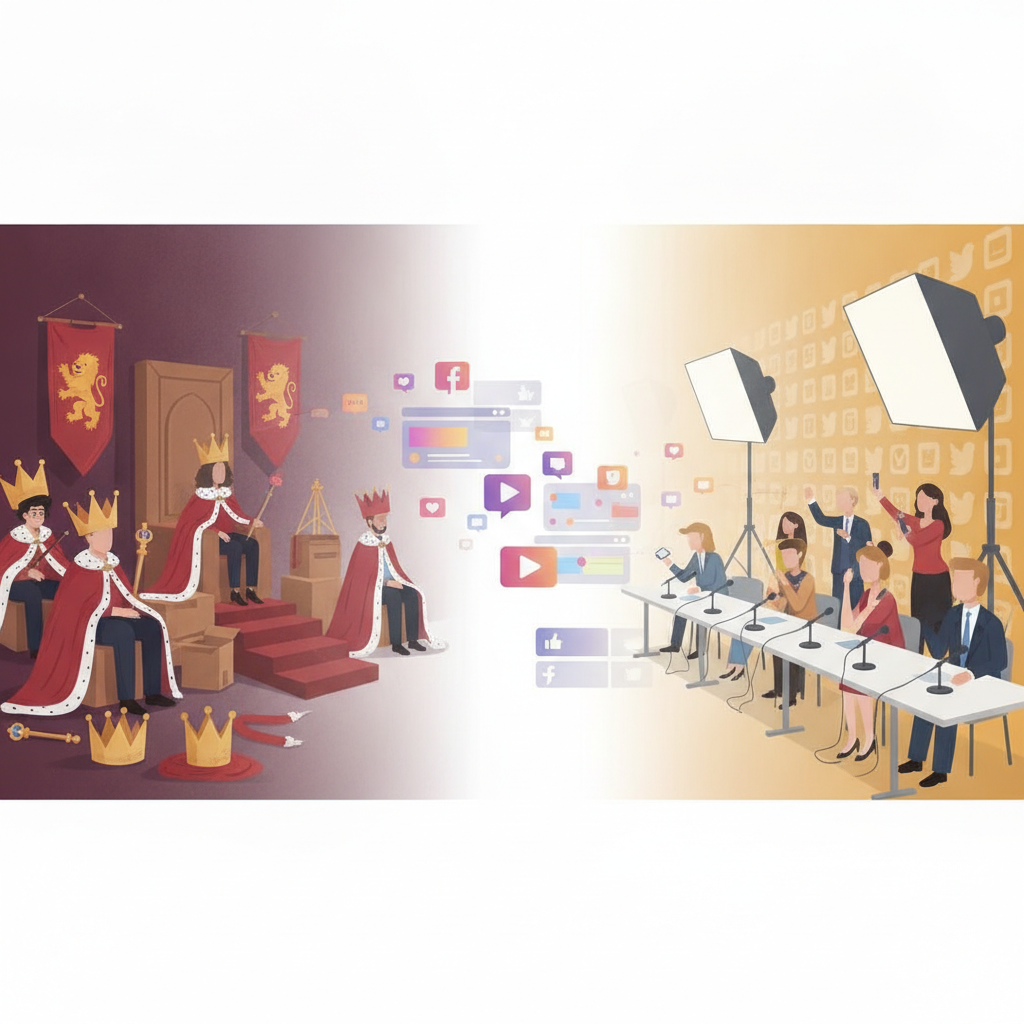
When Matt Damon, Anne Hathaway, Nicole Kidman, Sandra Bullock, and Bob Odenkirk all agree to dress in medieval costumes for a YouTube interview, something structural is working. Brittany Broski's Royal Court, which The Hollywood Reporter named to its 2026 Creator A-List, has become a press tour stop not because of budget or reach, but because the format itself solves problems traditional interviews create. The show is a case study in how rigid conventions, visual gimmicks, and editing for silent viewing can turn a podcast setup into a celebrity magnet.
Broski initially gained fame in 2019 after a kombucha tasting video went viral on TikTok. By 2026, she operates multiple revenue streams: The Broski Report podcast, Royal Court on YouTube, brand partnerships with Smirnoff Ice, Lola Blankets, Rocket Money, and Whatnot, and merchandise exploration in skincare. But Royal Court is the asset that gets A-listers to show up. The format's success is mechanical, not accidental.
The Costume as Structural Equalizer
Every guest on Royal Court wears a medieval costume. This is not set dressing. It is a psychological lever. Broski herself jokes, "I used to post videos of me being horny for celebrities I now have to sit opposite from and interview about their careers." The costume requirement flattens that power dynamic. When Nicole Kidman is wearing a velvet cape and foam crown, the formality of a traditional press junket evaporates. The guest cannot default to rehearsed answers because the environment itself is absurd.
This is not new in comedy (see: Hot Ones, Between Two Ferns), but Royal Court's execution is tighter. The medieval theme is consistent, legible, and memeable. Publicists can pitch it as "fun" without risk. The costume becomes the story, which means the interview itself can be looser. Broski gets unguarded moments because the format has already done the work of disarming the guest.
Editing for Silent Scrollers
In this recent short, the opening hook is a text overlay: "At 10, She Turned Down Worlds of Fun." The visual shows someone in a green alien costume (a Halloween episode variant) holding a microphone, with a large Mickey Mouse pumpkin in the foreground. The first spoken line is, "Dude, this is why I'm so scared of the ocean and I'm right about it." The text overlay and the visual costume grab attention before any audio registers.
The cut rhythm averages 2 to 3 seconds per shot. Jump cuts tighten dialogue. Text overlays highlight key phrases: "THIS IS WHY I'M SO SCARED OF THE OCEAN," "VERY SCARY PLACE," "I WAS TELLING EVERYONE." The video has a warm, slightly desaturated color palette. The structure is conversational: hook (text overlay), setup (personal anecdote about being 10 years old), payoff (punchline about the mother's reaction), energy peak (group laughter).
This editing vocabulary is built for TikTok and Instagram Reels, where 80% of views happen without sound. The text overlays make the narrative legible. The costumes make the thumbnail stand out. The medium cut rhythm keeps the pace engaging without requiring full audio context. Royal Court clips work as standalone units, which means every episode generates 10 to 15 shareable moments. Traditional interviews generate one or two.
The Broski Report as Content Engine
Royal Court is the flagship, but The Broski Report podcast is the content engine. The show features episodes covering pop culture, book club segments, and sponsor integrations. Recent episodes include reads for Smirnoff Ice, Lola Blankets, Rocket Money, and Whatnot. Broski's agent roster at UTA includes Emma Chamberlain, Bowen Yang, and Jonathan Van Ness, positioning her in the upper tier of creator-driven audio.
The Broski Report feeds Royal Court by maintaining Broski's voice and audience between guest episodes. It also provides a testing ground for bits, sponsor relationships, and format experiments. When Smirnoff Ice launched a Halloween activation with Broski, the brand used her personality across merchandise, social content, and a live experience. That integration only works if the creator has a consistent content cadence and a defined persona. The Broski Report delivers both.
Why Hollywood Keeps Showing Up
Traditional press junkets are adversarial by design. Journalists ask hard questions. Publicists limit time. Celebrities repeat talking points. Royal Court inverts this. The format is explicitly friendly. Broski is a fan, not a critic. The costume requirement signals that the interview will be lighthearted. The clips will be shareable, not scandalous.
For publicists, this is low-risk, high-reward. The interview will not generate controversy. It will generate memes. For celebrities, it is a chance to show personality without vulnerability. The medieval costumes do the comedic heavy lifting. The guest just has to show up and play along.
This is why Matt Damon, Anne Hathaway, and Nicole Kidman all agreed to appear. The format is predictable, the tone is safe, and the output is optimized for social distribution. Royal Court is not replacing traditional media. It is filling a gap: celebrity content that is fun, not forensic.
What EditorDuel Readers Can Take from This
Broski's operation demonstrates three principles businesses can apply:
- Format as moat. The medieval costume is not a gimmick. It is a structural advantage. It differentiates the show, disarms guests, and generates visual consistency. If your content looks like everyone else's, it will perform like everyone else's. Find a repeatable visual or structural convention that makes your work instantly recognizable.
- Edit for silent viewing. Text overlays, tight cuts, and bold visuals make Broski's clips work without sound. Most social video is consumed this way. If your content requires audio to make sense, you are losing 80% of potential reach. Design for the scroll, not the sit-down watch.
- Friendly beats forensic. Royal Court succeeds because it is explicitly non-adversarial. Guests know they will be treated well. This is why they keep coming back. If your content strategy relies on gotcha moments or controversy, you will struggle to book repeat guests or maintain long-term partnerships. Friendly content scales better.
Broski's work also shows the value of a content engine (The Broski Report) feeding a flagship product (Royal Court). The podcast maintains audience and persona between big guest episodes. It also provides a revenue base (sponsors, ads) that is not dependent on celebrity availability. If your business has one hero product, consider building a lower-lift content stream that keeps your audience engaged between releases.
Want to build content like this for your business? Post a competition on EditorDuel and get matched with editors who can deliver.