Alix Earle's rise from college student to one of the highest-paid creators on TikTok is not a story of production sophistication or viral stunts. It is a case study in format discipline. She built a large audience and a reported $250K to $450K per sponsored post rate by mastering one content structure: the Get Ready With Me (GRWM) video. She did not invent the format, but she refined it into a retention-focused format that converts casual viewers into buyers at scale.
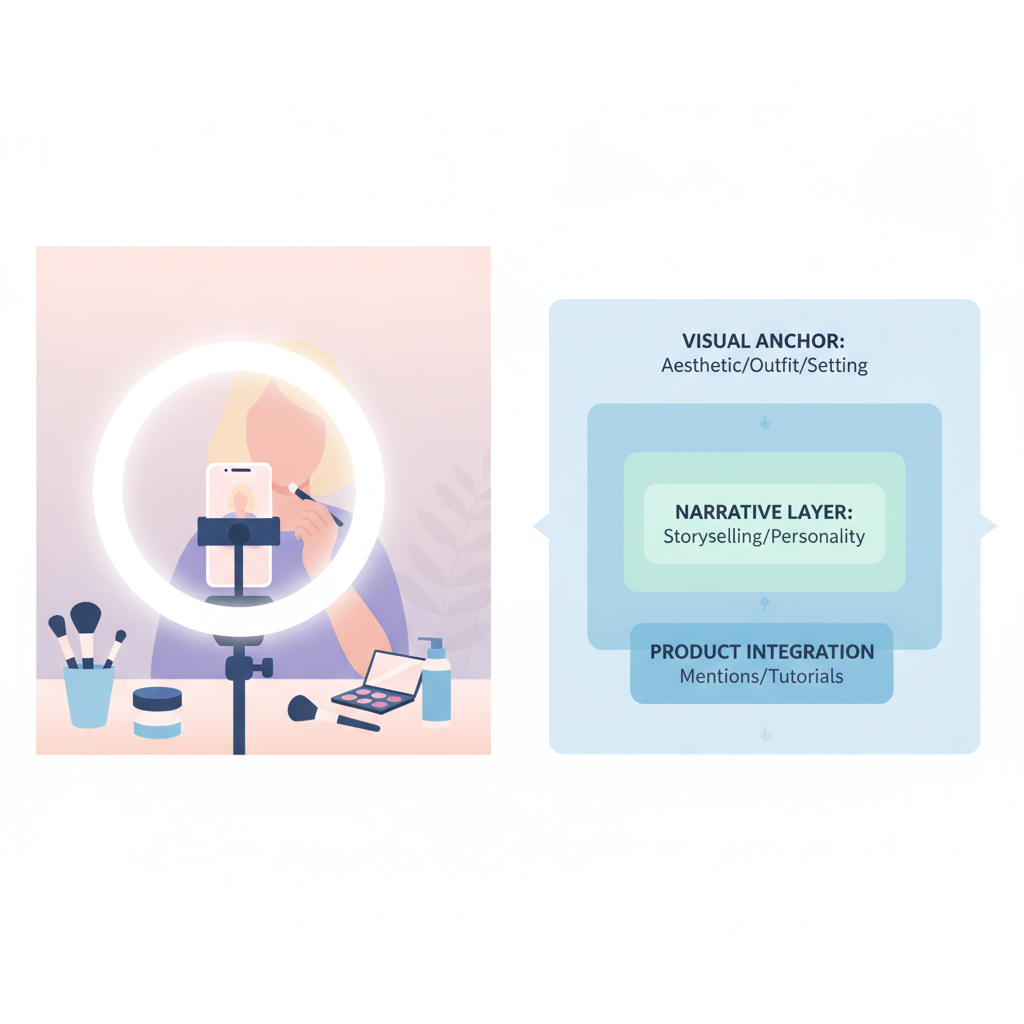
The mechanics are worth studying. Earle's content operates as a hybrid between tutorial and confessional, where the makeup routine is the visual anchor and the narration is the actual product. Brands pay her premium rates not because she teaches advanced techniques, but because her audience trusts her recommendations. That trust is a function of structure, not personality. The GRWM format creates the illusion of intimacy while maintaining the production velocity required to stay visible on TikTok's feed.
The Opening Hook: No Setup, Just Entry
Earle's videos do not waste time on introductions. In a recent interview clip, the split screen format shows her speaking directly to camera in the top frame while a wider shot of the conversation plays below. The cut rhythm is medium paced, changing every 2 to 5 seconds, with close-ups timed to emphasize reactions. This structure keeps two information streams active simultaneously: what she is saying and how she is reacting.
The GRWM videos follow a similar principle. According to analysis of her typical content, the hook lands in the first two seconds. There is no preamble, no channel branding, no "hey guys." The video starts mid-action: she is already applying product, already talking. The viewer enters a conversation that appears to have been happening before they arrived. This creates the psychological effect of eavesdropping, which is more engaging than being addressed.
The format works because it eliminates the decision point. On TikTok, viewers scroll until something stops them. A video that starts with setup gives the viewer a reason to keep scrolling. A video that starts with action forces a binary choice: stay or leave. Earle's content is designed to make "stay" the path of least resistance.
The Narration Layer: Story Over Instruction
The makeup application is not the content. It is the vehicle. Earle's GRWM videos are structured around storytelling, not demonstration. She talks about her weekend, her relationships, her anxieties, her plans. The product application happens in the background. This inverts the traditional tutorial format, where the technique is primary and the personality is secondary.
Coverage of her content style describes this as "vulnerability," but that is imprecise. What Earle does is create narrative momentum. Each video has a beginning (the setup of the story), a middle (the complication or detail), and an end (the resolution or cliffhanger). The makeup routine provides a visual throughline that keeps the viewer anchored while the story unfolds.
This structure solves the core retention problem of long-form vertical video. A static talking head loses attention within seconds. A pure tutorial requires the viewer to care about the skill being taught. Earle's format allows the viewer to stay for the story while the visual layer (the makeup application) provides enough movement to prevent the video from feeling static. The two layers reinforce each other without competing for attention.
The Product Integration: Endorsement as Narration
Earle's monetization model is built on the GRWM format's structural advantage. When she mentions a product, it is not a segue or a sponsored break. It is part of the narration. She picks up a concealer, applies it, and talks about why she likes it in the same tone she uses to talk about everything else. The product mention is not an interruption of the content. It is the content.
Her sponsored post rates are directly tied to what the industry calls the "Alix Earle effect," a term used by online communities to describe the sales spike that follows her recommendations. This effect is not the result of audience size alone. Creators with larger followings do not command the same rates. The premium comes from conversion, and conversion is a function of trust. The GRWM format builds trust by eliminating the visible boundary between organic content and paid promotion.
This has business implications beyond individual posts. Earle has moved into equity partnerships, taking investment positions in brands like Cymbiotika and Poppi. These deals are structured around the assumption that her endorsement will drive sustained sales growth, not just a one-time traffic spike. The GRWM format makes that assumption credible because it allows for repeated, natural product mentions over time without the audience perceiving saturation.
The Production System: High Volume, Low Variance
Earle's content calendar operates on high frequency. The GRWM format is repeatable by design. The structure does not require location scouting, elaborate setups, or post-production effects. The video can be shot in a bedroom with a ring light and a phone mount. This low production overhead allows for volume, and volume is what TikTok's algorithm rewards.
Her content includes variations like day-in-the-life vlogs and podcast clips, but the GRWM remains the anchor format. The vlogs and clips serve as supplementary content that reinforces the personality established in the GRWM videos. The structure is modular: the GRWM builds the audience, the vlogs maintain visibility between GRWMs, and the podcast extends the format into long-form audio.
This system is sustainable because it does not depend on creative breakthroughs or viral moments. Each video is a small bet with a known success rate. The cumulative effect of consistent posting is a stable audience and predictable reach. For brands evaluating creator partnerships, this consistency is more valuable than occasional viral hits.
What EditorDuel Readers Can Take from This
Earle's success is not about charisma or production quality. It is about format discipline. Businesses building content operations can apply three specific lessons from her approach.
First, pick a repeatable structure and commit to it. The GRWM format works because it is instantly recognizable and infinitely variable. The audience knows what to expect, but each execution is unique. For corporate content, this might mean a consistent episode structure (cold open, three-act body, CTA close) rather than reinventing the format for every video.
Second, layer information streams. Earle's videos work because the visual and narrative layers operate independently. The viewer can follow one, both, or neither and still extract value. For business content, this might mean using B-roll that supports the narration without duplicating it, or structuring interviews so the visual (the subject's environment, their process) tells a parallel story to the verbal content.
Third, eliminate the boundary between content and promotion. Earle's product mentions work because they are structurally identical to her other narration. For brands, this means integrating product features, customer stories, or case studies into the narrative fabric of the content rather than treating them as separate segments. The goal is to make the commercial message feel like information, not interruption.
The GRWM format is not universally applicable, but the principles behind it are. High frequency, low variance, layered information, and structural integration of monetization. These are operational decisions, not creative ones. They can be systematized, tested, and scaled.
Want to build content like this for your business? Post a competition on EditorDuel and get matched with editors who can deliver.